Audio file
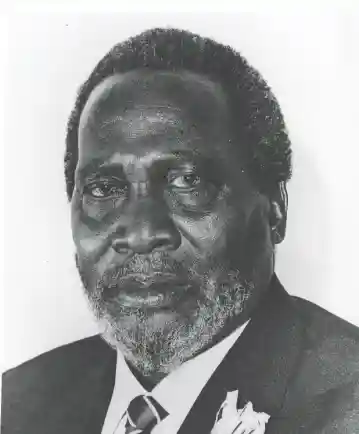
HE Mzee Jomo Kenyatta
1963
–
1978
It is believed that Jomo Kenyatta was born around 1895, in Ngenda, Gatundu, the eldest son of Muigai and Wambui. After his father's death, his mother remarried according to Kikuyu custom before later passing away, leaving Kenyatta with the responsibility of caring for his younger brothers. Despite experiencing hardship and loss at an early age, he embraced his family duties, experiences that helped shape his character, resilience, and future leadership.
Overview
The exact date of Jomo Kenyatta’s birth remains uncertain, though it is believed he was born around 1895 to Muigai and Wambui. He was named Kamau wa Muigai. His parents were ordinary farming folk who earned their livelihood in the village of Ngenda, Gatundu.
Ngenda, Kenyatta’s birthplace, lay approximately twenty-five miles north-east of Fort Smith, a former British colonial outpost established between 1892 and 1895 by Major Eric Smith in present-day Kabete. Ngenda, where two rivers converged supporting sugarcane farming and cattle grazing, formed part of the ridges that would later make up Kiambu District.
Kenyatta had two younger brothers. One was Kongo, also spelled Kung’u, the third son of Wambui and Muigai and named after Kenyatta’s paternal grandfather. He was referred to as “the second Kongo” because an older sibling bearing the same name had died in infancy.
The other brother was Muigai.
Shortly after Kongo’s birth, Kenyatta’s father, Muigai, died. Following Kikuyu customary law, Wambui married her late husband’s younger brother, Ngengi. From this union, another son was born and named Muigai after the deceased father, a traditional practice intended to preserve the spirit and memory of the departed within the family.
Ngengi, who became both uncle and stepfather to the boys, assumed leadership of the household. He was known to be harsh and distant. To him, sons represented future claims to inheritance rather than wealth, unlike daughters who would bring dowries through marriage. Although he observed tribal obligations, he showed little affection toward the boys and increasingly resented their presence in his home.
Life in Ngenda was difficult for the young Kenyatta and his mother. Soon after the birth of Muigai, Wambui returned to her own people further north with her infant son, where she later died.
As the eldest son, Kenyatta was expected to shoulder family responsibilities, including inheriting his late father’s property and caring for his younger siblings. Upon learning of his mother’s death, the young Kenyatta travelled to his maternal grandparents’ homestead and brought back the now motherless infant Muigai to Ngenda, where he was raised by his late mother’s co-wives and sisters.
Through these early experiences, Kenyatta began to shape not only his own future but also that of his extended family.
The founder of the family lands at Ngenda was Kenyatta’s great-grandfather, Magana. In Kikuyu, “Magana” literally means “hundreds,” possibly a reference to the vastness of his possessions. As Magana’s family expanded, the ridges became increasingly populated, the clan prospered, and only twenty-five miles separated them from the forest edge to the south.
Ngenda formed part of the southern forest belt through which Kikuyu clans migrated during the nineteenth century. Family heads claimed land by clearing forests with the help of their sons while their wives cultivated.
By the time of Kenyatta’s birth, there was considerable movement between Ngenda and Dagoreti, following routes earlier used by Chief Waiyaki. Families often left some relatives behind to safeguard cultivated land while others advanced to new frontiers. Kenyatta’s father, Muigai, and his uncle Ngengi remained in Ngenda, while Kongo and Kuria, sons of Magana, migrated south and settled at Muthiga, near the site where Lugard later established his ill-fated stockade.
Stories about life along the railway line, combined with the difficult conditions at Ngengi’s homestead, deeply affected the young Kenyatta. Eventually, he ran away to Muthiga to live with his grandfather Kung’u, a respected Mundu Mugo (medicine man).
Kenyatta assisted the ageing grandfather by carrying his tools, as his services were in high demand. Like many children in traditional African societies, Kenyatta learned through observation and participation. From his father, he learned herding skills; from his mother, lessons shared during evening meals; and from his grandfather, elements of traditional healing and medicine.
Kenyatta’s generation grew up hearing stories about mysterious developments beyond the forests. These stories echoed the prophecy of the famed seer Mugo wa Kibiro, who foretold the coming of “strange men, like butterflies, with pale skins and the colour of frogs,” as well as a great iron snake stretching across the land, later associated with the railway.
Some boys had already encountered these strangers.
Among them was Musa Gitau, an older acquaintance from Ngenda who had lived with Europeans at Thogoto and later became a church minister there. Gitau frequently spoke to Kenyatta about the changing world beyond the ridges. Fascinated by these stories, Kenyatta resolved to join Musa Gitau at Thogoto to learn more about the white man’s world and education.
European missionaries sought to educate Kikuyu children but initially faced resistance from parents who feared losing labour needed for farming activities. As a result, enrolment at Thogoto Mission School, which has been established in the early 1900’s, remained low in its early years. The establishment of a boarding house for sixteen boys in 1907 and an industrial training scheme for fourteen more and supported by government grants improved attendance.
In November 1909, Kenyatta enrolled at Thogoto Mission School under the name Kamau wa Ngengi. At the school, he learned sewing and undertook duties such as washing dishes and tending gardens.
It was here that he encountered Arthur Ruffell Barlow (the nephew by marriage of Clement Ruffell Scott) who had joined the mission at the Christmas of 1905, after two years at a nearby farm and one of the earliest Europeans to learn the Kikuyu language. Barlow participated in Kikuyu dances and translated St Mark’s Gospel into Kikuyu, helping make Christian teachings more accessible to local students. In the elementary classes, students first learned to read Kikuyu translations of Old Testament stories before progressing to Barlow’s translation of the New Testament.
Another important influence at Thogoto was Dr John William Arthur, who arrived in 1907 as the mission doctor. Shortly after his arrival at the school, Kenyatta contracted phthisis, a lung infection common among poorly clothed herd boys. He was admitted to the Hunter Memorial Hospital, today known as PCEA Kikuyu Hospital, where he recovered after a month of treatment. The hospital which was opened in January 1908 had been named after the benefactor of the mission
Arthur mentioned Kenyatta in the mission journal, leading to spiritual support from Christians abroad. A year after his enrolment at school, the Sunday School of St John’s Church in Dundee sponsored Kenyatta both financially and spiritually for four years.
Despite this support, Kenyatta’s academic progress remained modest. In July 1912, after completing primary schooling, he chose to pursue apprenticeship training as a carpenter.
Tradition remained central to Kenyatta’s life. During his childhood, he learned about his family lineage, Kikuyu customs, the worship of ‘Mwene Nyaga’, God, believed to reside atop Mount Kirinyaga (now Mount Kenya) and the legends of Gikuyu and Mumbi, the ancestral parents of the Agikuyu community.
In 1912, Kenyatta and a group of other boys and girls, dressed in white robes, made vows during a solemn service at Thogoto Church. According to Arthur Barlow, these vows committed them to life as catechumens. Kenyatta committed to serving as a catechumen which meant that he had to give up his tribal life and get instructed every Sunday morning until he was ready for baptism.
Despite his Christian commitments, Kenyatta still underwent the traditional Kikuyu initiation ceremony that marked entry into adulthood and warrior status. For the Kikuyu community, circumcision symbolised spiritual rebirth and full integration into society. The missionaries recognized the significance of the initiatory rites but they considered the physical operation of circumcision to be brutal and unhygienic and, in the case of girls, barbaric mutilation that caused permanent injury. Equally, the atmosphere in which the ceremonies were carried out seemed to the missionaries especially evil. Hence, they criticized the practices and prayed that the people might forgo them altogether. However, at the time, it was unthinkable for a Kikuyu boy or girl not to be circumcised. Within the church circles, the only circumstance under which circumcision was permitted was when undertaken at the mission hospital, and under proper medical procedures. However, when the time for initiation came, some students quietly slipped away from the mission and joined their age mates in the village ceremonies.
Kenyatta was no exception. In 1913, likely during the customary initiation season in February, when the mission school was closed for holidays, the missionary teacher Garrioch reached a compromise by organizing a small group of boys eligible for initiation and taking them to Nyongara Stream. Each initiate had a sponsor, or circumcision father, who stood behind him during the ceremony and acted as his guardian on behalf of the tribe.Kenyatta chose Musa Gitau as his sponsor.
The procedure was carried out by Samson Njoroge, the first Kikuyu to train as a hospital assistant, under medically supervised conditions. After the ceremony, Kenyatta went to live in Musa’s hut as though entering the home of a new “father.” Through the ceremony, he was symbolically reborn into full membership of the tribe, joining the age-set known as ‘Mubengi.’
Baptism also represented a significant rite of passage. Candidates were required to adopt Christian names. Kenyatta selected the names John and Peter, but missionaries permitted only one Christian name. He therefore adapted Peter into its Hebraic equivalent, “Stone,” combining it with John to form “Johnstone.” In 1914, he was baptised as Johnstone Kamau.
Following his baptism, Kenyatta left the dormitory and briefly lived with friends near the mission. Although he had shown limited promises in both academics and carpentry, the mission encouraged him to continue apprenticeship training as a mason. Viewing masonry as a lower status trade, he declined the offer. With little more to gain at Thogoto, Kenyatta, like many young men of his generation, turned his sights toward Nairobi, the growing colonial city only a few miles away.
In 1916, Kenyatta approached John Cook, an engineer who managed a sisal company in Thika. Cook had arrived in East Africa in December 1907 as part of Henry Scott’s team overseeing a new building programme at the Thogoto Mission. While working in Thika, Kenyatta earned Cook’s trust and was entrusted with the sensitive responsibility of collecting company wages from a bank in Nairobi, some 25 miles away. The position paid him Ksh 250 per month, a princely sum by the standards of the time.
Just as life appeared to be stabilizing, Kenyatta’s recurring lung problems flared up again, leaving him seriously ill. Rather than returning to Thogoto for treatment, he sought care at the Presbyterian Mission Hospital in Tumu Tumu, where his friend Charles Kasaja was based.
It was during this period that the First World War intensified demands on Britain’s colonies. The Church of Scotland Mission in Kenya was instructed by London to support the Empire’s war effort. Dr. John William Arthur, the pioneering Scottish missionary doctor who had arrived in Kenya in 1907, proposed the formation of a special contingent of volunteer porters drawn from among mission communities.
Many young men of Kenyatta’s generation at Thogoto enlisted, including Philip Karanja and Musa Gitau, who were among the leaders of the group. Kenyatta’s friend Charles Kasaja also volunteered, but Dr. Arthur persuaded him to remain at Thogoto as an interpreter and assistant.
Although the British colonial administration was actively recruiting African men as soldiers and porters, and many of Kenyatta’s peers answered the call, Kenyatta chose a different path. Determined to avoid conscription, he fled to Maasai land in 1917 and sought refuge in the Narok area.
In Narok, he worked as a clerk, helping to organize the movement of cattle, sheep, and donkeys destined for Nairobi. By early 1918, the Kikuyu Mission Volunteers had returned from Dar es Salaam, easing recruitment pressures on the Kikuyu community. With the immediate threat of conscription reduced, Kenyatta left Narok and returned to Nairobi, where opportunities for educated and industrious Africans were increasingly available.
Back in the city, he attended evening classes and briefly worked for a man named Stephen Ellis, managing a store that sold farming and engineering equipment. A few months later, he supervised the construction of staff housing at the Thogoto Mission.
The pull of the capital had become impossible to resist. Nairobi, with its promise and endless possibilities, had captured Kenyatta’s imagination. He was, now, no longer a visitor standing on the edge of the city, but a dweller whose dreams and ambitions would be shaped by its rhythm.
Relations between the Kikuyu and Maasai were not always peaceful. While tensions and occasional conflicts existed between the two communities, certain clans maintained close ties through trade, intermarriage, and mutual alliances. Kenyatta's own family was connected to the Maasai through such bonds. One of his grandfather's wives was Maasai, and one of his aunts had married a Maasai chief.
These family connections proved invaluable during the First World War. Faced with the prospect of forced recruitment by the British colonial administration, Kenyatta fled to Maasai land in 1917. There, he lived among the family of his aunt and her Maasai husband, adopted aspects of Maasai culture, and worked as a clerk on a ranch.
His stay in Narok would have a lasting impact on his identity. While living among the Maasai, he acquired a beaded belt known locally as a Kinyata or Kenyatta. He later adopted the name, which would become famous throughout Kenya and beyond.
In 1922, he added another name to his growing list of identities, Jomo, meaning "burning spear." Before settling on the name Jomo Kenyatta, he had been known by several others. He was born Kamau wa Muigai and later became Kamau wa Ngengi following the death of his biological father and his mother's remarriage to his uncle Ngengi. He was baptised as a Christian at the Church of Scotland Mission in Thogoto and was given the name Johnstone Kamau, which he used before adopting the name Jomo Kenyatta.
Upon returning from Maasai land, Kenyatta renewed his ties with his family at Ngenda. As the eldest surviving son of Muigai, he remained the heir to the family's ancestral land and livestock. Under Kikuyu custom, he was entitled to request sheep and goats from Ngengi, his stepfather, to mark important stages of his life. One of the most significant milestones for a young Kikuyu man was marriage.
Kenyatta's first attempt to find a wife ended unsuccessfully when it emerged that the prospective bride was related to his clan. He soon found another young woman, Grace Wahu, a student at the Christian Mission School for Girls in Kabete, near Dagoreti. The two established a home together, and on 20 November 1920, Grace gave birth to their first child, a son named Muigai after Kenyatta's father.
Life at the family homestead, however, was far from harmonious. Ngengi increasingly resented the presence of the sons of his deceased brother and grew irritated by Grace and the new baby. Eventually, he resorted to a traditional Kikuyu method of expressing rejection. He ordered a second door to be cut into Grace's hut, an act which carried the weight of a curse and a public humiliation. Unable to endure the disgrace, Grace left with her infant son and joined Kenyatta in Dagoretti.
At the time, Kenyatta was living in the village of Kioi, one of the wealthiest landowners in the district surrounding the Presbyterian Mission. A descendant of Waiyaki wa Hinga, Kioi valued Kenyatta's education, his familiarity with mission life, and his understanding of European customs. These qualities made him a useful adviser and intermediary.
In 1919, Kioi enlisted Kenyatta's help in a major land dispute. In an earlier ruling, a judge had ordered Kioi to remove his homesteads from a contested piece of land. After relocating, he found himself facing another legal challenge when neighboring claimants asserted ownership of the new site. They argued that their father had purchased the land from the Ndorobo. Kioi countered that the original owner had been Kinyanjui, from whom he had acquired the land in exchange for one hundred goats, four oxen, a daughter, and four fat sheep.
The dispute highlighted the complexity of traditional land ownership systems and kinship relationships. Kenyatta's role was to help Kioi's European lawyers understand the intricate family ties and customary arrangements underlying the claim. Despite these efforts, Kioi lost the case. The judge dismissed much of the evidence rooted in customary law, exposing the growing conflict between African concepts of land tenure and the colonial legal system.
The implications extended far beyond a single lawsuit. In 1921, the colony's Chief Justice drew upon the principles raised in the Kioi case to declare that ultimate ownership of land reserved for African communities rested with the Crown. The judgment made explicit what many Africans had feared, that the colonial authority was absolute, and customary rights to ancestral lands could be overridden at will.
For Kenyatta, the case was a formative lesson. It exposed him firsthand to the profound injustices embedded in colonial land policy, an issue that would later become central to his political activism and leadership.
Long before Jomo Kenyatta became the face of Kenya's struggle for independence, another man quietly set him on that path. His name was James Beuttah, a nationalist whose influence on Kenyatta's political awakening was profound.
Born Mbutu wa Ruhara in Lower Muhito, Mukurwe-ini, in present-day Nyeri County, Beuttah's life began in hardship. Orphaned at an early age, he left home at just twelve years old and travelled to Maragua, in present-day Murang'a County, in search of work and survival.
His fortunes slowly changed. In 1903, he accompanied his employer to Nairobi before moving to Mombasa the following year. There, he attended the Church Missionary Society (CMS) school at Freretown before training as a telegraphist at the CMS school in Rabai.
At his baptism in Freretown, Mbutu adopted the Christian name James Mbuto. Later, while working in Mombasa in 1918, he anglicised his surname to Beuttah. The decision was strategic. He believed the new spelling would help him bypass racist colonial restrictions that prevented Africans from purchasing shares in European-owned companies such as Brooke Bond.
Beuttah first met Kenyatta in 1924 while on a mission in Nairobi's Pumwani estate, where he sought to bring together Christian and Muslim Kikuyu communities.
Although employed as a post office manager, Beuttah maintained close ties with the emerging Kikuyu Central Association (KCA), even though his name rarely appeared in its official records. Soon afterwards, he was transferred to Uganda, but distance did little to weaken his relationship with either the KCA leadership or Kenyatta.
During Beuttah's absence, members of the KCA increasingly turned to Kenyatta for help translating correspondence and drafting official letters. Payment was often beer or expensive Goan spirits rather than cash. While this was expensive, Kenyatta’s command of English made him indispensable.
As demand for his services grew, the association realised it needed him full-time. Kenyatta agreed to become the KCA's permanent secretary, despite risking his existing employment. After losing his job, he negotiated compensation equivalent to his previous salary which included a motorcycle and other allowances, enabling him to devote himself entirely to the organisation.
Towards the end of 1927, the KCA invited Beuttah to represent the organisation in London but family responsibilities prevented him from accepting.
Instead, he recommended several possible delegates, among them Kenyatta, whose fluency in English made him an ideal candidate.
KCA official Kang'ethe approached Kenyatta, who hesitated before accepting. His wife, Grace, was expecting their second child, and he was supporting both his younger brother Muigai, then studying at Alliance High School, and his young son at Thogoto Central School. In fact, on 16 February 1928, two days after Kenyatta’s appearance before the Hilton Young Commission, Grace gave birth to their daughter Wambui, later baptised Margaret. Wambui would eventually become Nairobi's first female mayor. Although she barely knew her father during her childhood because of his political commitments, she would later become one of his closest confidantes.
The Kikuyu Central Association was rapidly expanding. In 1927, it established offices in Nairobi, and membership continued to grow.
The transformation did not go unnoticed. By 1928, the District Commissioner of Fort Hall acknowledged:
"It can no longer be said that KCA is unrepresentative of the Kikuyu people. It includes in its ranks a vast proportion of the more enlightened and progressive youth and wields an increasing influence on the council of elders."
Kenyatta's public association with the nationalist movement began in earnest on 14 February 1928, when he accompanied KCA representatives to Government House in Nairobi to give evidence before the Hilton Young Commission, serving primarily as an interpreter.
Although the delegation failed to persuade the commissioners to recommend African representation, the appearance elevated Kenyatta's profile.
The following month, he attended a meeting at Kahuhia alongside the Provincial Commissioner and local chiefs. Speaking on behalf of the KCA, Kenyatta assured colonial officials that the association wished to pursue its objectives peacefully and within the law. While the Provincial Commissioner questioned whether the KCA truly represented all Kikuyu, he nevertheless welcomed the spirit of dialogue.
In May 1928, now serving as KCA Secretary-General, Kenyatta launched the Kikuyu-language newspaper Muigwithania ("The Reconciler").
Bearing the association's motto, "Pray and Work," the newspaper became the KCA's principal platform for communicating with Kikuyu communities. Officially edited by "Johnstone Kenyatta," it promoted unity while carefully navigating colonial censorship.
By mid 1928, Kikuyu anger over land loss had reached a breaking point. Edward Grigg, the colonial Governor, proposed setting up land boards to hold all land in the native reserves in trust for each tribe. The board would regulate land exchanges, supervise improvements and generally demarcate the areas within which the tribe might exercise authority. This meant that the British administration sought to legally secure the "Native Reserves" to stop white settlers from encroaching further, while simultaneously stripping the Kikuyu of independent land ownership and placing it under colonial control. However, the Hilton Young Commission which was tasked by London with studying closer administrative union for British territories in East and Central Africa, threatened to take control of the matter, forcing the local government to suspend its proposed bill on June 18 to prevent a jurisdictional clash.
Kenyatta responded cautiously. His articles in Muigwithania generally supported missionaries, district commissioners and chiefs, avoiding direct confrontation with the colonial government.
Yet beneath this moderation lay a growing nationalist message. In September 1928, the newspaper introduced the term Karing'a, meaning "Real Kikuyu," calling on Kikuyu people to unite while embracing their traditional customs and identity. The campaign also helped raise funds for Kenyatta's planned journey to Britain.
Determined to present the KCA's grievances directly to the British government, Kenyatta prepared for the journey to London.
By December 1928, sufficient funds had been raised.
At a gathering in Pumwani, Kenyatta stood before supporters holding a Bible and a handful of Kikuyu soil. He swore that he would faithfully represent their cause abroad and remain committed to them upon his return.
The gathering answered with an oath of its own promising to look after Kenyatta’s wife, Grace and the children while he was away.
It was James Beuttah, the humble telegraphist, whose belief in a younger man helped set Kenya on its path to independence.
In early 1929, the Kikuyu Central Association (KCA) formally sought permission from the colonial administration to send its Secretary, Jomo Kenyatta, to London to present the grievances of the Kikuyu people before the British Government.
Not everyone supported the plan. Canon Leakey of the Church Missionary Society (CMS), who had once taught Kenyatta's wife, Grace, urged him to abandon the mission. The KCA, however, remained resolute. It assured the colonial authorities that it would meet all the expenses of the journey and that a West African organisation had pledged to host Kenyatta upon his arrival in Britain.
On 4 February 1929, the British authorities in Nairobi warned Kenyatta that the trip would be a futile waste of both time and money. While they could not legally prevent him from travelling, officials wrote to the KCA president, reminding the Association that it was not an officially recognised body and that the Secretary of State for the Colonies would therefore be unable to grant Kenyatta an audience.
The warning came too late to change his mind. Kenyatta had already booked his passage and sailed from Mombasa on 17 February 1929, arriving in London on 8 March.
He carried with him a petition prepared by the KCA outlining the Kikuyu people's grievances. At its heart were demands for the restoration of alienated African land, reform of oppressive labour practices, and protection of Kikuyu customs and institutions from colonial interference.
Among the contacts provided to him before departure was Ladipo Solanke, a Nigerian lawyer, Yoruba nationalist and founder of the West African Students' Union (WASU), whose organisation had promised to assist the KCA delegation. When Kenyatta arrived, however, Solanke was preparing to embark on an extensive fundraising tour across West Africa, where he also intended to spread interest in the organization he had founded.
London exposed Kenyatta to a world unlike any he had previously encountered. For the first time, he found himself among highly educated African intellectuals including lawyers, writers and political activists from Nigeria and the Gold Coast. While he admired their achievements, he also discovered that they shared few common experiences with a colonial subject from Kenya. Many regarded him with scepticism, and the cost of board and lodging arranged through the students' network proved prohibitively expensive.
Faced with these difficulties, Kenyatta turned to an unlikely ally, W. McGregor Ross, the former Director of Public Works in Kenya from 1905 to 1923, who had since retired to England. Ross offered practical assistance at a critical moment, helping Kenyatta establish himself while he pursued the KCA's mission.
Once settled, Kenyatta prepared a detailed memorandum for the Colonial Office setting out the Kikuyu case. He submitted it to the Secretary of State for the Colonies and sought support from sympathetic Members of Parliament.
His lobbying contributed to discussions that culminated in the publication of a White Paper affirming that Africans would no longer be alienated from their remaining lands. Although it fell far short of restoring land already taken by settlers, the declaration marked an important shift in British colonial policy.
The discussions also opened the way for the Kikuyu Central Association to establish independent schools. Beginning 1930, the Kikuyu Independent Schools and the Karing'a Independent Schools Association (KISA) emerged, providing African controlled education outside missionary influence.
While still in London, Kenyatta broadened his political network. He contacted members of the League Against Imperialism, an international anti-colonial organisation founded in 1927 that included many socialist and communist activists. He also established links with prominent British progressives, including Fenner Brockway of the Independent Labour Party and journalist Kingsley Martin, relationships that would prove valuable during his later years of political activism in Britain.
While based in London, Kenyatta broadened his political horizons beyond Britain. Travelling by train through Berlin, he arrived in Moscow on 24 August 1929, where, despite opposition by the British colonial authorities, he met with radical and communist activists.
Many believed that his decision to visit the Soviet Union would spell the end of his political career. Instead, Kenyatta returned safely to England on 4 October 1929, more convinced than ever of the need to internationalise the struggle against colonial rule.
Less than a month later, on 27 October, he published a lengthy article titled "Give Back Our Land" in the communist newspaper The Sunday Worker. The article which was written in the form of an interview, described the dispossession of African communities by British settlers, condemned forced labour, and accused the colonial administration of enriching "interloping imperialist bosses" at the expense of the indigenous population.
Kenyatta argued that widespread discontent among Africans would persist "until they govern themselves." The themes he articulated including land alienation, political representation and self-government, would remain the cornerstone of his political philosophy for the next three decades.
Back in Kenya, Governor Edward Grigg dismissed the article as seditious propaganda.
Kenyatta wrote two more articles in the New Daily recounting the events surrounding the arrest of Harry Thuku in 1922. Their striking headlines, "An African People Rise in Revolt" and "A General Strike Drowned in Blood", portrayed the colonial administration's violent response to African protest. Although Kenyatta made it clear that he had not been a member of Thuku's organisation, he wrote that he had witnessed the shootings firsthand.
On 23 January 1930, W. McGregor Ross introduced Kenyatta to Dr. Drummond Shiels, the Under-Secretary of State at the Colonial Office. During their meeting, Shiels emphasised that constitutional reform could only come through gradual progress supported by an educated African population. Kenyatta agreed that education was essential, even as he continued to press for greater political rights.
Back in Kenya, however, Governor Grigg was taking an increasingly hard line against African political activism. He proposed confiscating and destroying funds collected by Africans for political associations, effectively cutting off financial support to the Kikuyu Central Association and to Kenyatta while he remained abroad. He also sought to suppress vernacular newspapers, recognising their growing influence among African communities.
As the months passed, Kenyatta contemplated returning home but feared that the colonial government would seize the opportunity to imprison him.
Throughout this period, Ross and his family became some of his strongest supporters. They introduced him to discussion groups, helped arrange meetings, lent him money and guided him through Britain's political landscape. Ross also sent Kenyatta to Transport House to study the organisation and financial management of trade unions, believing that such knowledge would prove valuable in the future.
On 2 September 1930, the Ross family bid Kenyatta farewell as he departed for Kenya.
He arrived in Mombasa on 24 September and deliberately kept a low profile while acquainting himself with developments within Kikuyuland. By the end of the month, he travelled to Nairobi, where Grace and leaders of the Kikuyu Central Association welcomed him home.
During the months that followed, Arthur sought to draw Kenyatta back into the Church. The two men held several discussions on education and the increasingly contentious issue of female circumcision, but their meetings ended without agreement, reflecting the widening gulf between missionary leaders and African nationalists.
Kenyatta's stay in Kenya was brief.
By 22 May 1931, he was once again in London, this time accompanied by teacher Parmenas Mackerie Githendu. The pair hoped to present the views of the Kikuyu Central Association to the Joint Parliamentary Committee examining proposals for closer political union in East Africa.
Like his first mission, the visit ended in disappointment. The British Government again refused to grant Kenyatta an official audience.
Undeterred, Kenyatta resumed contact with the political networks he had cultivated during his earlier stay in Britain. W. McGregor Ross, however, grew increasingly concerned. By the end of May, he believed Kenyatta was making little progress and questioned the reliability of the information reaching him from Kenya. When Kenyatta declined to identify his sources, Ross conducted inquiries of his own.
Ross’ conclusion from his own investigations was that the Kikuyu Central Association appeared to be losing credibility. He feared that unless Kenyatta changed course, he would eventually face imprisonment on his return to Kenya and subsequently advised Kenyatta to abandon his mission in Britain and go home.
Early in August 1931, Ross received an unsigned, unaddressed letter from Kenyatta informing him that he had moved. After that, communication ceased, marking the end of one of the most significant relationships in Kenyatta's formative political years.
After the unaddressed letter about his move from London, Kenyatta went to Germany in the company of his girlfriend, Connie McGregor and the famous pan-Africanist, George Padmore.
Padmore, a Pan-Africanist, journalist, and anti-colonial strategist, had great influence on Kenyatta and they, together with other African leaders like Kwame Nkrumah of Ghana and African American WEB Dubois, became the pioneer Pan Africanists and organisers of the Pan African Congress.
Padmore and Dubois have roads named after them in Nairobi to immortalise their contribution to the eventual freedom of Africans from colonial domination.
Kenyatta then proceeded to Moscow following an invitation to study at The Toilers of the East University. George Padmore was instrumental in facilitating Jomo Kenyatta's opportunity to study in Russia.
To see how the Russians were dealing with their own backward areas, Kenyatta travelled as much as he could, but most of his time was spent at this special revolutionary institute in Moscow where he studied for two years.
Kenyatta returned to London on 30th August 1933.
The Kikuyu Central Association (KCA) had sent funds to cover the return fare to Kenya for both Kenyatta and Parmenas Mackerie Githendu, who had accompanied him on an earlier mission to London. By the time the money arrived, however, Kenyatta had not yet returned to London from Moscow. Mackerie purchased a first-class ticket for himself and kept the remaining funds. Consequently, when Kenyatta eventually returned to London on 30 August 1933, he found himself stranded with no money for the journey home.
To support himself, Kenyatta took on a variety of jobs. He worked as an agricultural labourer, lectured for the Workers' Educational Association, translated Kikuyu recordings for the Columbia Gramophone Company, and accepted other odd jobs to make ends meet. In 1935, he even appeared as an extra in the British film Sanders of the River.
In January 1933, Kenyatta wrote an article, entitled ‘An African looks at British Imperialism’ for the issue of the ‘The Negro Worker.’ This article was as extreme as anything he had written for the communist press. In the article, he dismissed the Carter Commission out of hand. He asserted that land had been stolen by the whites and those natives, chosen to speak for the people, were no more than stooges. By then, no one advancing such views would be allowed free expression in Kenya and indeed at this point no one thought in these terms. The Kikuyu leaders in Kenya at the time all looked to the British government for their welfare and saw their future only on colonial terms unlike Kenyatta, who looked for self-governance. Taking stock of himself as the winter of 1933 approached, Kenyatta concluded that there was no place for him yet in his own country. One thing was missing though; unlike other Africans he met, his own education still lacked credentials, so he decided to become a student again to make up for this deficiency.
He was first attached to the London University at the phonetics department of University College where he helped Lily Armstrong compile her book, ‘The Phonetic and Tonal Structure of the Kikuyu Language.’ He later began to study anthropology under the world -famous Professor Bronislaw Malinowski, then teaching at the London School of Economics. Under his guidance, each student was expected to give a paper which was followed by discussion and lectures. Kenyatta’s paper gave a detailed account of Kikuyu female circumcision with a factual account of how the ceremony was performed. Europeans and missionaries considered this rite disgusting and barbarous, while the Kikuyu considered it very important for the solidarity of their social structure. But through the discipline of anthropology, Kenyatta had found the weapon he needed to answer the philosophy of colonialism. The outcome was his book, published in 1938, ‘Facing Mount Kenya.’
In autumn 1936, Peter Mbiyu Koinange, son of chief Koinange, arrived in UK on completion of his studies in America. It was the Leaky family who arranged for Koinange to spend a year at the Cambridge College with which they had connections, St.John’s. During this time, he met with Kenyatta and helped him prepare ‘Facing Mount Kenya.’ for production. At that time, he was still called Johnstone Kenyatta but wanted an African name for the cover of the book. Together with Koinange, they coined the word ‘Jomo’ the closest alliteration of “Guchomora”, the Kikuyu word for “unsheathing a sword.” By now, Kenyatta had taken an active part in the Pan-African movement when he met Dinah Stock, the then secretary of British Center against Imperialism. By profession, she was a Workers Educational Association (WEA), lecturer. She also helped Kenyatta organize his Manuscript for the book.
1938 was a very busy year for Kenyatta. With Dinah Stock’s assistance he wrote a number of articles for the Manchester Guardian about Kamba troubles. He also attended various meetings organized by the Fabians, the ILP and by the Workers Education Association. Through this, he translated into political terms the message of ‘Facing Mount Kenya.’ By this time, the qualified Koinange, now back in Nairobi and contrary to his expectations, was allocated a minor post in the Education Department on a salary less than Europeans with far poorer qualifications than his own. Koinange refused the offer and with the help of his father, he founded the Teachers’ Training College at Githunguri on the 7th of July 1939.
During the Second World War, there was an inevitable clamp-down on Kenyatta’s communications with Kenya. On 30th May, KCA was banned, with Jesse Kariuki, George Ndegwa and other ringleaders, arrested and exiled to the northern part of Kenya. The arrest and government security measures sealed off Kenyatta from his own country. But the war did force on Kenyatta a period of reflection. To him, there was no much point in writing to the papers but Dinah Stock encouraged him to continue. So he began a novel, not to be completed, about the upbringing of an African in a British colony. Another result was a pamphlet which appeared under the title ‘My People of Kikuyu’ with the subtitle ‘The Life of Chief Wang’ombe,’ the first half of which described the traditional political organization of the Kikuyu and stressed its democratic structure through age grades and it ended with a strong plea for Kenyan independence. In 1942, Kenyatta met Edna Grace Clarke, the daughter of a marine engineer from Yarmouth. On 11th May 1942, they were married at Chanctonbury Registry Office. And on 11th August 1943 at Worthing hospital, Edna gave birth to a son, Peter Magana, named after Kenyatta’s grandfather.
Kenyatta continued his activities with the Pan-African congress. In the years that followed, Peter Abrahams had written a novel entitled ‘A Wreath for Udomo’ Kenyatta was Abraham’s model for his hero, Udomo. He is seen first in exile and then as the African statesman whose wisdom appears too conservative for the forces released by independence, which was to prove to be curiously prophetic. Abrahams was impressed both with Kenyatta’s sense of history and his humanity, and still in his novel, Udomo is involved in having to face complex issues while in England.
Finally, Kenyatta boarded the Alcantara on 5 September 1946, leaving behind nearly two decades of life abroad that had transformed him from a young secretary of the Kikuyu Central to a seasoned Pan-Africanist, an accomplished scholar, and an internationally connected nationalist. The battles that followed would be fought on Kenyan soil, but the leader who would wage them had been refined in the streets of London, the classrooms of Moscow and the political circles of Europe.
On September 24, 1946, Jomo Kenyatta returned to Kenya after more than fifteen years abroad. At the Port of Mombasa, he was warmly received by Grace Wanjiku, her two children, and a group of close friends. The celebrations continued as he travelled to Nairobi, where hundreds gathered to welcome home the man who had become the face of African nationalism. The jubilant procession followed him to his home in Dagoretti, where former members of the Kenya Central Association (KCA), neighbours and supporters streamed in to celebrate his return.
Despite the fanfare, Kenyatta understood that reclaiming his place in Kenya's political landscape required more than public admiration. He needed to reconnect with the traditional centres of influence within the Kikuyu community. One of the most influential figures was Senior Chief Koinange wa Mbiyu, the patriarch of the powerful Koinange family. Their relationship was cemented when Kenyatta married the chief's daughter, Grace Wanjiku Koinange, in 1946.
The marriage represented far more than a personal union. Grace was the sister of Peter Mbiyu Koinange, who would later become one of independent Kenya's most influential cabinet ministers. The marriage strengthened political ties between two of the most prominent Kikuyu families at a time when unity was essential to the nationalist movement.
Their happiness, however, was short-lived. In 1950, Grace died while giving birth to their daughter, Jane Wambui Gecaga, leaving Kenyatta grieving.
Upon his return, Kenyatta discovered that the Kenya Central Association, the organisation he had once represented abroad, had been banned during the Second World War. Although officially outlawed, its ideals and membership survived underground. Those who welcomed him home assured him that the KCA spirit remained alive in the struggle for African rights and self-government.
In KCA's place had emerged the Kenya African Union (KAU), a broader nationalist movement whose formation had been championed largely by the Koinange family.
The Kenya African Union (KAU) was established on October 1, 1944, initially under the name Kenya African Study Union (KASU). It was founded by Kenya's first African member of the Legislative Council, Eliud Mathu, together with James Gichuru and leaders of the Kikuyu Central Association (KCA). Harry Thuku became its first president.
The colonial government insisted that the organisation be called a "study" union in an effort to downplay its political ambitions and limit its influence. However, as nationalist sentiment gathered momentum, the word "Study" was dropped in 1946, transforming KAU into an openly political organisation dedicated to advancing African rights, land ownership, and self-government.
When Jomo Kenyatta returned to Kenya in September 1946, he initially remained outside active politics. However, James Gichuru believed that Kenyatta’s immense international experience, unifying influence, and charisma were essential to effectively lead the country's independence movement. Gichuru voluntarily stepped aside as KAU president n June 1, 1947, paving way for Kenyatta to take over the leadership of the party.
Kenyatta immediately set about transforming KAU into a disciplined, united nationalist movement. He needed not only to establish himself as the accepted leader of the Kikuyu but also to persuade Kenya's many other communities to rally behind a common demand for self-government.
By the late 1940s, KAU faced mounting difficulties. Its moderate leadership had failed to secure meaningful constitutional reforms from the colonial government and had struggled to build support beyond Central Kenya. Representation from regions such as the Coast and Nyanza remained limited, exposing the movement's regional weaknesses.
To strengthen the party's influence among the Kikuyu, Kenyatta and other senior leaders revived the practice of administering oaths to elders and respected community leaders. The oath targeted carefully chosen elders rather than militants or urban youth. The goal was to build broad-based support, secure unity for the anti-colonial independence struggle, and bind the Kikuyu community religiously to the party's leadership.
Instead of creating unity, the secretive practice fuelled suspicion and intensified tensions. By 1948, a new and mysterious name, Mau Mau, had entered public discourse, referring to what colonial authorities believed to be a clandestine movement committed to violently overthrowing colonial rule. The colonial government outlawed organisations associated with the movement in August 1950.
Political tensions intensified throughout 1950. On April 23, KAU joined forces with the East African Indian National Congress to oppose the revised Grigg constitutional proposals, while the East African Trade Union Congress called for a boycott of Nairobi's City Charter celebrations.
Violence soon followed. Two prominent opponents of militant tactics, Tom Mbotela, a senior KAU official, and Muchohi Gikonyo, a respected Kikuyu councillor, survived assassination attempts. Trade union leaders Fred Kubai and Makhan Singh were arrested for belonging to an unregistered union, triggering a general strike. Kenyatta and the KAU leadership opposed the strike, reflecting the widening divide between constitutional nationalists and more radical activists.
At the same time, a younger generation of militants, known as the Forty Group, steadily displaced KAU's older leadership in Nairobi. Fred Kubai became chairman, Bildad Kaggia assumed the role of general secretary, and Paul Ngei became assistant secretary. The new leadership demanded complete independence within three years.
Recognising the growing influence of the younger nationalists, Kenyatta chose cooperation over confrontation. In October 1950, he unveiled KAU's new flag of green, black and red, a symbol of an African nationalist movement that officially embraced a non-racial vision for an independent Kenya.
Despite these efforts, Kenyatta's authority became increasingly challenged by militant elements within the movement. In January 1952, younger activists established a secret Central Committee that organised an underground network of cells across Kikuyu country. Preparations for armed rebellion intensified as weapons were collected, secret oaths administered and suspected informers targeted. African policemen disappeared, bodies were found in rivers, and those unwilling to cooperate faced intimidation or violence.
Ironically, even as Kenyatta continued advocating a broad, inter-ethnic nationalist movement, the growing militancy increasingly isolated the Kikuyu struggle from other African communities.
Publicly, Kenyatta maintained that constitutional change remained the preferred path to self-government and never openly endorsed the Mau Mau campaign. Nevertheless, settlers continued to portray him as the movement's mastermind and pressed the colonial government to declare a State of Emergency. Nationalist calls for self-rule were increasingly branded as seditious.
A significant turning point came on August 16, 1952, when Waruhiu Itote, later known as General China, and seven other young militants met Kenyatta after the Central Committee had ordered the establishment of guerrilla bases in the forests. According to later accounts, Kenyatta encouraged them and assured them of his support. By then, many believed he had concluded that constitutional methods alone were unlikely to end colonial rule.
To some observers, Kenyatta appeared increasingly isolated. In reality, he stood apart because of the breadth of his experience. Years spent in Moscow and London, together with his involvement in the Pan-African movement, had given him an international political outlook unmatched by most African leaders of his generation.
Unlike many who sought advancement within the colonial system, Kenyatta longed for recognition of African dignity and equality, aspirations continually frustrated by the racial attitudes of the settler establishment.
Now in his fifties, he enjoyed a relatively comfortable life between his farm in Gatundu and his home at Githunguri. Around this period, he married his fourth wife, Ngina Muhoho, a young woman from Ngenda whose father was a local chief. The couple welcomed their first child together, a daughter, Kristina, even as Kenya edged ever closer to the defining conflict that would reshape its history.
The assassination of Senior Chief Waruhiu wa Kung'u on October 7, 1952, near Gachie, just outside Nairobi, marked a critical turning point in Kenya's struggle for independence. Widely attributed to the Mau Mau, the killing was seen as revenge for the chief's unwavering loyalty to the British colonial administration. It heightened tensions across the colony and became the catalyst for the colonial government's most stern response to the growing nationalist movement.
On October 20, 1952, Governor Sir Evelyn Baring declared a State of Emergency throughout Kenya. Within hours, the colonial administration launched Operation Jock Scott, a coordinated crackdown that led to the arrest of Jomo Kenyatta and several prominent African leaders. The government believed that by removing the perceived leadership of the nationalist movement, it would crush the Mau Mau rebellion. Instead, the opposite occurred. The Kenya African Union (KAU) Central Committee instructed guerrilla fighters already operating in the forests to act independently, intensifying the armed struggle. A wave of violent attacks and reprisals followed.
Jomo Kenyatta, President-General of the Kenya African Union (KAU), was arrested at his Nairobi home in the early hours of October 21, 1952, while still asleep. His arrest was part of Operation Jock Scott, the colonial government's coordinated crackdown on suspected Mau Mau leaders and nationalist figures following the declaration of the State of Emergency. Kenyatta offered no resistance and was initially detained at a screening station north of Nairobi under heavy guard.
Nearly a month later, on November 18, 1952, Kenyatta and five fellow KAU leaders: Bildad Kaggia, Fred Kubai, Paul Ngei, Kung'u Karumba, and Achieng Oneko, were transferred to Kapenguria to stand trial. The six men would become famously known as the Kapenguria Six. Contrary to a common misconception, Waruhiu Itote (General China) was not among them, although he was later arrested and detained, he was never tried alongside Kenyatta and the others.
The colonial government accused Kenyatta of directing the Mau Mau movement through his leadership of KAU. Prosecutors alleged that he had inspired and organized the oath-taking campaign, attended Mau Mau ceremonies, and encouraged followers to embrace the movement at public rallies. Kenyatta firmly rejected every accusation, insisting he had consistently advocated constitutional methods of political change. Despite the seriousness of the charges, much of the prosecution's evidence was circumstantial and heavily contested.
As the trial neared its conclusion, two dramatic incidents shook the colony on the night of March 26, 1953. One was a daring raid on the Naivasha Police Station, during which firearms and ammunition were stolen. The other was the Lari Massacre, one of the bloodiest episodes of the Emergency. These events reinforced settler fears and hardened colonial attitudes toward the accused.
On April 8, 1953, Judge Ransley Samuel Thacker found Kenyatta and his co-accused guilty. Many settlers celebrated the verdict, believing they had permanently removed the man they regarded as the driving force behind African nationalism. Yet, rather than ending his political influence, the conviction elevated Kenyatta into a powerful symbol of Kenya's struggle for freedom.
Following his conviction, Kenyatta was transferred to Lokitaung Prison in the remote and arid Turkana region of northwestern Kenya. The harsh climate, isolation, and limited intellectual stimulation made imprisonment particularly difficult. Over time, however, restrictions eased slightly. He was permitted to read selected books, including the Bible and the Quran, received newspapers that were often several weeks old, and occasionally welcomed visitors from outside including Kenya’s former President Daniel Arap Moi later his long time Vice President and successor as president.
After completing his prison sentence on April 15, 1959, Kenyatta was not released. Instead, he was transferred to compulsory restriction in Lodwar, fulfilling Governor Baring's earlier pledge that he would remain confined indefinitely in the remote Northern Province. Special bungalows were built to accommodate detainees transferred from Lokitaung, and, unlike in prison, their wives were permitted to join them. Kenyatta would spend nearly two more years in restricted residence there.
Despite Kenyatta's continued detention, the struggle for independence continued to gather momentum. The centre of African political resistance remained firmly rooted in Kikuyuland: in the forests, detention camps, and villages where supporters sustained the nationalist cause. Across Africa, the tide of decolonization was also accelerating. The Gold Coast gained independence as Ghana in 1957 under Kwame Nkrumah, inspiring nationalist movements across the continent. Meanwhile, Kenya had a new governor, Sir Patrick Renison.
The constitutional path to independence also advanced. Following the 1960 Lancaster House Conference, African leaders reorganized into two principal political parties. The Kenya African National Union (KANU), which inherited much of KAU's support, drew its strength largely from the Kikuyu and Luo communities. Shortly afterward, the Kenya African Democratic Union (KADU) was established to represent the interests of Kenya's smaller ethnic groups.
On May 14, 1960, KANU elected Kenyatta as its president in absentia. Acting President James Gichuru famously declared that he was "keeping the seat warm" until Kenyatta's return. Nevertheless, the colonial government remained unwilling to release him.
For many Africans, Kenyatta's freedom became inseparable from the demand for independence. KANU's rallying cry evolved from "Uhuru and the Dust of Lodwar" to the more direct "Uhuru na Kenyatta." The party announced that it would not participate in government until its leader was released.
The State of Emergency officially ended in January 1960, although active fighting had largely ceased after the capture of Dedan Kimathi in October 1956. Kenyatta later reflected that his years in detention had become an unexpected period of political education. Shortly before his release, he remarked with characteristic humour, "We have been in a university. We learnt more about politics there than we learnt outside."
The February 1961 general elections gave KANU a decisive victory. Yet the party honoured its pledge and refused to form a government while Kenyatta remained under detention. Consequently, Governor Renison invited the minority KADU to form the government instead.
As domestic and international pressure mounted, the colonial administration gradually eased Kenyatta's restrictions. On April 4, 1961, the government announced that he had been moved from Lodwar to Maralal, where he remained under restriction with his family. Delegations from KANU, KADU, and the Kenya Indian Congress visited him, strengthening demands for his unconditional release. They emphasized that an independent Kenya under Kenyatta would welcome all who wished to continue serving the nation regardless of race.
Finally, on August 14, 1961, Kenyatta was permitted to return to his home in Gatundu. Seven days later, all remaining restrictions on his movement were lifted. On October 28, 1961, he formally accepted the presidency of KANU and immediately embarked on a nationwide campaign promoting national unity, reconciliation, tolerance, and hard work.
The final legal obstacle to his political return was removed on November 23, 1962, when the Kenyan Constitution was amended to allow individuals who had served prison sentences of two years or more to contest elections. The amendment cleared the way for Kenyatta to participate fully in Kenya's final negotiations toward independence and ultimately to lead the nation into self-government.
The 1963 Kenyan General Election, held between May 18 and 26, 1963, was a defining milestone in the country's transition from colonial rule to self-government. Conducted across the Kenya Colony, it elected members of the House of Representatives and the Senate under the new constitutional framework negotiated at the Lancaster House Conferences. The elections paved the way for internal self-government and ultimately for Kenya's attainment of full independence on December 12, 1963.
The election was also the first in Kenya's history to be conducted under universal adult suffrage. Introduced through the Kenya Independence Order in Council 1963, the new constitutional framework extended the right to vote to Kenyan citizens and other qualified British subjects aged 21 years and above who met the residency requirements set out in Schedule 5 of the Constitution. In doing so, it abolished the income, property, and other discriminatory qualifications that had restricted participation in earlier colonial elections. As a result, the 1963 poll became Kenya's first truly national election, with the vote for the House of Representatives serving as the clearest expression of the people's democratic will.
The contest was dominated by two major political parties. The Kenya African National Union (KANU), led by Jomo Kenyatta following his release from detention in 1961, campaigned for a strong unitary state. Its principal rival, the Kenya African Democratic Union (KADU), advocated a federal majimbo system designed to safeguard the interests of Kenya's smaller ethnic communities.
KANU won a decisive victory, securing 58 of the 124 seats in the House of Representatives, while KADU won 28 seats. Although no party achieved an outright majority, KANU emerged as the largest political force and, with the support of aligned representatives, was able to form the government. On May 28, 1963, Governor Malcolm MacDonald invited Jomo Kenyatta to form Kenya's first elected self-governing administration, making him the country's first Prime Minister.
Kenyatta assembled a broadly representative cabinet that reflected both the diversity of the nationalist movement and the need for national unity. Oginga Odinga became Minister for Home Affairs, Tom Mboya took charge of Justice and Constitutional Affairs, while Mbiyu Koinange and Joseph Murumbi were appointed to senior ministerial positions. Fellow Kapenguria detainees Fred Kubai and Bildad Kaggia were given junior ministerial roles, and Achieng Oneko assumed an influential cabinet portfolio.
On December 12, 1963, Kenya attained full independence after more than six decades of British colonial rule. The historic ceremony, held outdoors in Nairobi, was attended by the Duke of Edinburgh, representing Queen Elizabeth II, and Duncan Sandys, the British Secretary of State for the Colonies. In a moment of profound symbolism, the Union Jack was lowered for the last time and replaced by the new Kenyan flag, marking the birth of a sovereign nation.
Among the distinguished guests were Edna Clarke and her son Peter Magana, both of whom were warmly welcomed into Kenyatta's family by Grace Wahu, Margaret Wambui, and Mama Ngina Kenyatta. Also present were Dinah Stock and Denis Pritt, who had played important roles in coordinating Kenyatta's legal defence during the Kapenguria Trial.
Independence transformed not only Kenya's political status but also the nation's historical narrative. Those once condemned by the colonial administration as "terrorists" came to be honoured as freedom fighters. Nationalist agitators were celebrated as liberators, and the man whom colonial propaganda had portrayed as leading Kenya toward "darkness and death" emerged as the principal symbol of unity, hope, and national freedom.
Exactly one year later, on December 12, 1964, Kenya formally became a republic within the Commonwealth. The office of Governor-General was abolished, and Mzee Jomo Kenyatta was sworn in as the Republic's first President, ushering in a new chapter in the country's history as both Head of State and Government.
After serving Kenya for nearly fifteen years as its first President, Mzee Jomo Kenyatta's health began to decline in the later years of his presidency. He had suffered a heart attack in 1966 and, throughout the mid-1970s, experienced recurring health complications, including periods of prolonged exhaustion and occasional comas. Despite his frailty, he continued to discharge the duties of his office, remaining a revered symbol of national unity and stability.
In the early hours of August 22, 1978, President Kenyatta died peacefully in his sleep at the State House in Mombasa, where he had travelled for his annual working holiday.
News of his passing brought the nation to a standstill. Kenyans from all walks of life mourned the loss of the man who had led the country to independence and guided it through its formative years as a sovereign state. Tributes poured in from across Africa and the wider international community, reflecting the respect he had earned as one of the continent's foremost nationalist leaders and statesmen.
Kenyatta was accorded a full State funeral, attended by numerous African heads of state, foreign dignitaries, diplomats, and thousands of mourners. On August 31, 1978, he was laid to rest with military honours at a mausoleum within the grounds of Parliament Buildings in Nairobi.
In accordance with the Constitution, Vice President Daniel Toroitich arap Moi was sworn in as Acting President. On October 14, 1978, following a unanimous endorsement by the Kenya African National Union (KANU), Moi was sworn in as Kenya's second President. He pledged to continue Kenyatta's vision under the philosophy of Nyayo, a Kiswahili word meaning "footsteps", signifying his commitment to follow in the footsteps of his predecessor.
Legacy & Achievements
He was the central political figure in the negotiations that ended British colonial rule. Kenya gained independence on 12 December 1963, with Kenyatta becoming the first Prime Minister and later the first President.
After independence, he helped unify different ethnic and political groups under a single national government, preventing the country from falling into early post-colonial chaos like some neighboring states.
Kenyatta promoted the idea of “Harambee” (pulling together), which became a national philosophy encouraging cooperation, self-help, and community development across Kenya.
His administration pushed for African ownership of businesses and land reforms. Many previously European-owned farms and enterprises were gradually transferred to Kenyan ownership.
His government invested heavily in schools, roads, and public institutions, laying the foundation for Kenya’s modern education system and infrastructure network.
Kenyatta positioned Kenya as a relatively stable and moderate African state during the Cold War, building strong international relations with Western countries and other African nations.
He shaped Kenya’s early political system, including a strong presidency model that continued long after his death in 1978.
Video Gallery
Up Next
Video file
1
The raising of the kenyan flag after independence video reel_1963
Now Playing
Video file
2
The first Madaraka day celebrations in Nairobi Kenya video reel_1.6.1963
Video file
3
Mzee Jomo Kenyatta swearing in as Prime Minister video reel with captions_1.6.1963
Video file
4
Pre Independence Kenya
Video file
5
British And African Troops 1963
Video file
6
British And African Troops during the Kenya pre Independence period in 1963
Video file
7
Jomo Kenyatta leading the KANU delegation at The Lancaster Conference in London_20.4.1962
Video file
8
Mau Mau Kenya Land and Freedom fighter Dedan Kimathi captured by the British Soldiers_21.10.1956.mp4
Video file
9
Mau Mau fighters cleansing ceremony during the fight for Independence in 1953.mp4
Video file
10
Political intrigues_Jaramogi Oginga Odinga formally resigning as Kenya's Vice President_14.4.1966
Video file
11
Political intrigues_Thomas Joseph Mboya_1964-1969
Video file
12
President Jomo Kenyatta swearing in after being Re-Elected as President of Kenya at Uhuru Park Nairobi_5.11.1974
Video file
13
President Jomo Kenyatta announcing his new Cabinet Ministers at State House Nairobi_31.10.1974
Video file
14
President Jomo Kenyatta Receiving the Flag from the Kenyan Olympic Team 1972_4.9.1972
Video file
15
President Jomo Kenyatta installed as the first Chancellor of the University of Nairobi_10.12.1970
Video file
16
President Jomo Kenyatta Visiting First Lady Mama Ngina Kenyatta at Aga Khan Hospital Nairobi_14.06.1964
Video file
17
Inauguration of Prime Minister Jomo Kenyatta
Audio Gallery
Audio file
Audio file
Audio file
Audio file
Audio file
Audio file
Audio file
Audio file
Audio file
Audio file
Photo Gallery
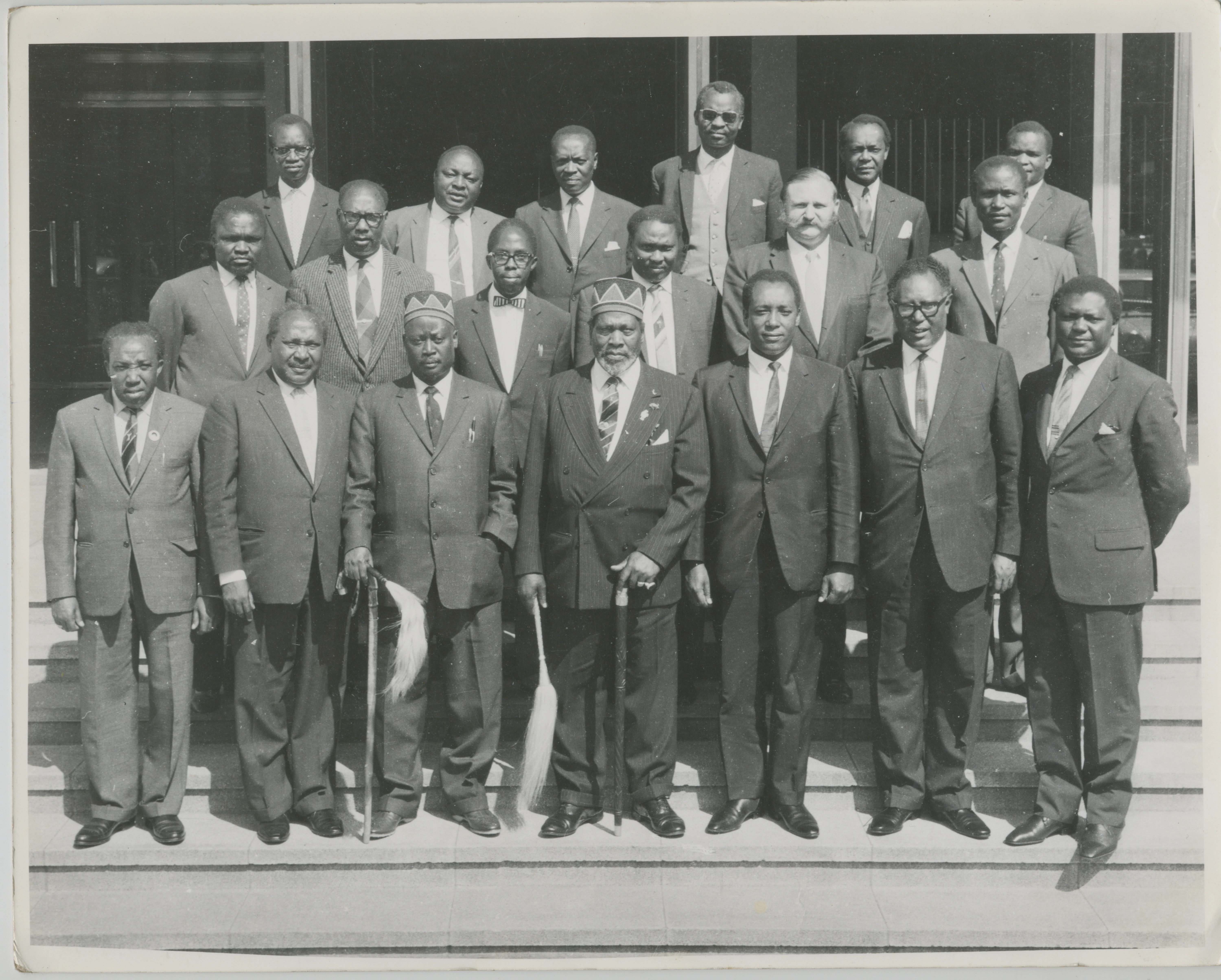
President Jomo Kenyatta First Cabinet of the Republic of Kenya group photo in 1964
President Jomo Kenyatta First Cabinet of the Republic of Kenya group photo in 1964
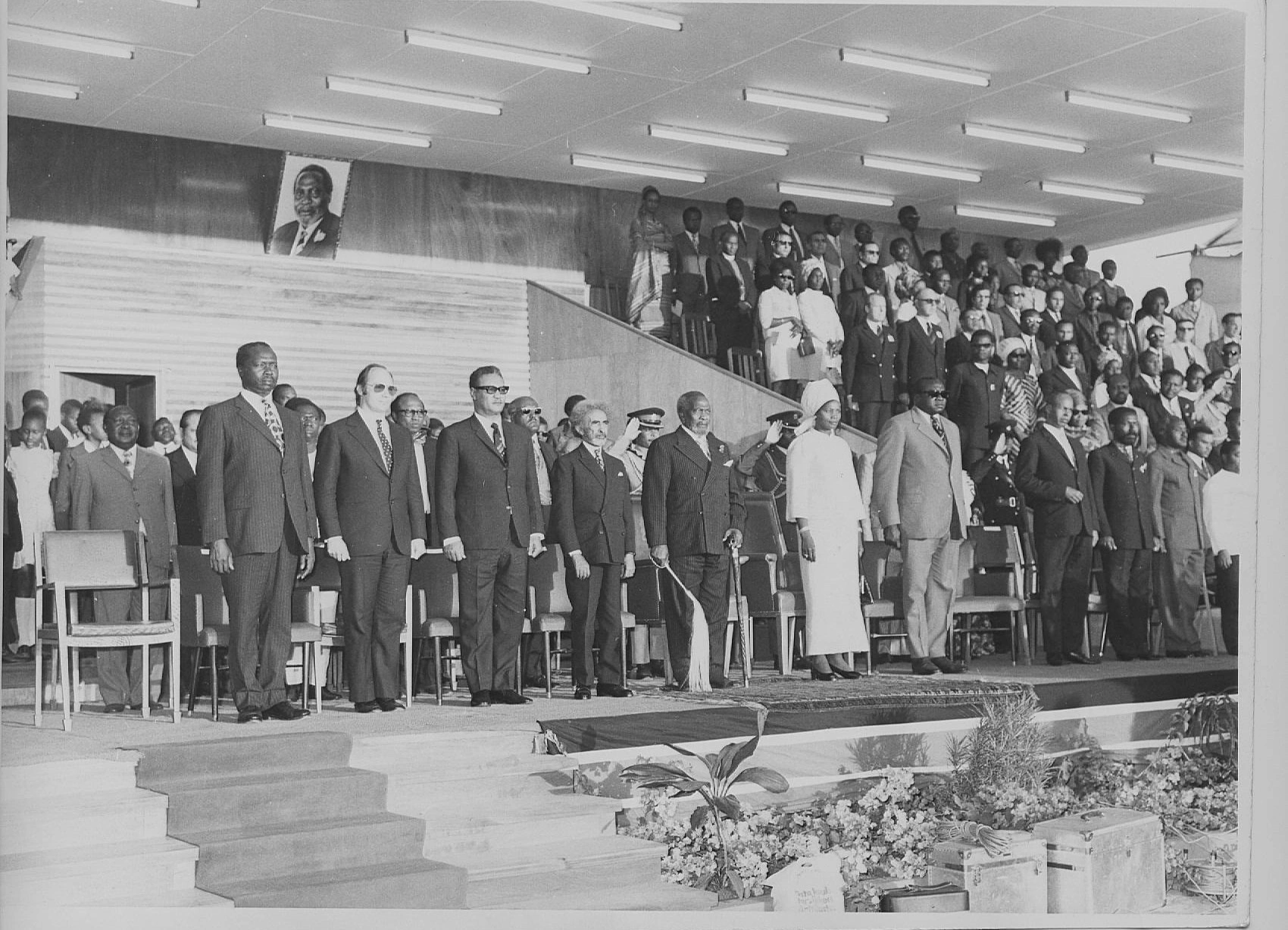
President Jomo Kenyatta hosting his guests at the Uhuru Memorial Site Langata on Kenya's 20th anniversary of Independence_12.12.1973
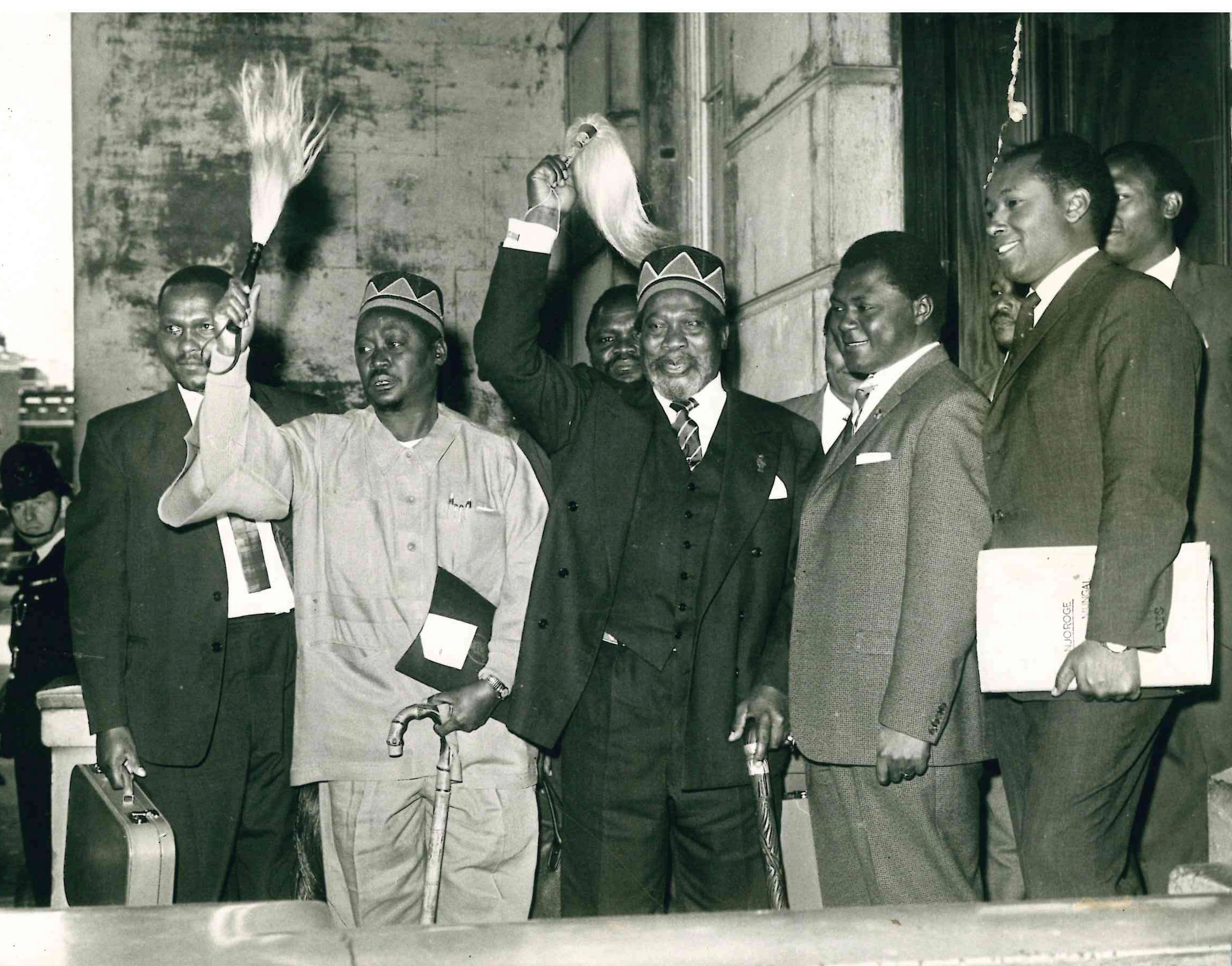
Jomo kenyatta Jaramogi Oginga Odinga Paul Ngei Thomas Joseph Mboya and Njoroge Mungai in Nairobi_September 1963
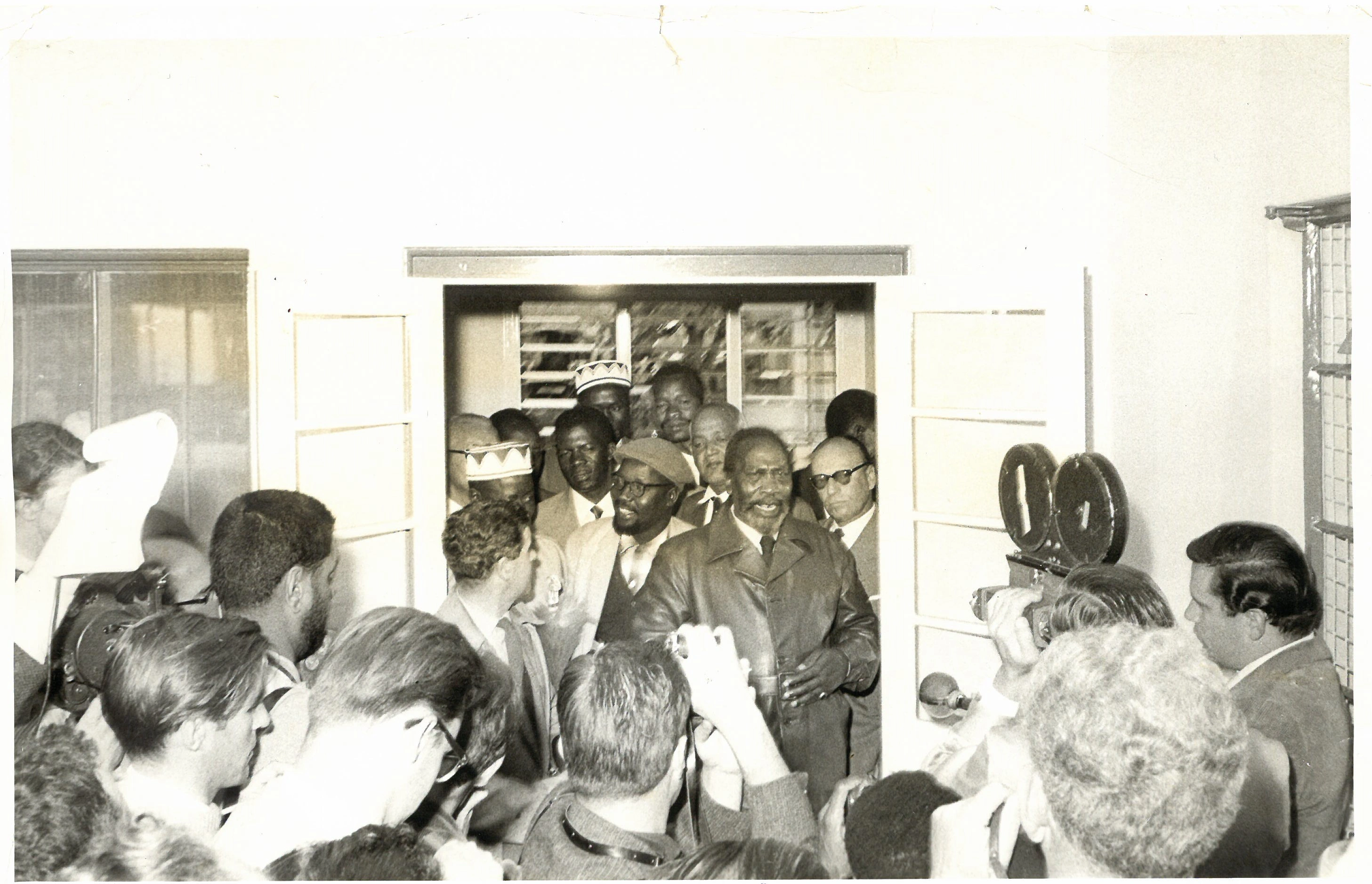
Jomo Kenyatta addressing the Press at his Gatundu Home after release from Maralal Prison_21.8.1961
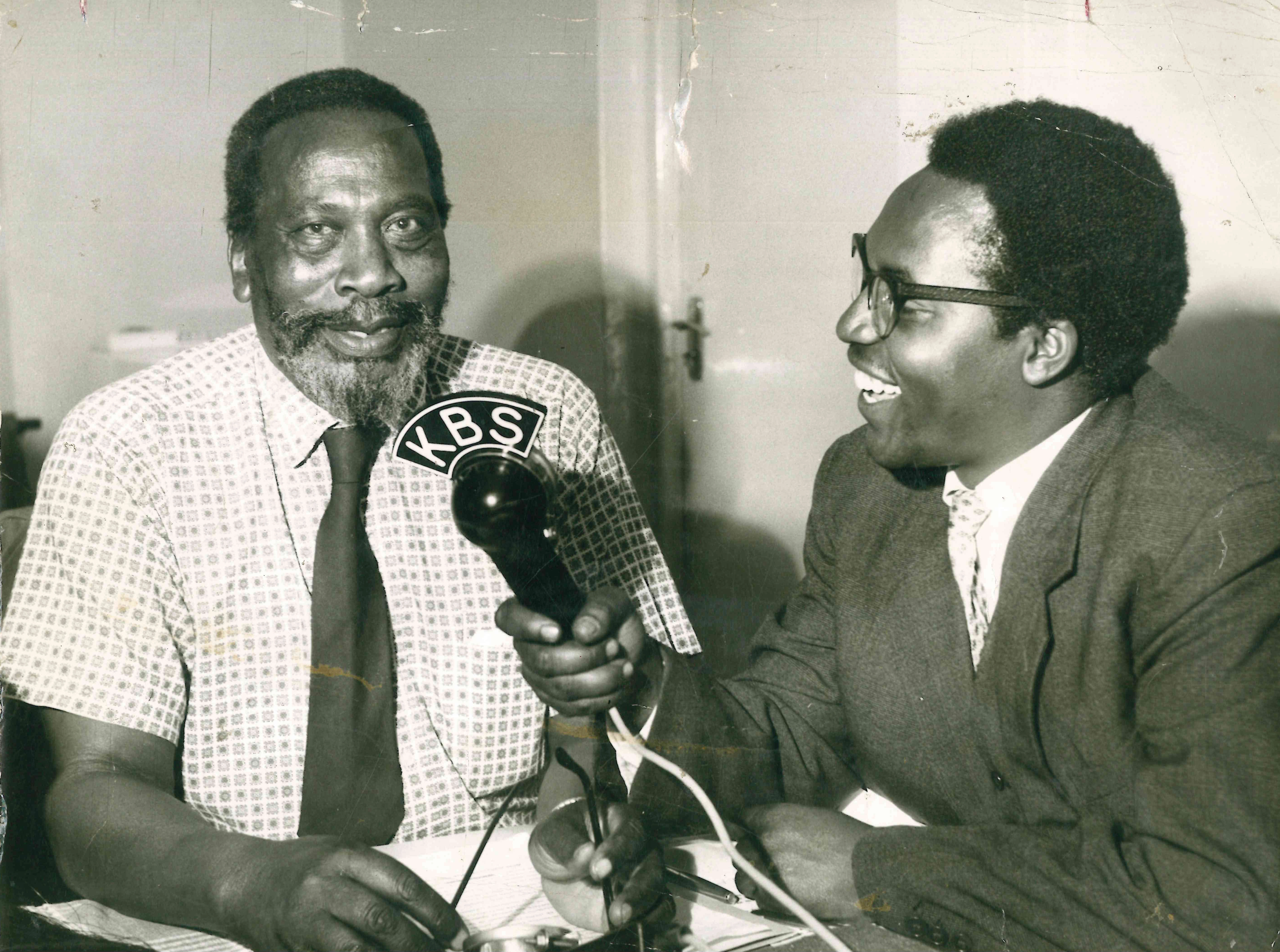
Jomo Kenyatta in detention interviewed in Maralal by Mr Stephen Kikumu a Producer on the African National Service of K.B.S Records_1961
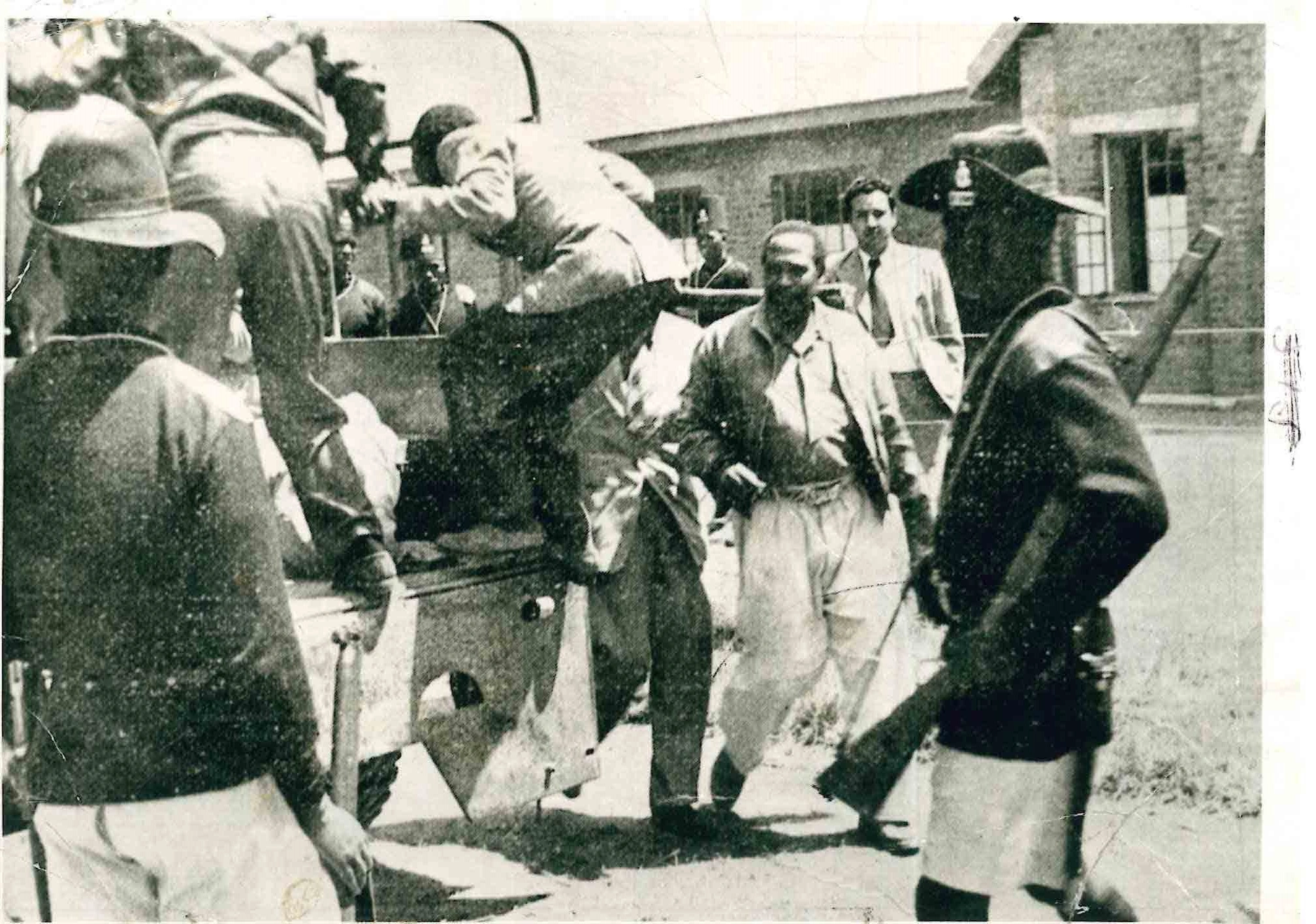
Jomo Kenyatta arrested during the Mau Mau uprising by the British colonial government_20.10.1952
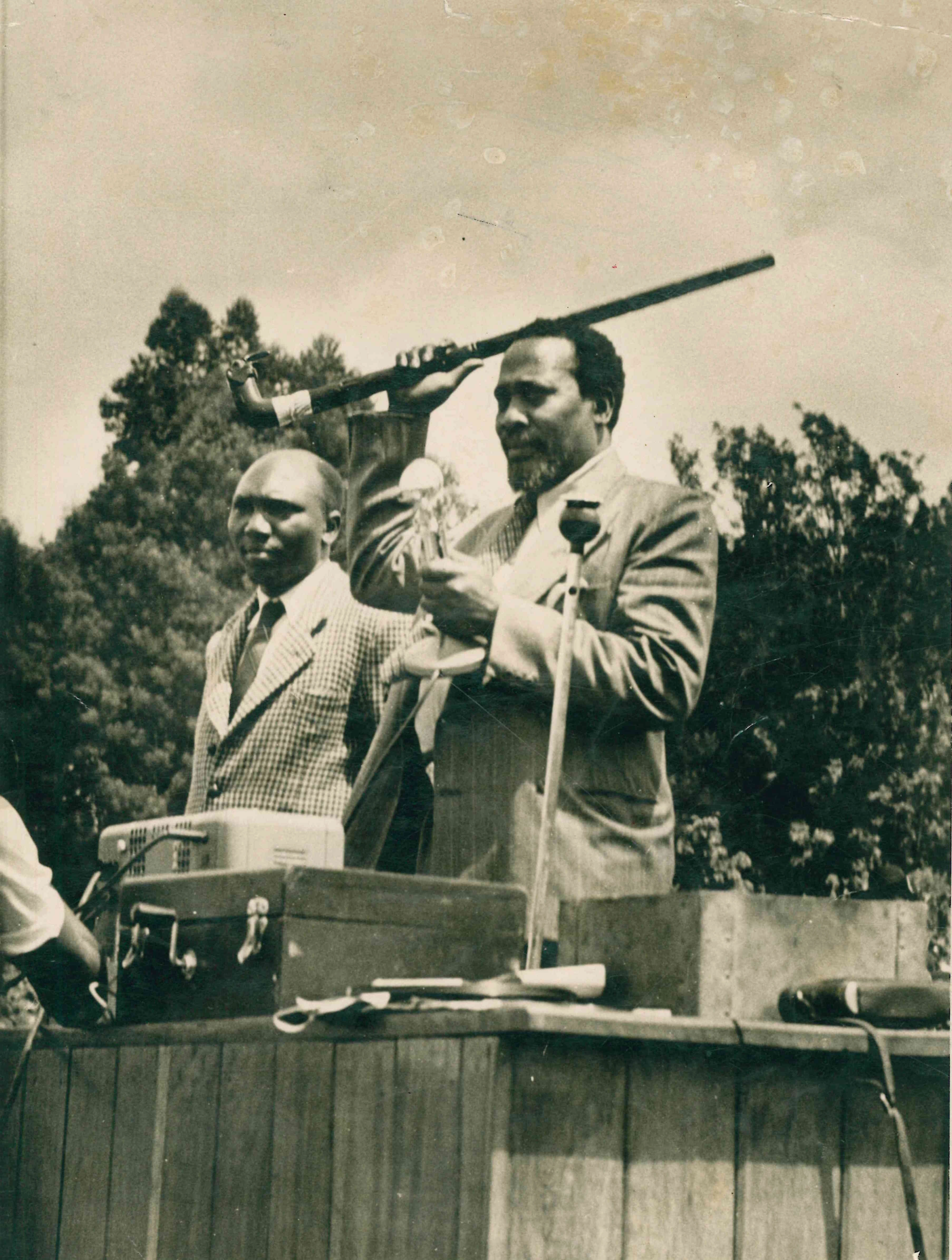
Jomo Kenyatta last public rally before he was arrested and imprisoned by the colonialists_20.10.1952
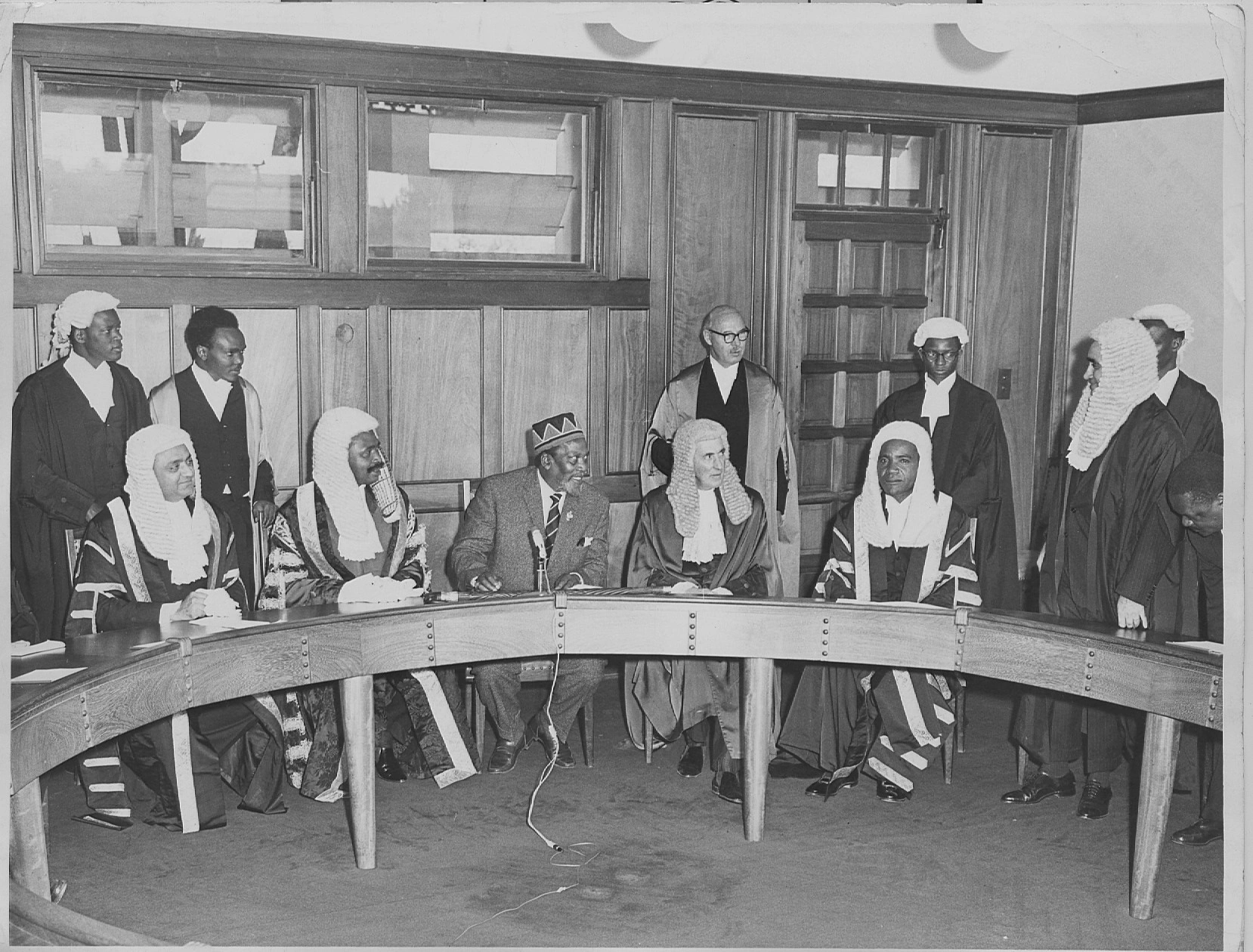
Prime Minister Jomo Kenyatta in a meeting with Parliament Speakers and Clerks at a conference in Nairobi_13.8.1964
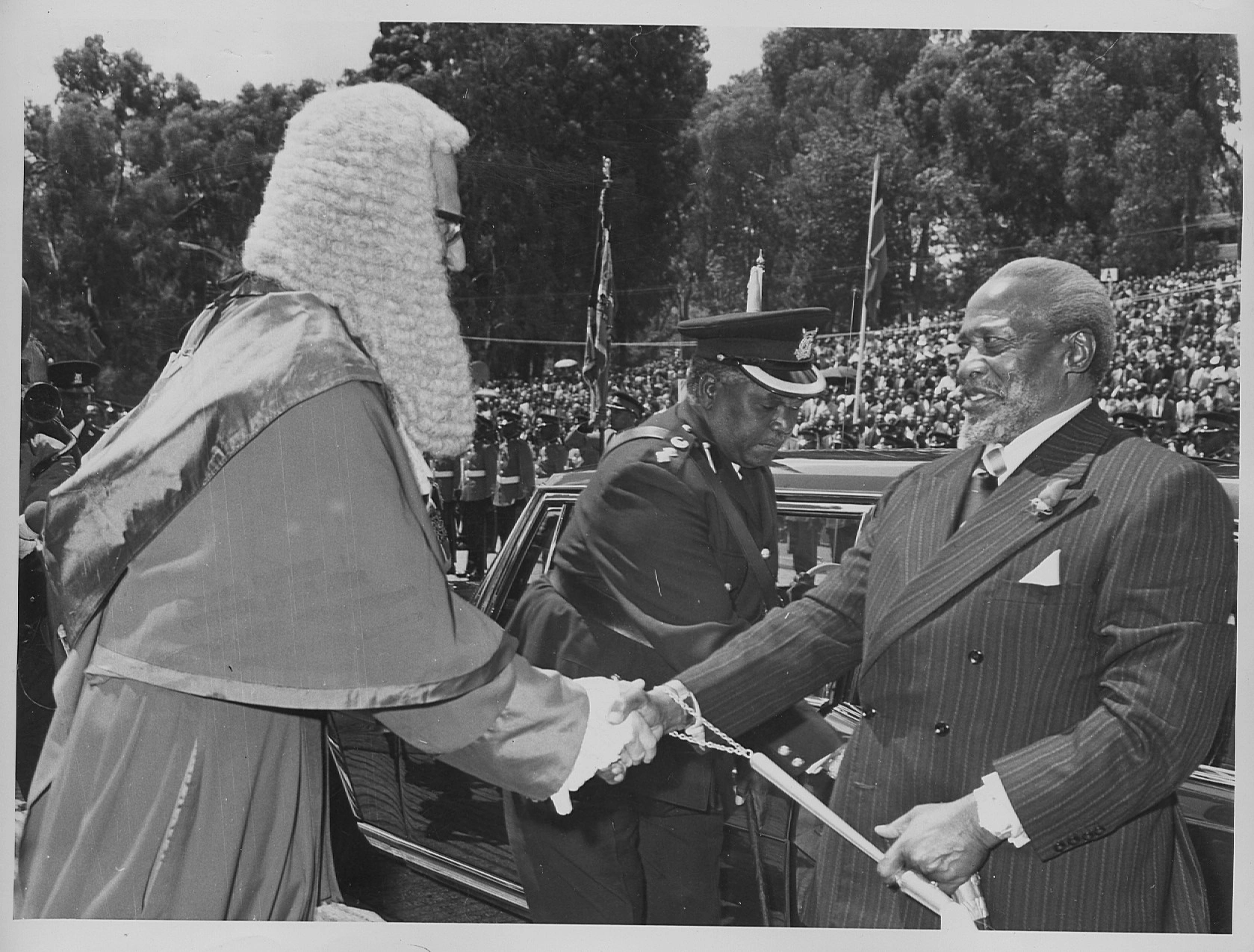
President Jomo Kenyatta arriving for the Public swearing in ceremony for his new cabinet at Uhuru Park in Nairobi_5.11.1974
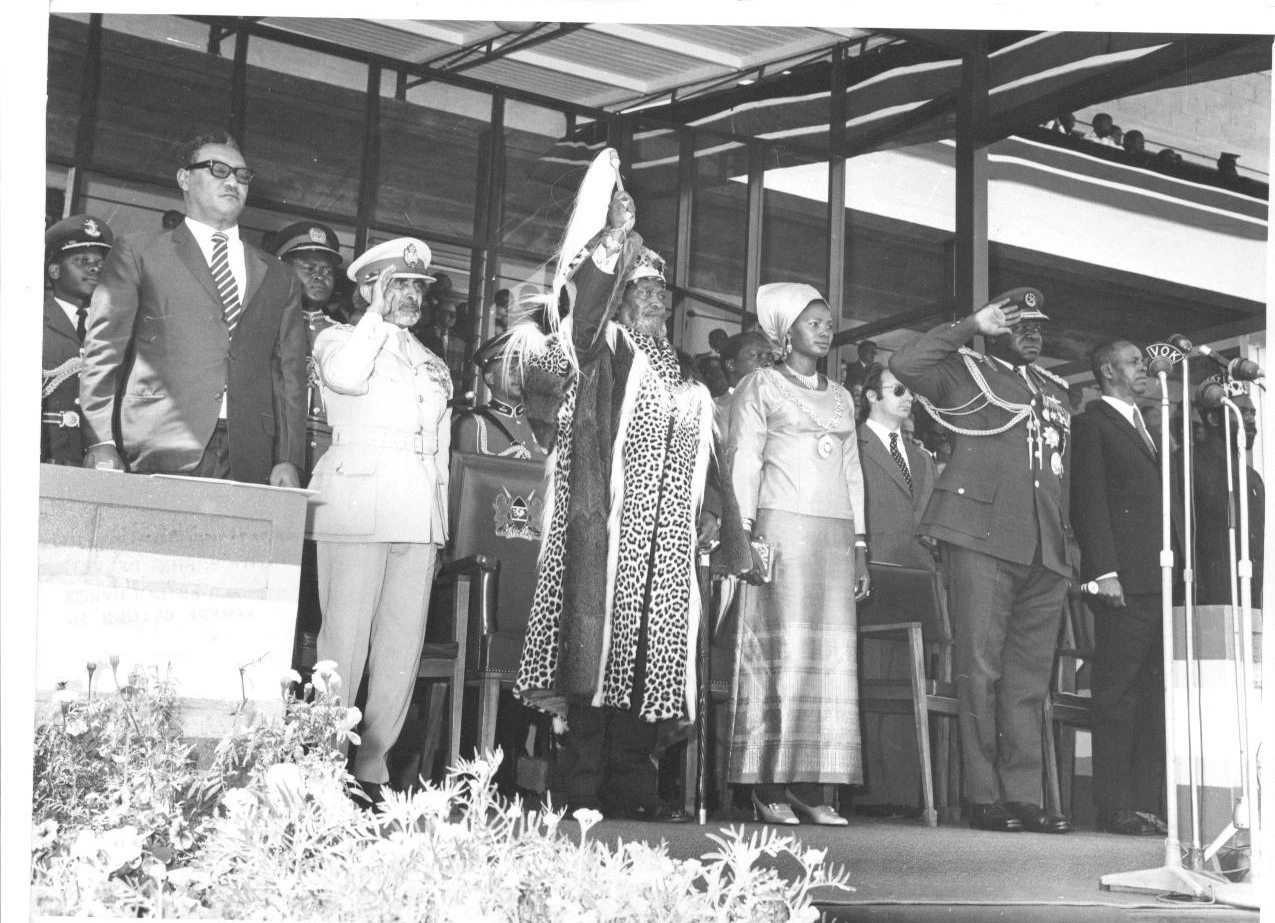
President Jomo Kenyatta with Uganda President Idi Amin and Ethiopia Emperor Haile Selassie at Jamhuri Park during Independence day celebrations_12.12.1972
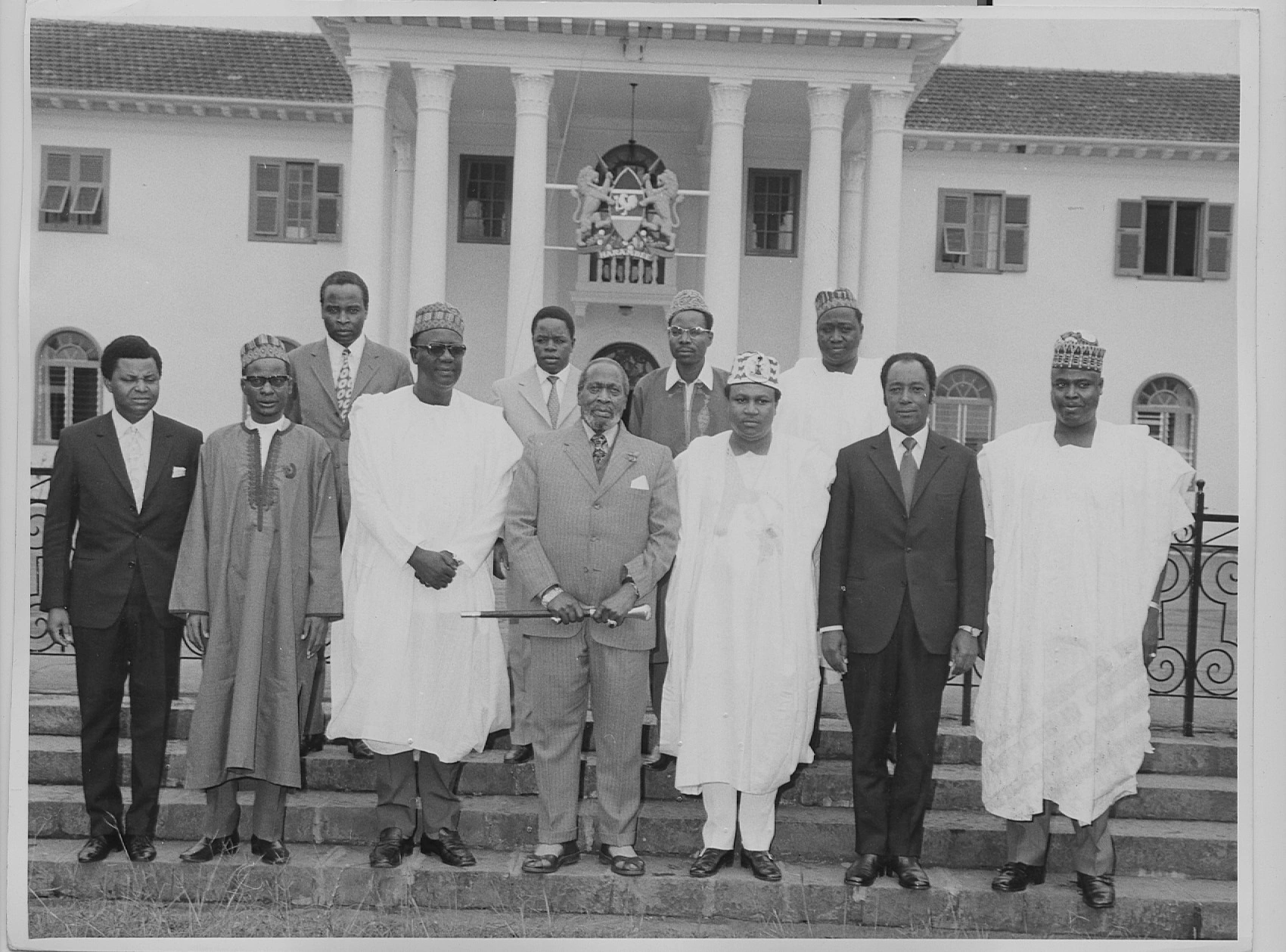
President Jomo Kenyatta hosting a Nigeria Government delegation at State House Nairobi_22.07.1972
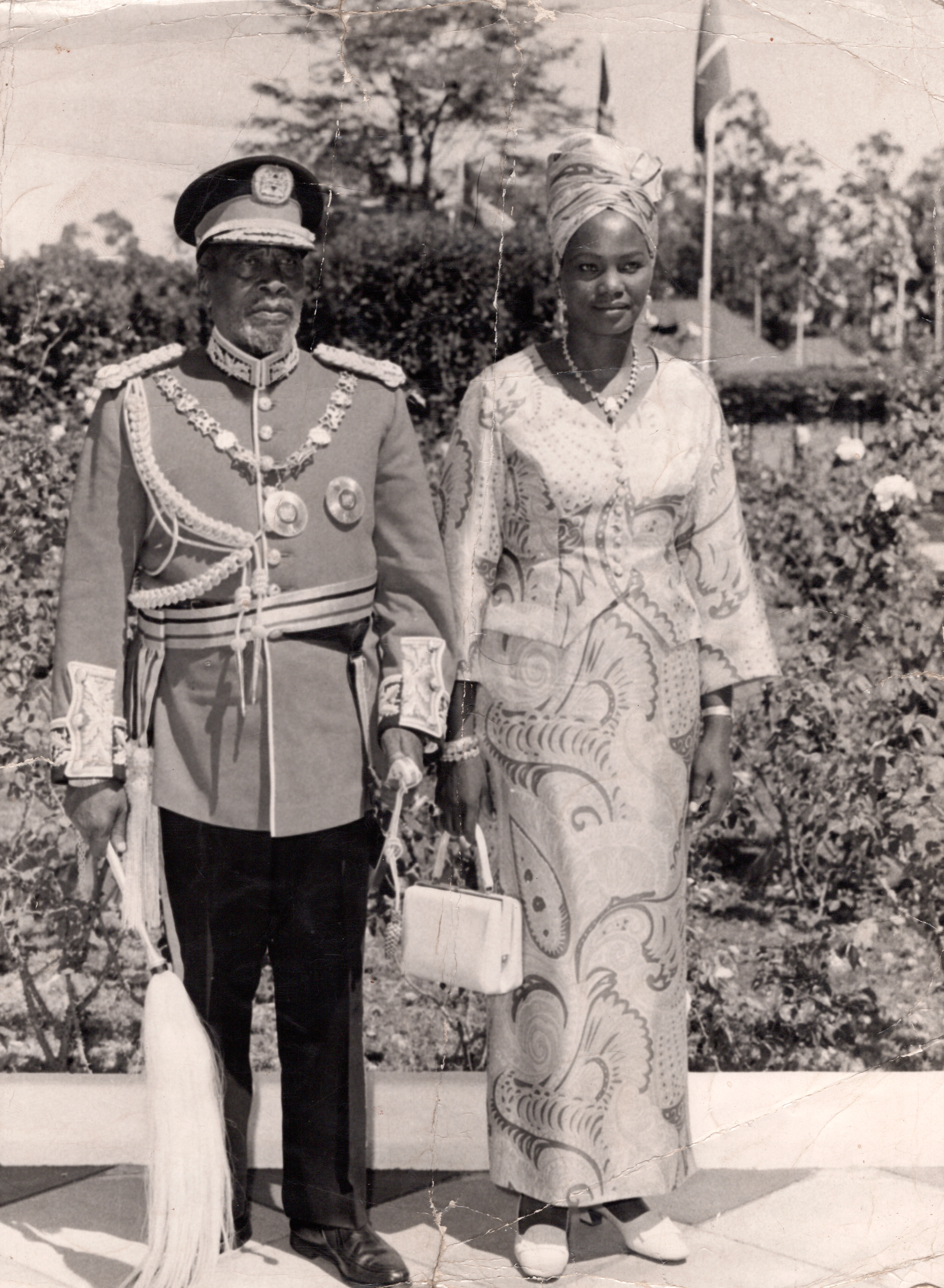
President Jomo Kenyatta in Ceremonial Military Uniform accompanied by First Lady Mama Ngina Kenyatta on the way to Uhuru Park for Jamhuri Day Celebrations_12.12.1971
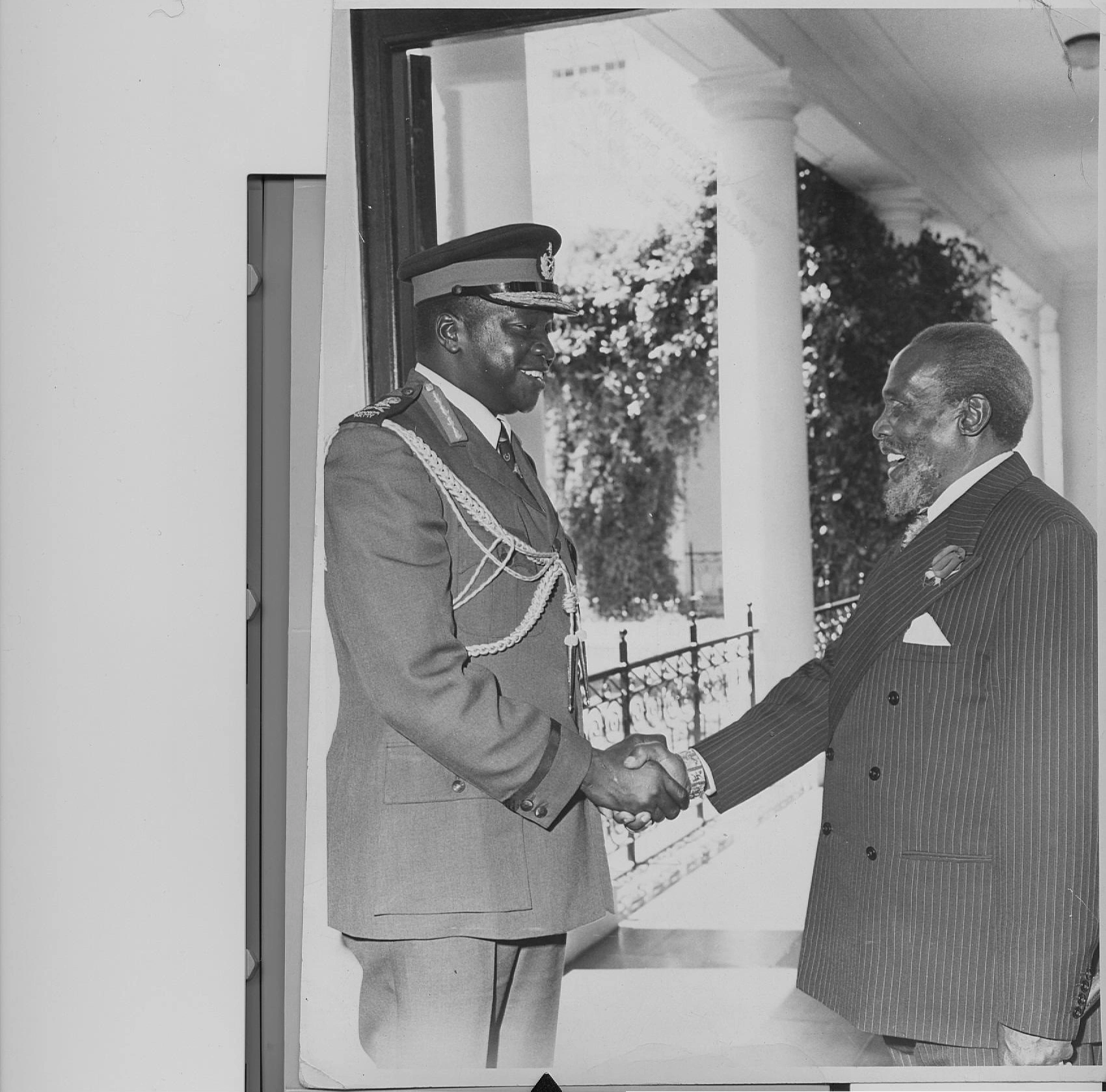
President Jomo Kenyatta welcoming Uganda President Idi Amin at State House in Nairobi_19.11.1971
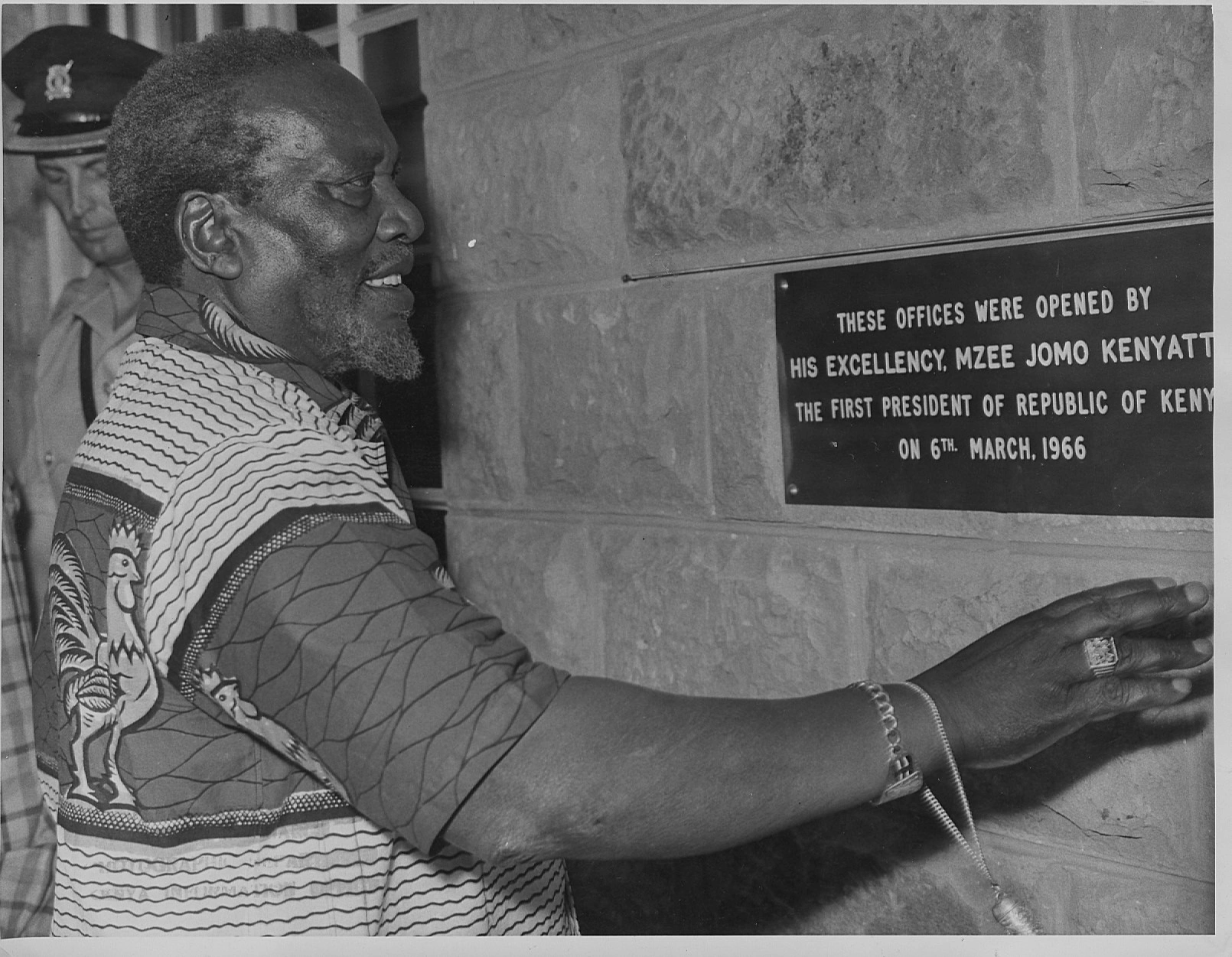
President Jomo Kenyatta pictured admiring a plaque during Official Opening of Government Offices in Kirinyaga_6.3.1966
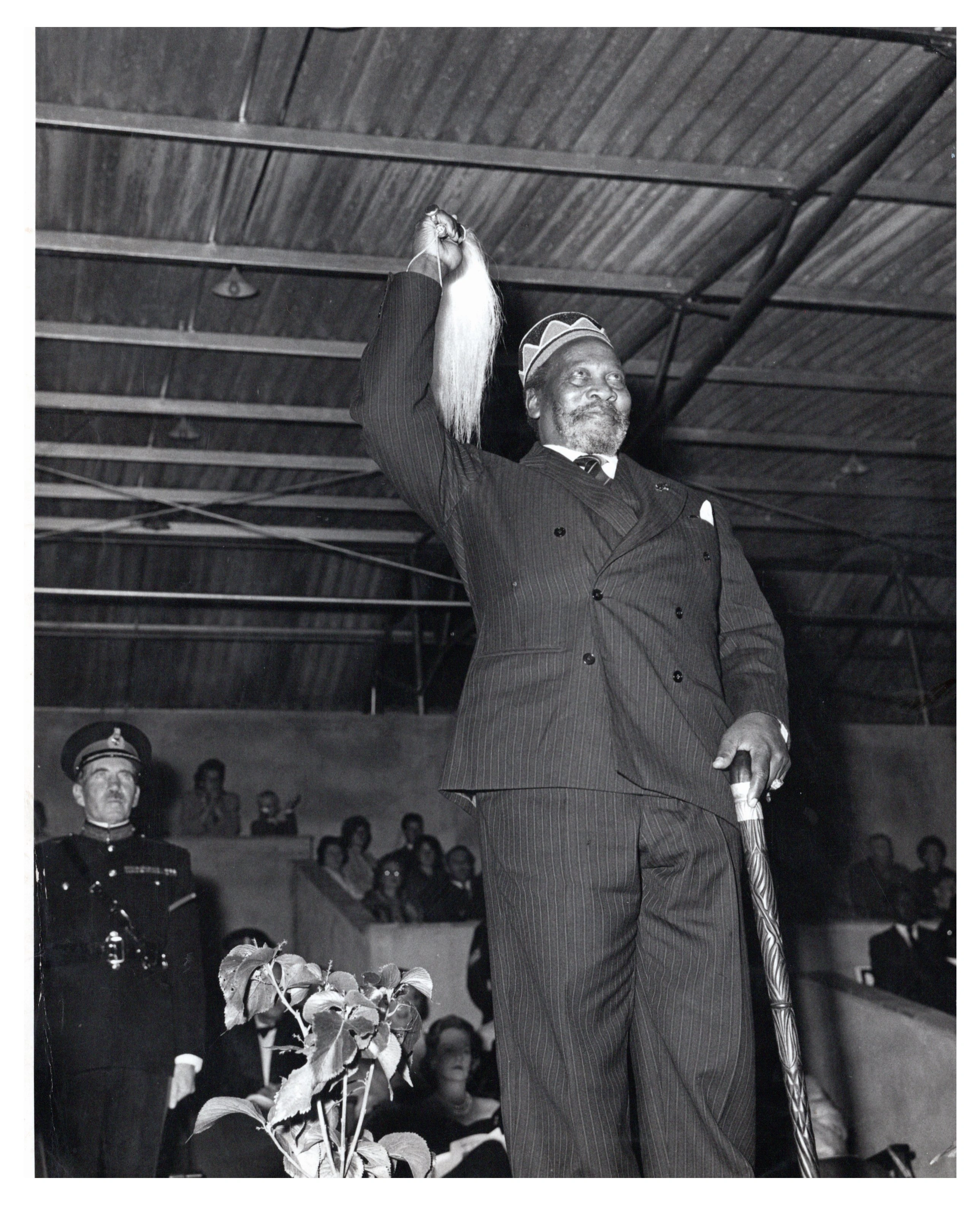
Prime Minister Mzee Jomo Kenyatta taking salute at a military tatoo event held at Mitchel Park in Nairobi_15.8.1963
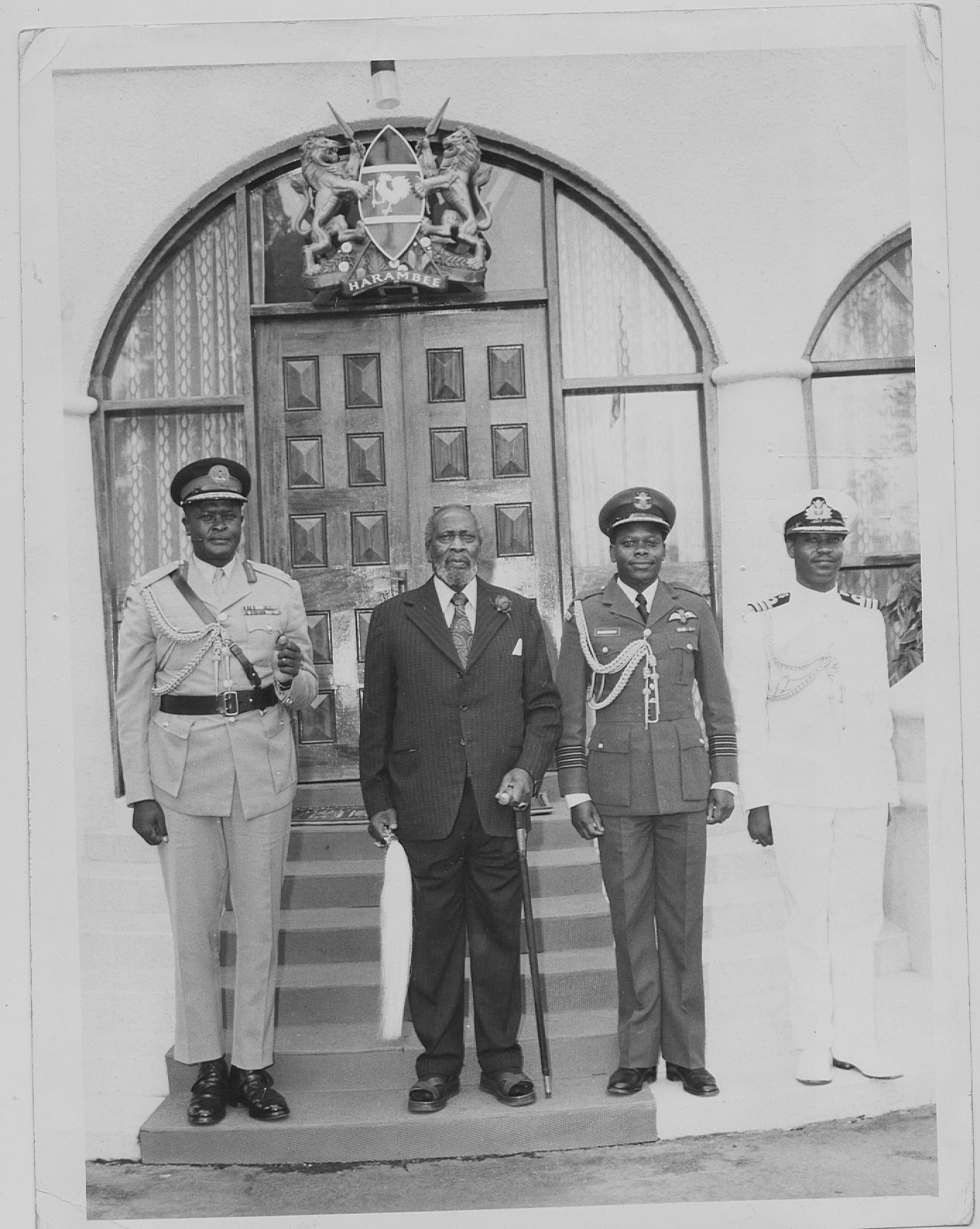
President Jomo Kenyatta with Kenya Army Commanders at State House Nakuru_7.4.1978
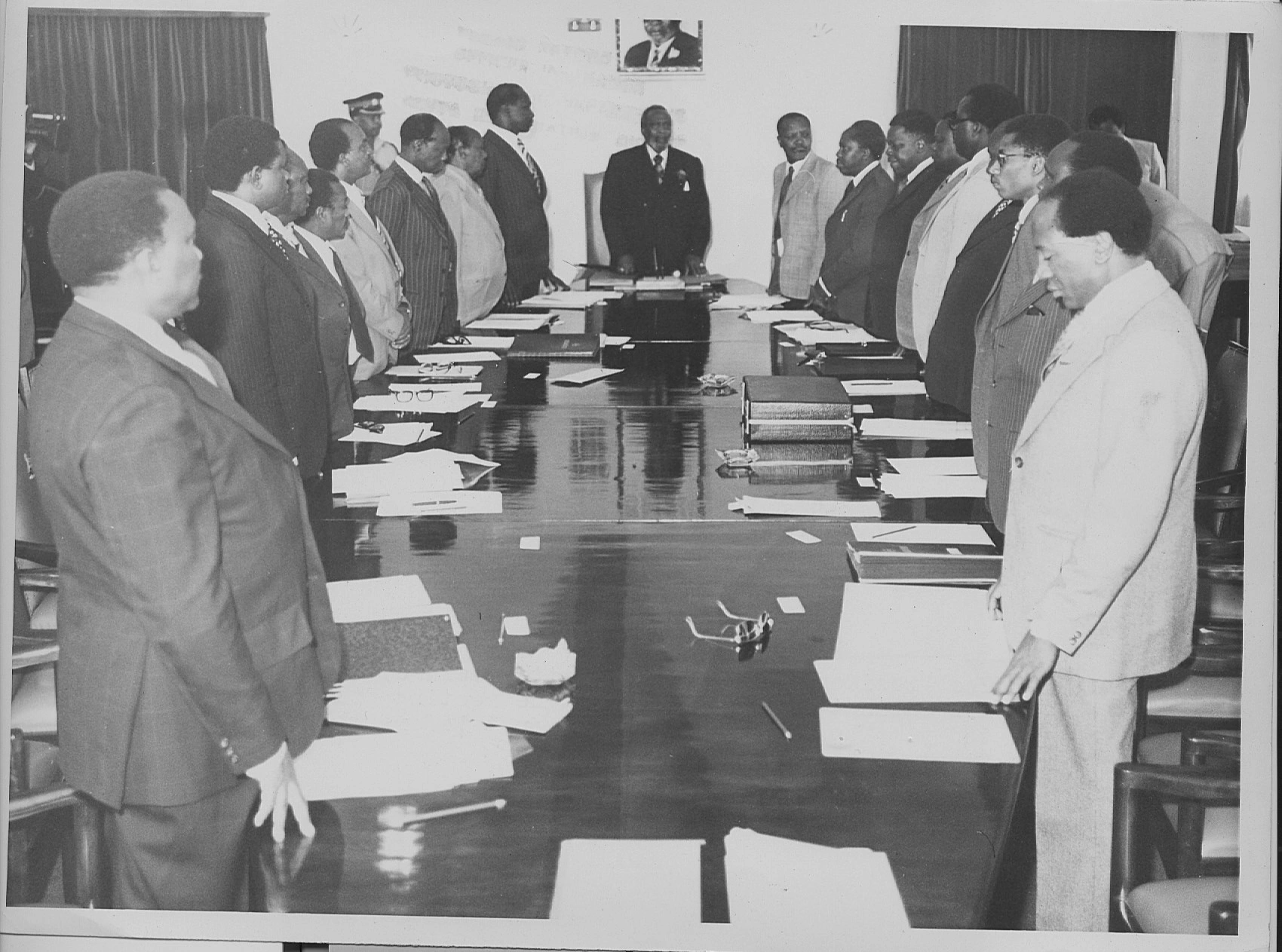
President Jomo Kenyatta chairing a Cabinet Meeting at State House Nairobi 20.9.1976
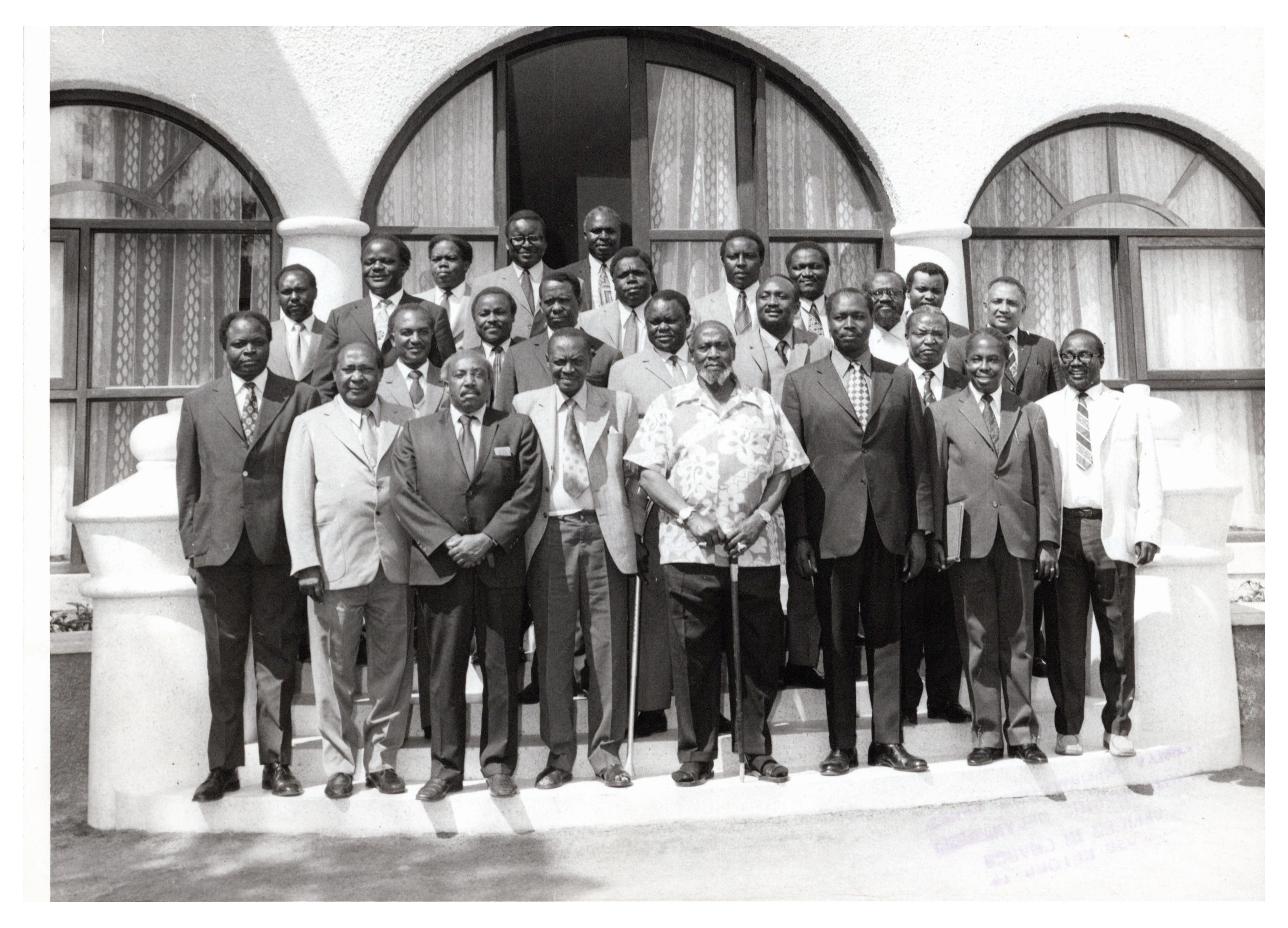
President Jomo Kenyatta and Members of the Cabinet after a meeting at State House Nakuru 18.12.1973
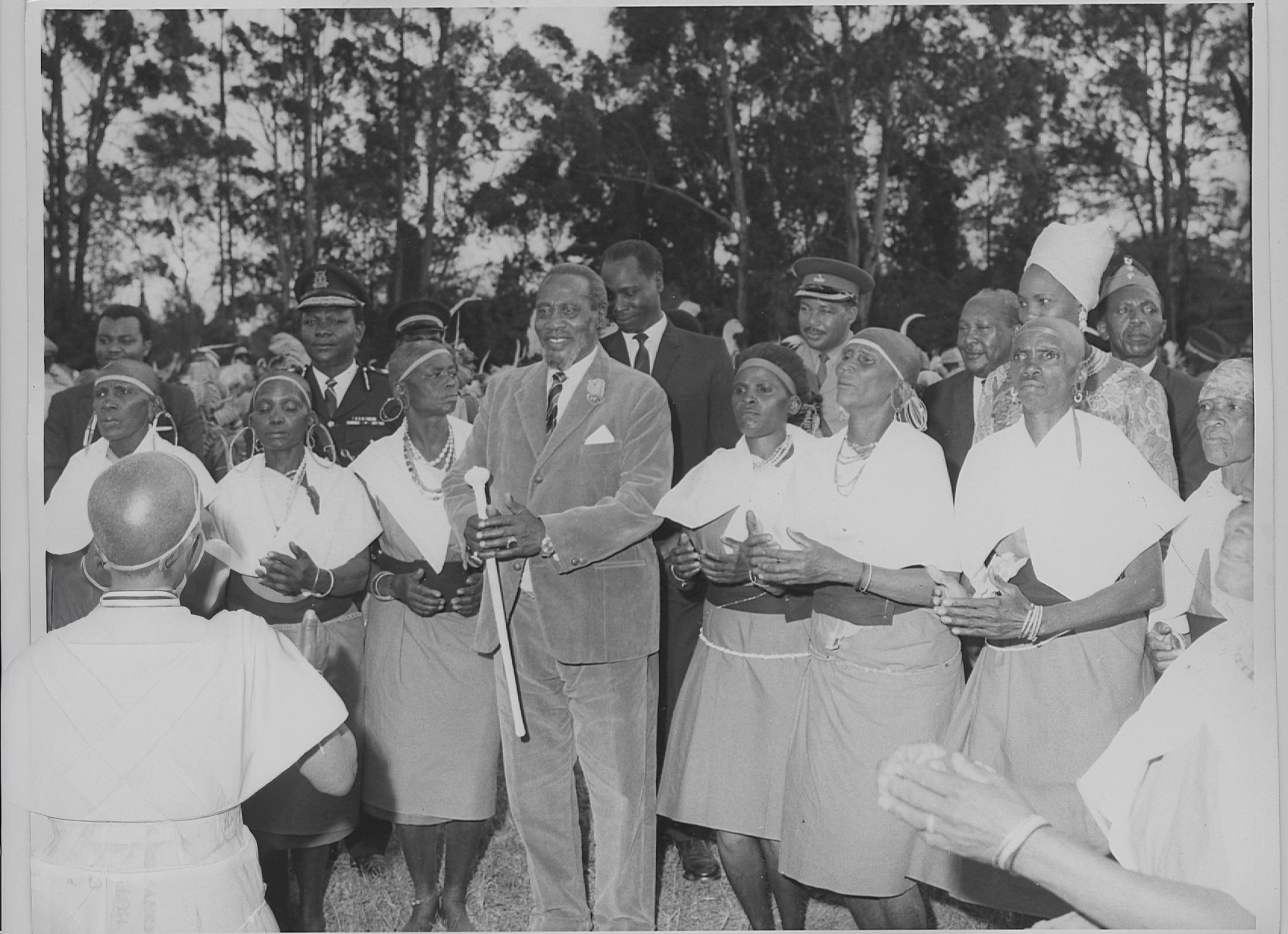
President Jomo Kenyatta being entertained by traditional dancers at State House Nairobi_20.10.1973
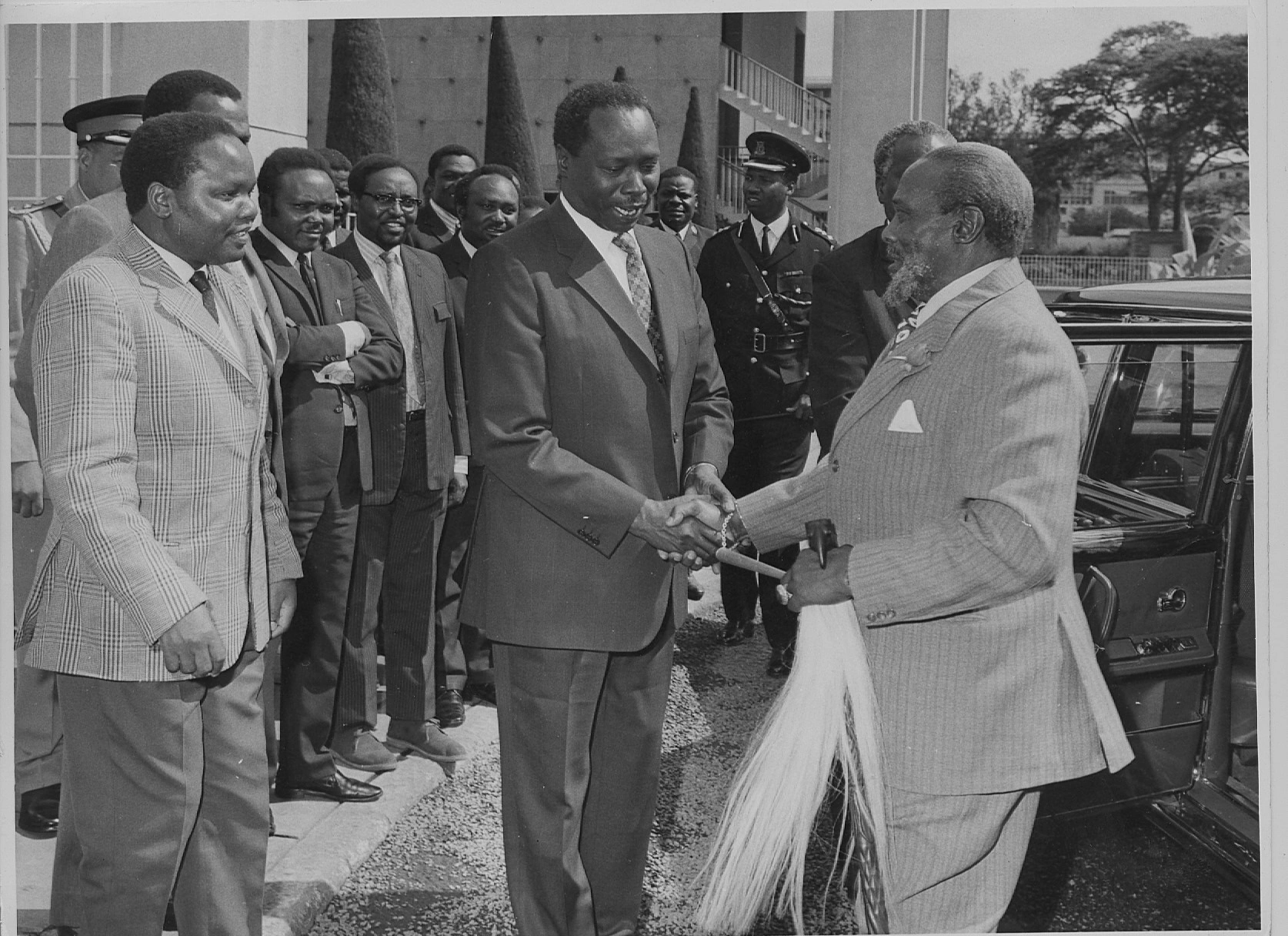
President Jomo Kenyatta with Vice President Daniel Arap Moi at Parliament Buildings Nairobi_13.6.1972
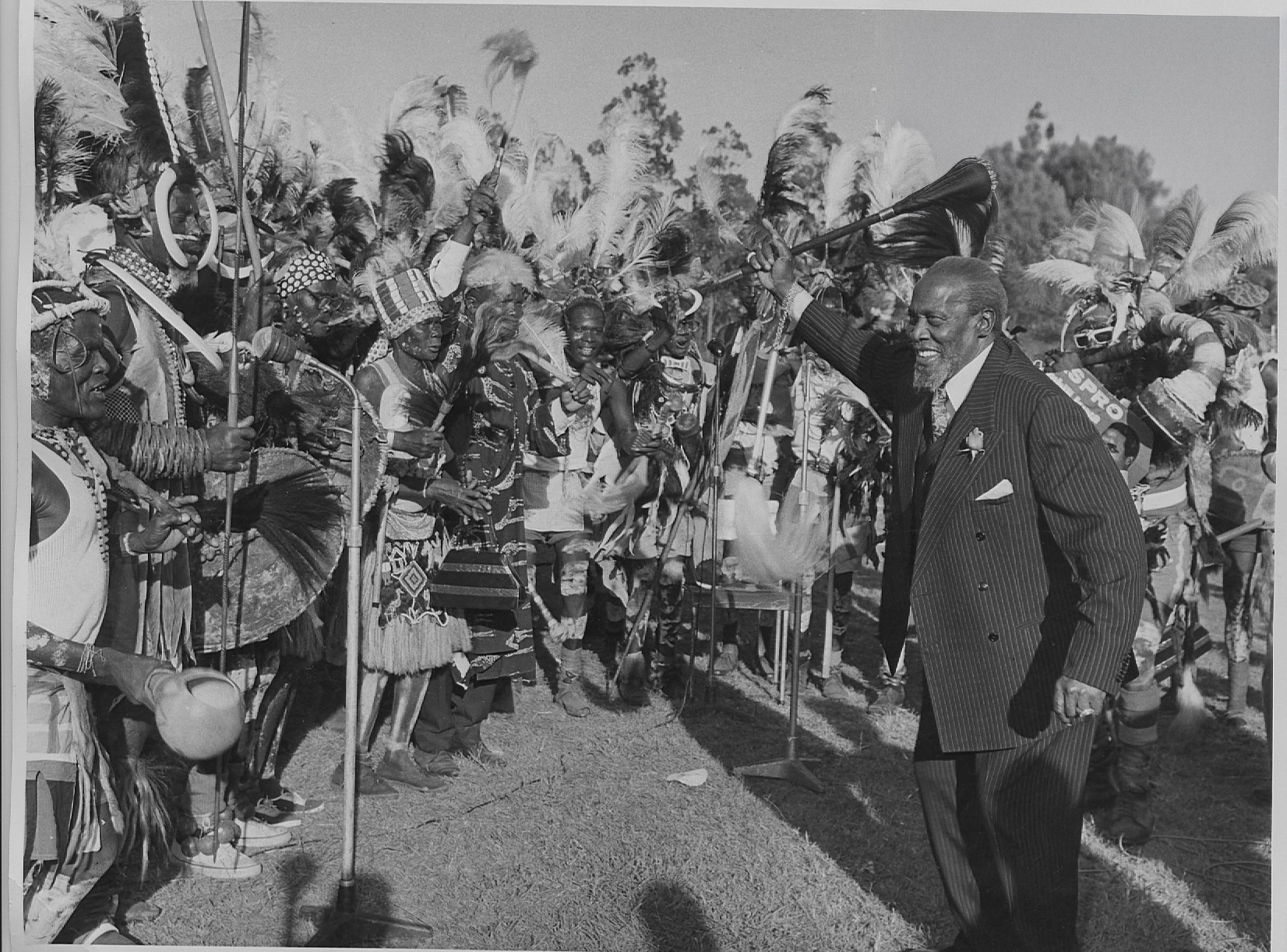
President Jomo Kenyatta being entertained by Luo traditional dancers during Jamhuri Day celebrations_12.12.1971
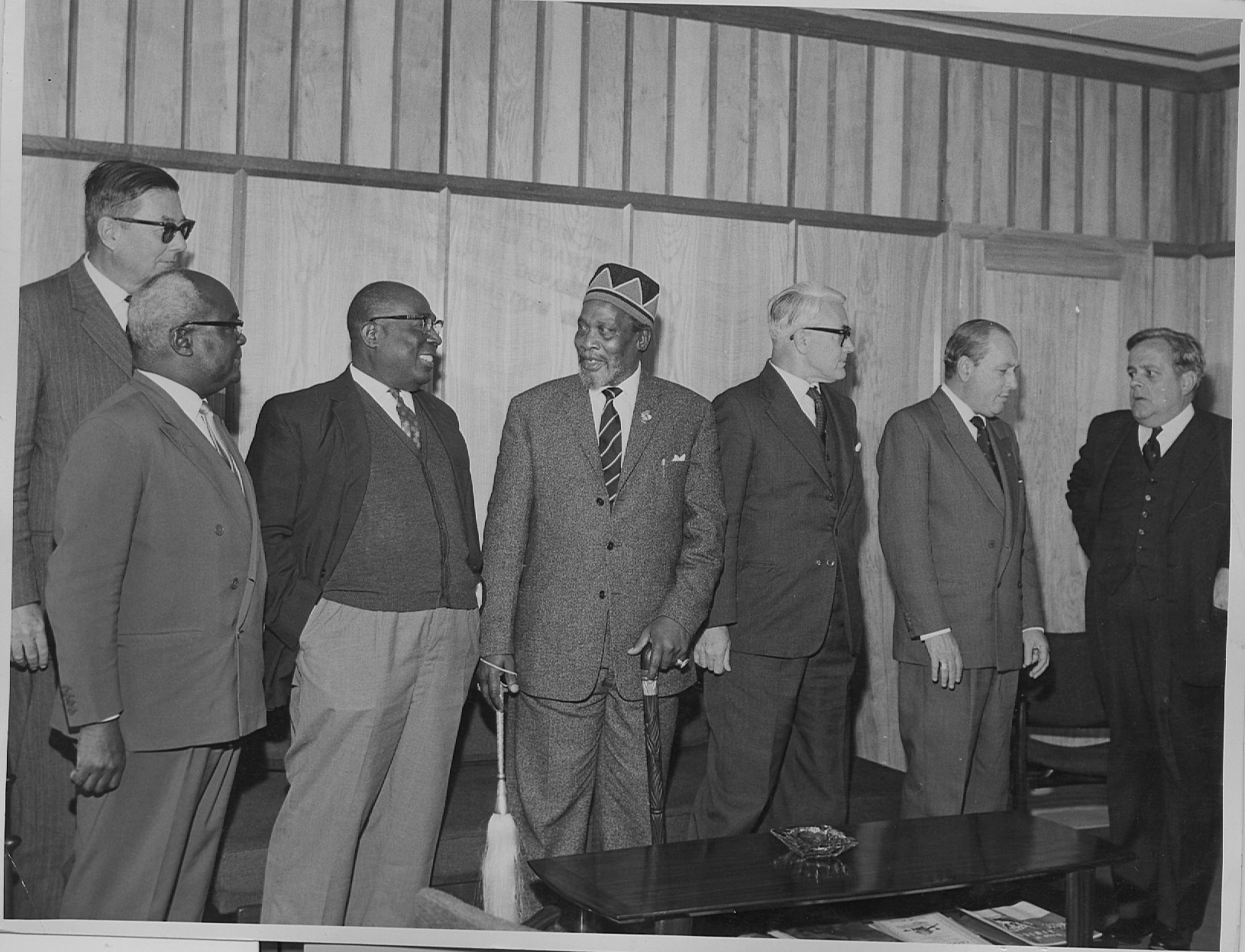
President Jomo Kenyatta meeting with Judges_13.8.1964
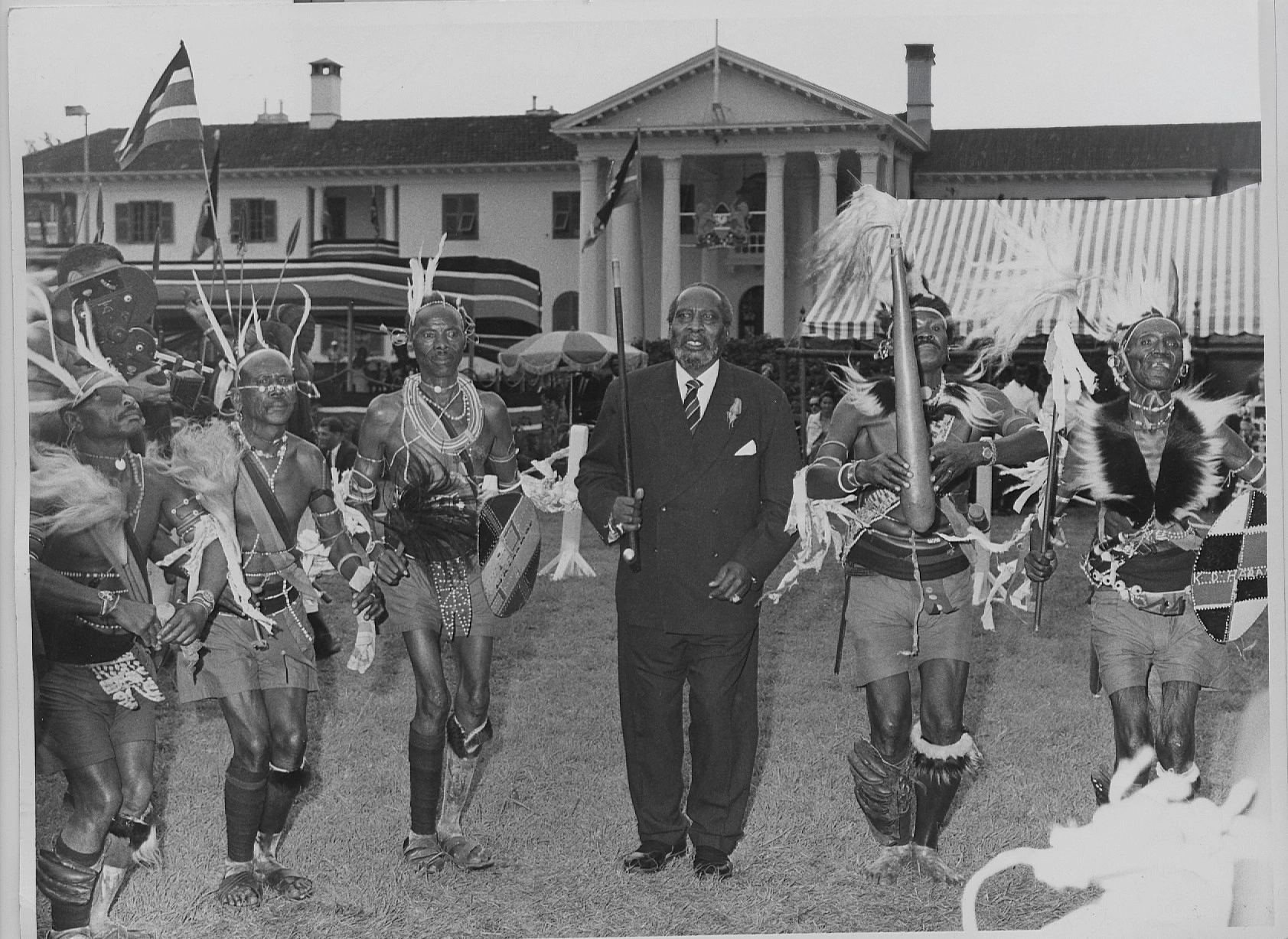
President Jomo Kenyatta being entertained by Kikuyu traditional dancers in 1970
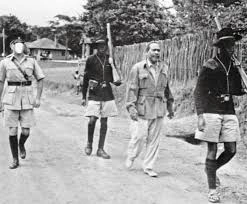
Jomo Kenyatta walking after he was released from detention in lodwar in 1961
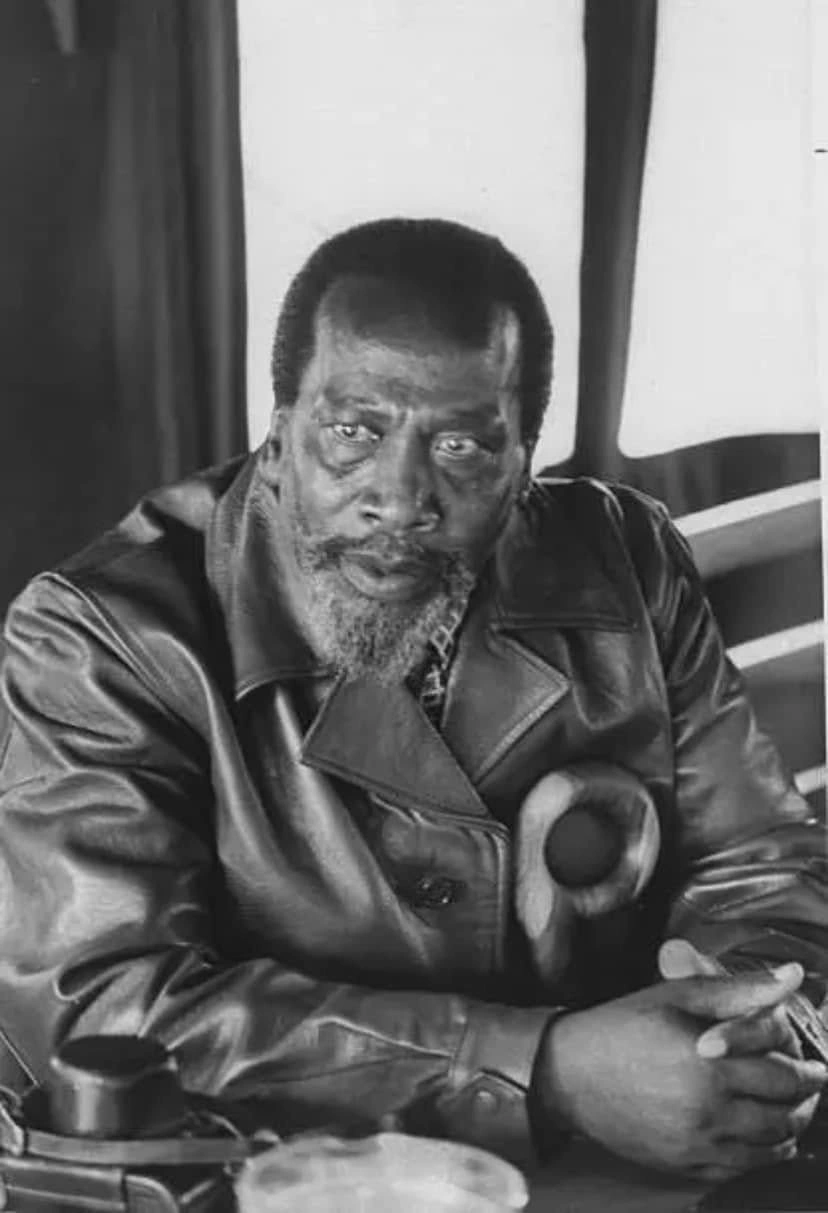
Jomo Kenyatta sitted pre Independence in 1961
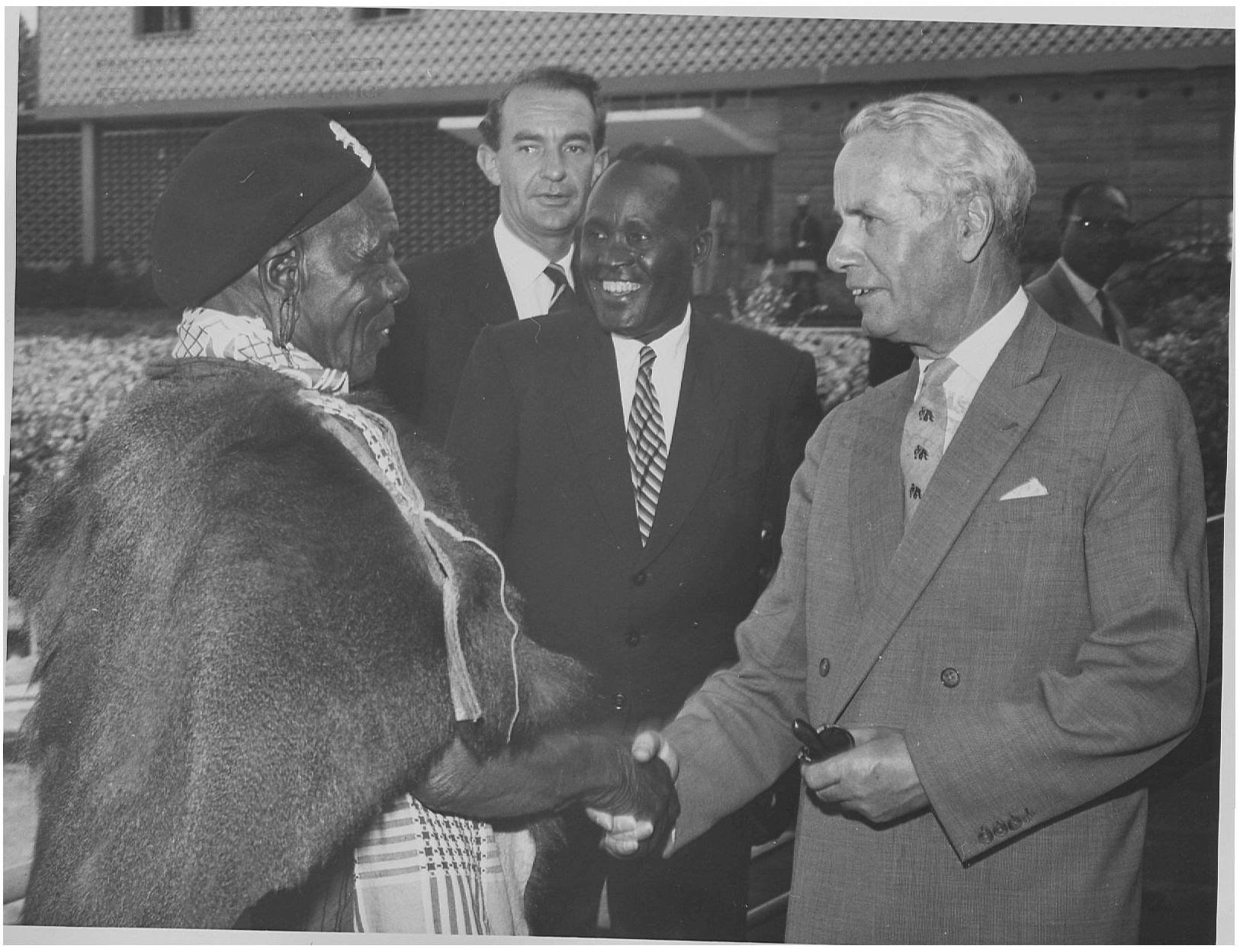
Governor of Kenya Sir Malcolm MacDonald pictured shaking hands with Njiri in Nyeri_1st Feb 1963
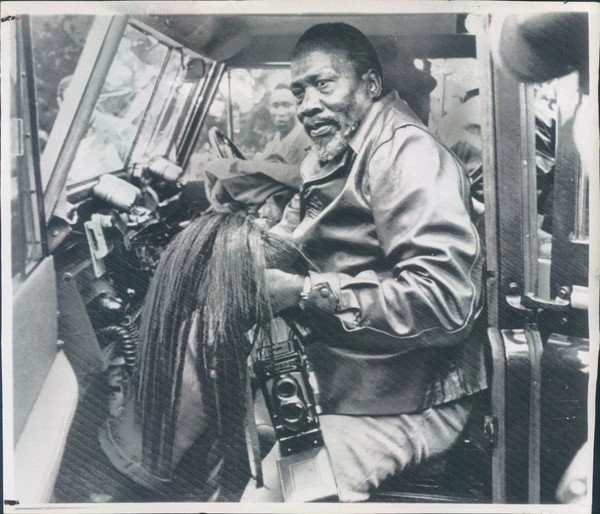
Jomo Kenyatta arrives in Gatundu after release from prison in 1961
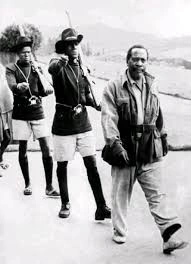
Jomo Kenyatta released from detention in lodwar in 1961
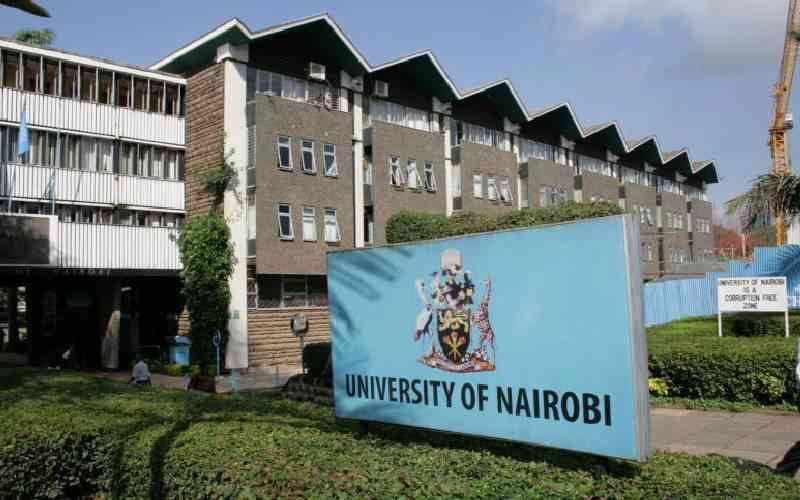
University of Nairobi
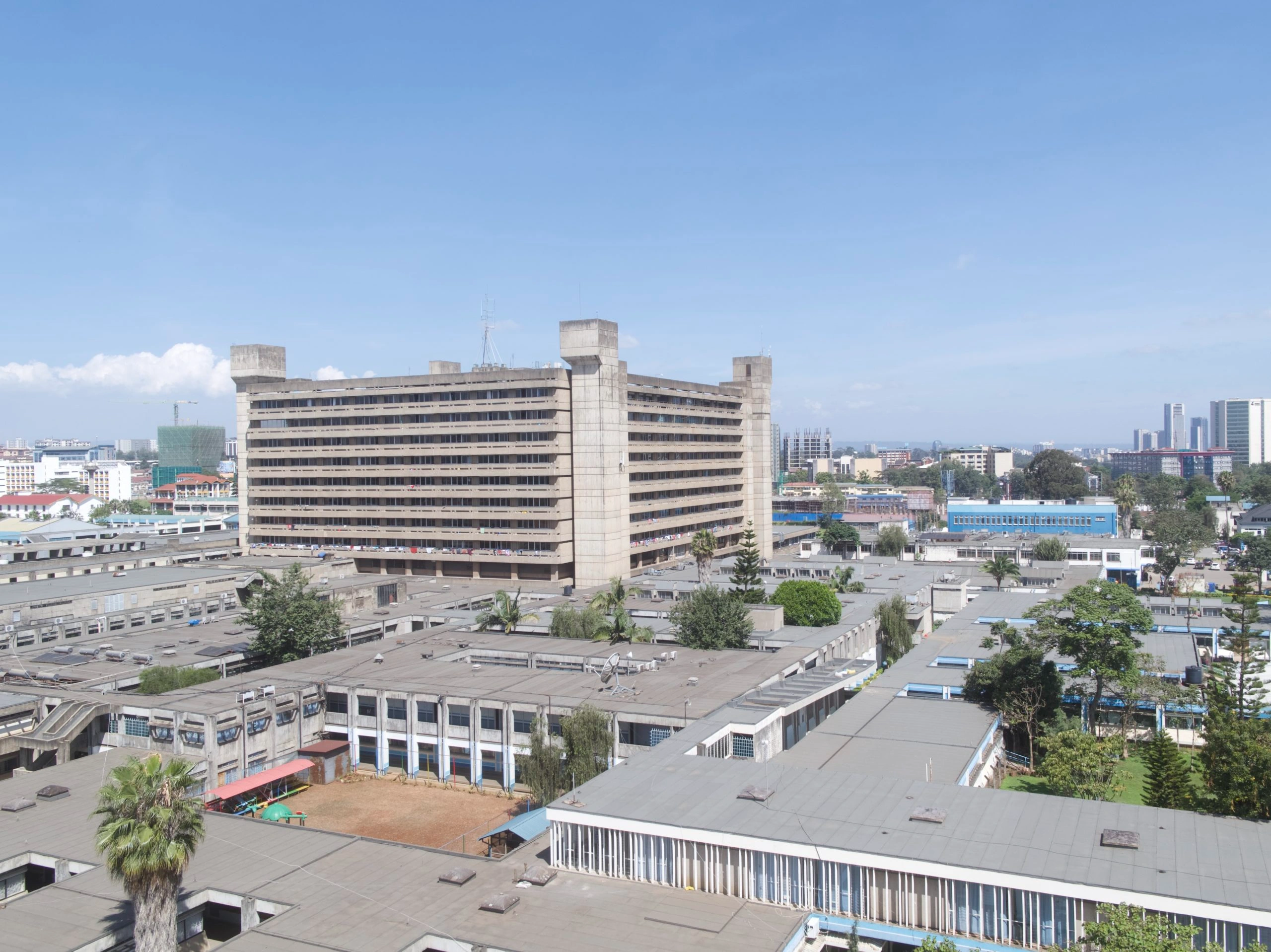
Kenyatta National Hospital
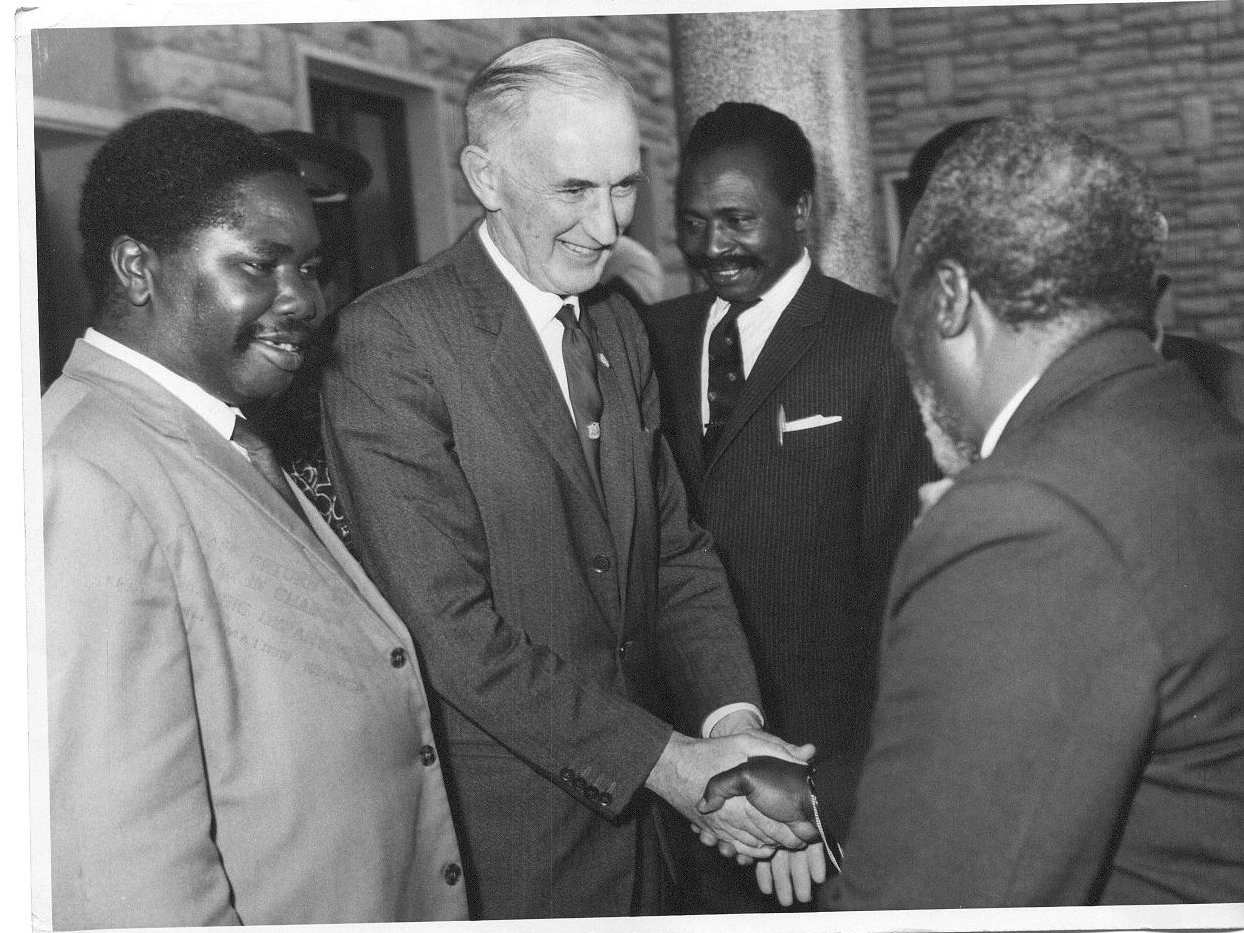
President Jomo Kenyatta pictured touring the new Parliament Buildings_4 Nov 1965.
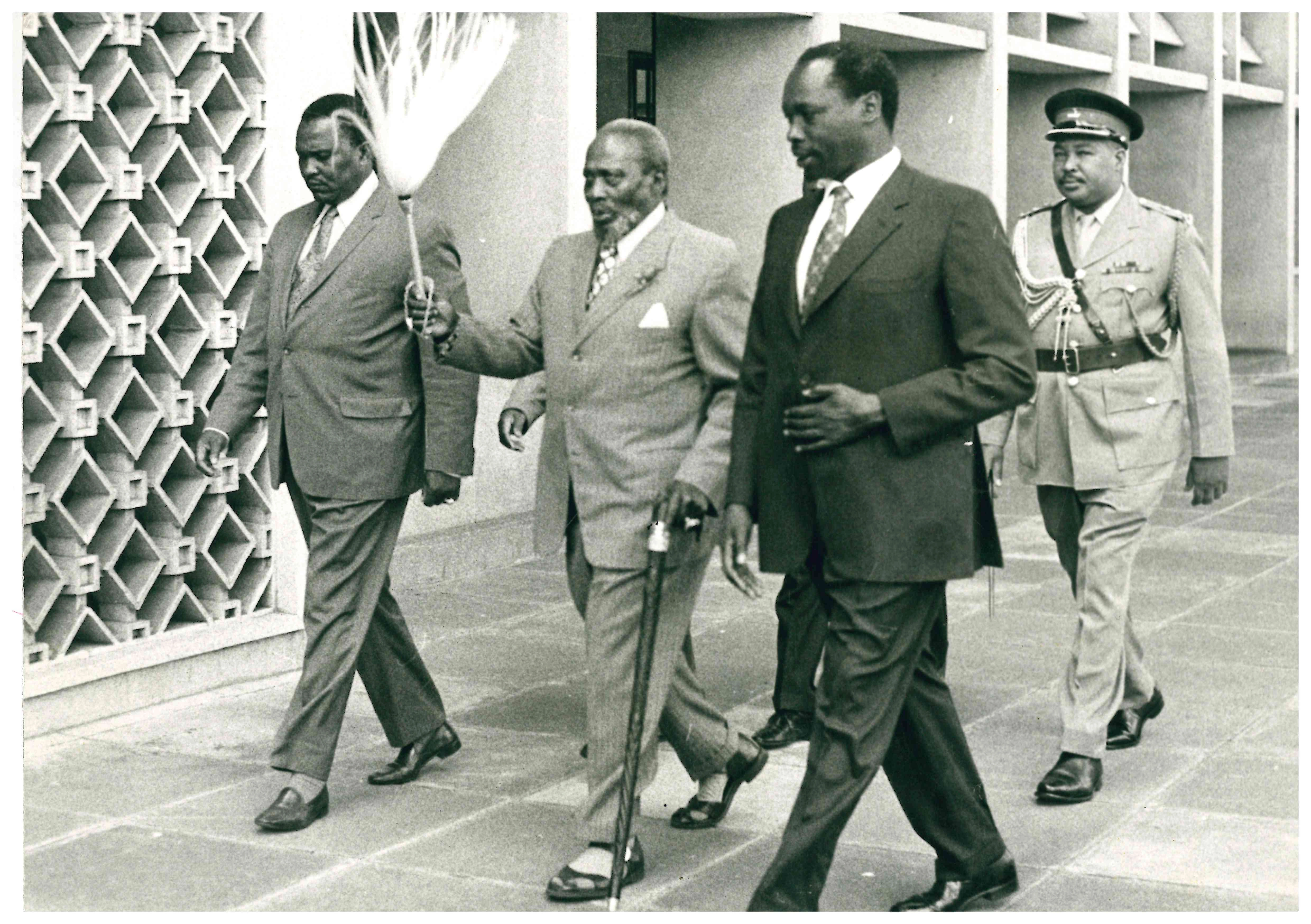
President Jomo Kenyatta walking alongside Vice President daniel Arap Moi in 1972
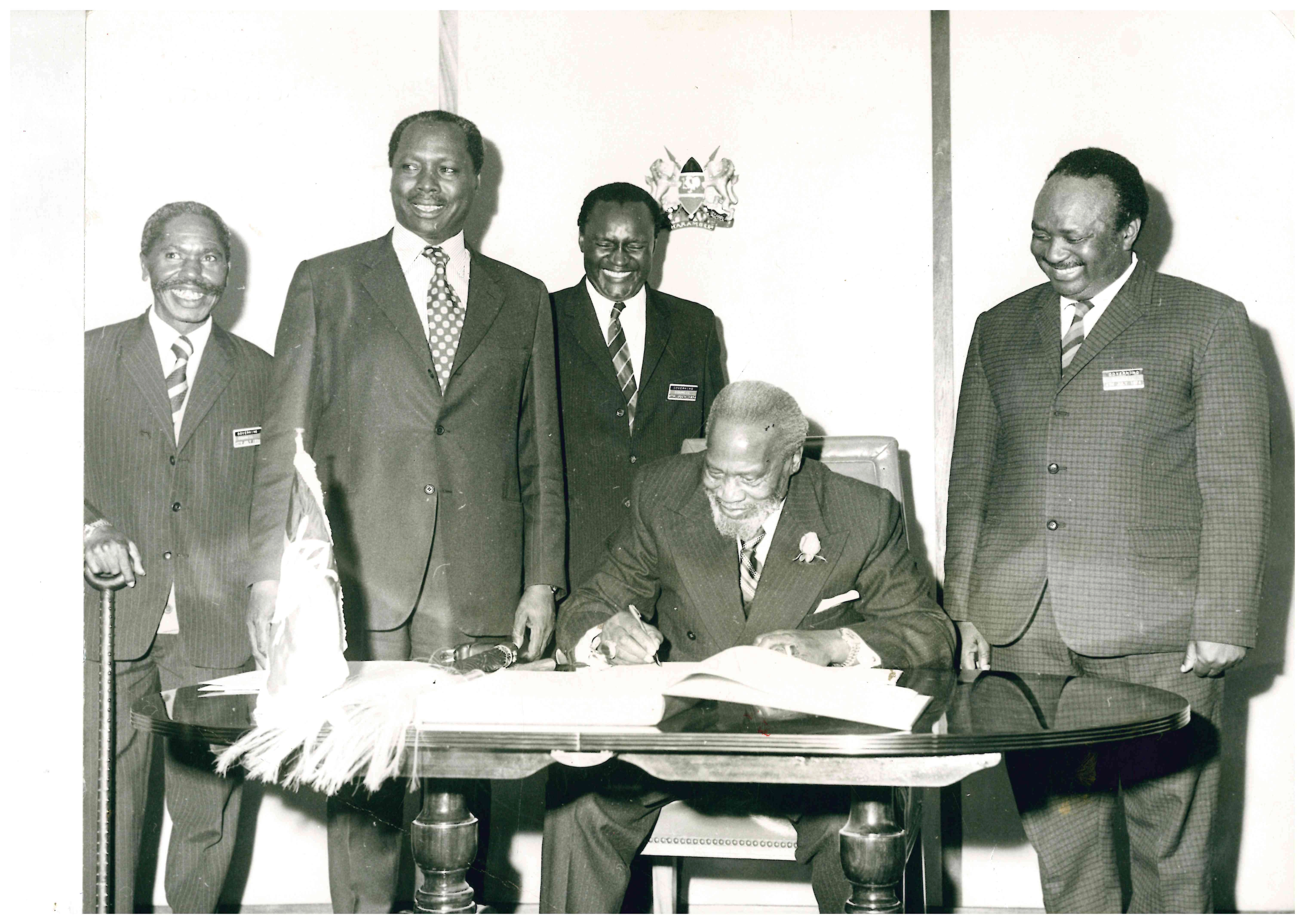
President Jomo Kenyatta with VP Daniel Arap Moi and Ministers in 1974
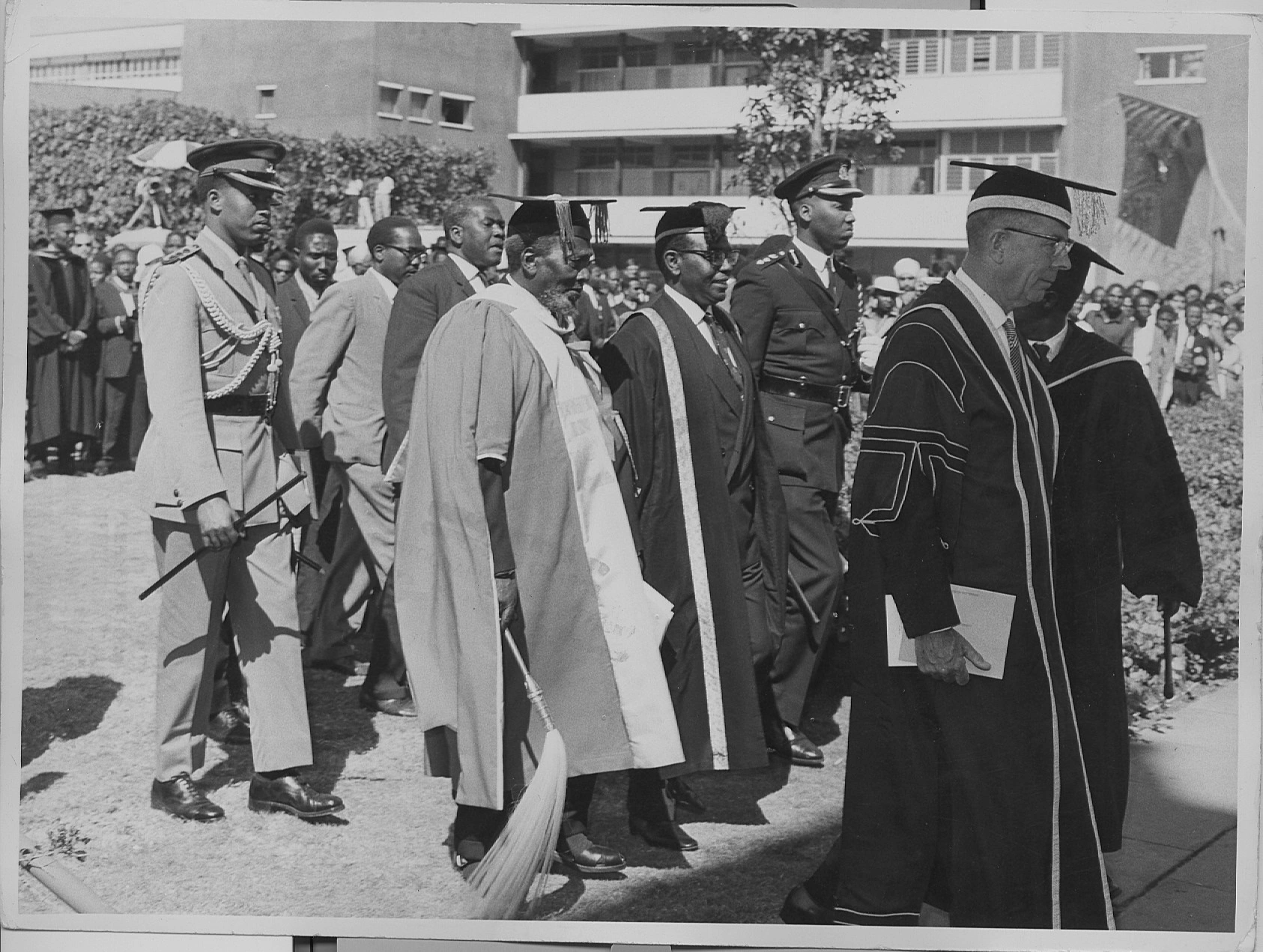
President Jomo Kenyatta pictured at Nairobi University_29 Sep 1969
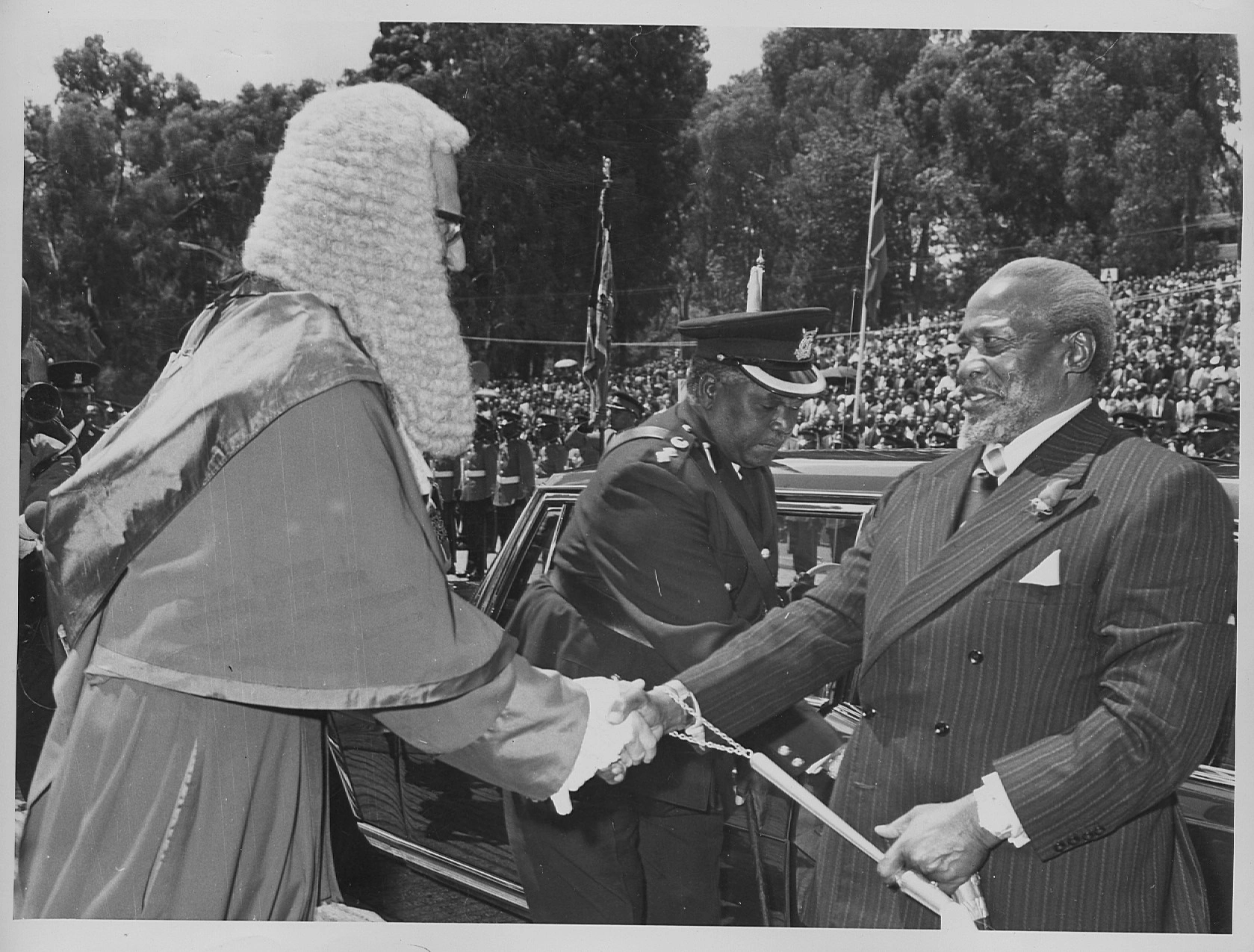
President Jomo Kenyatta pictured arriving at Uhuru Park Nairobi 5 Nov 1974
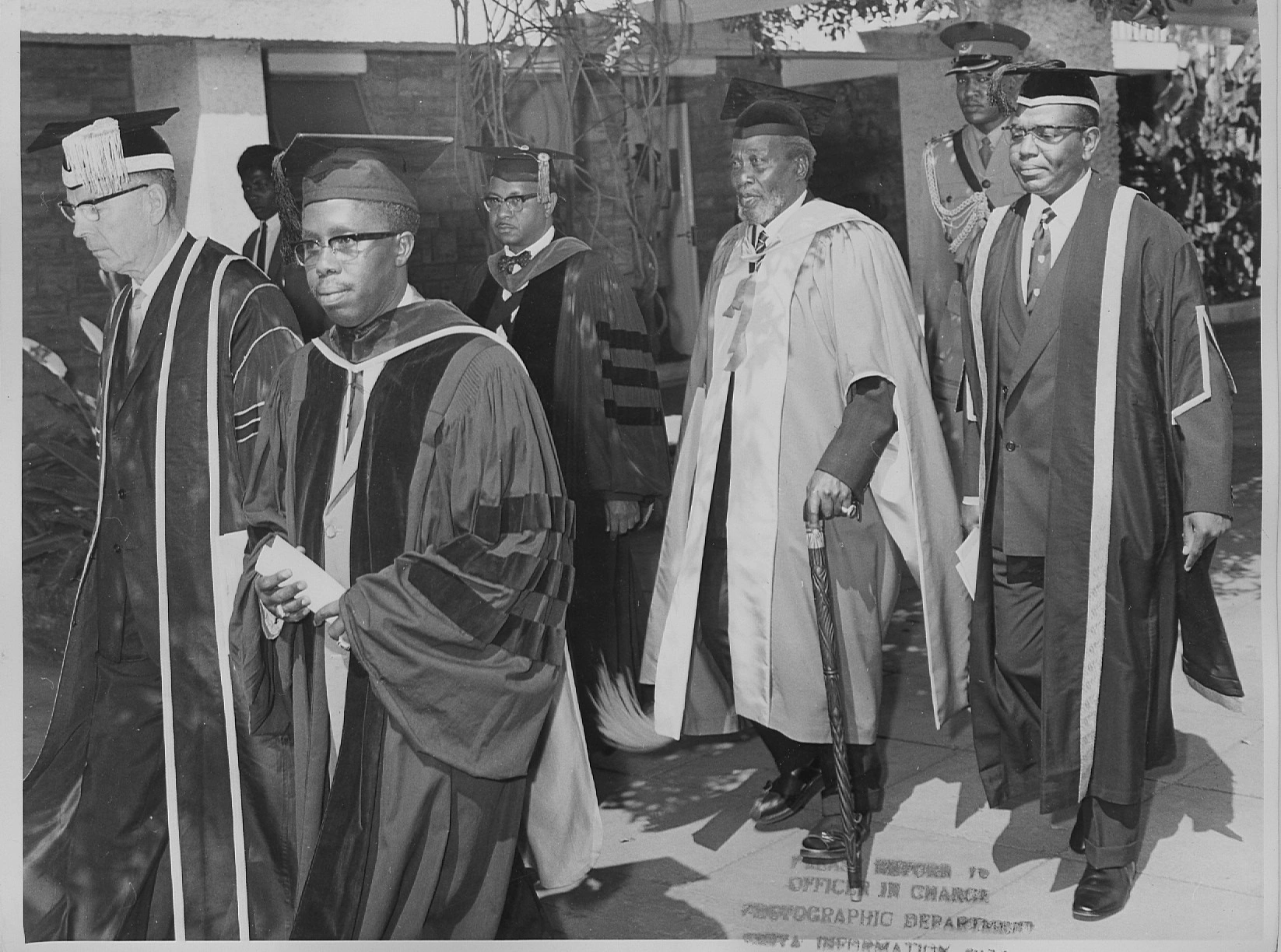
President Jomo Kenyatta pictured being welcomed at University of Nairobi_28 September 1968
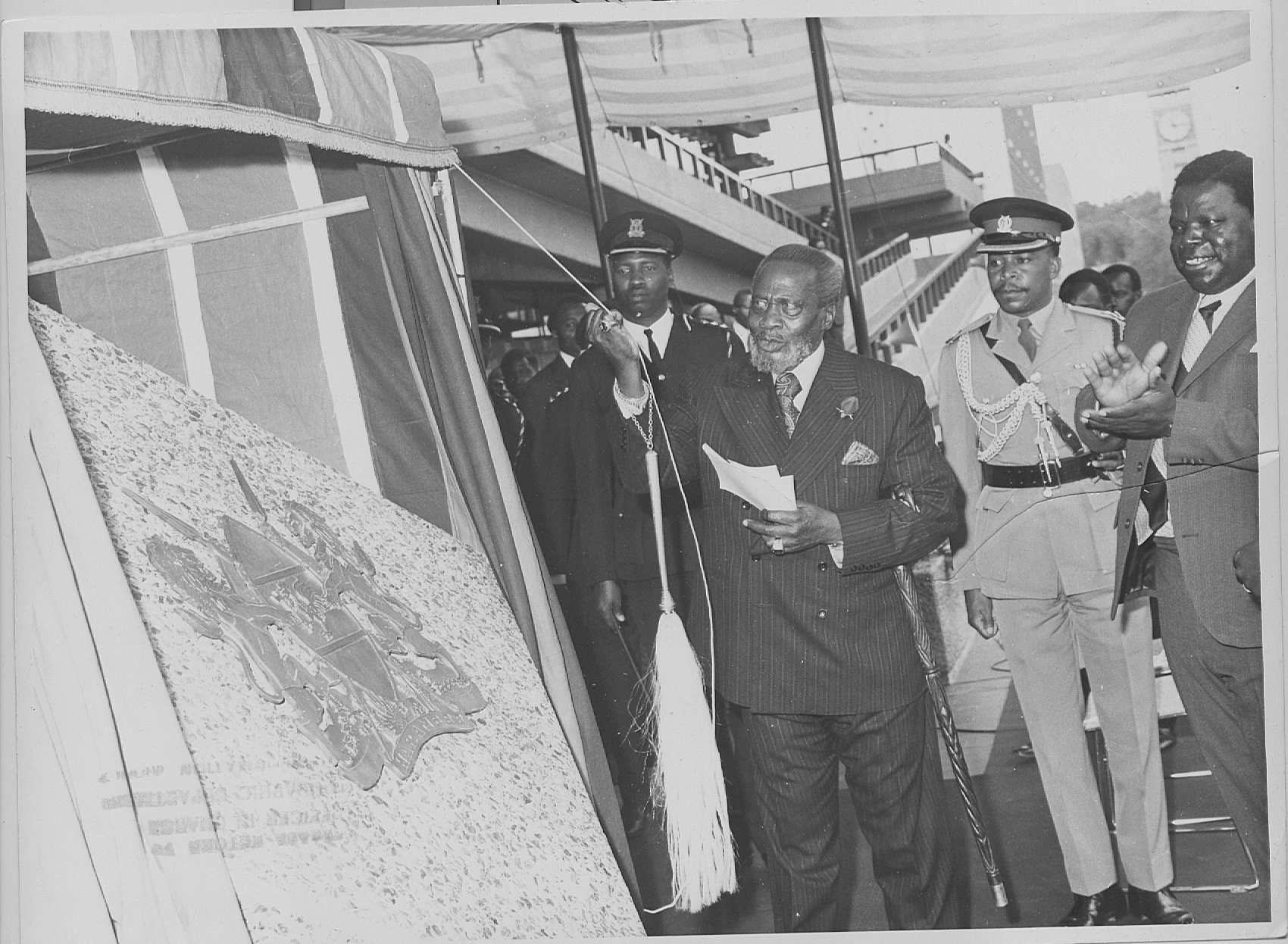
President Jomo Kenyatta pictured unveiling a plaque at KICC_11 Aug 1973
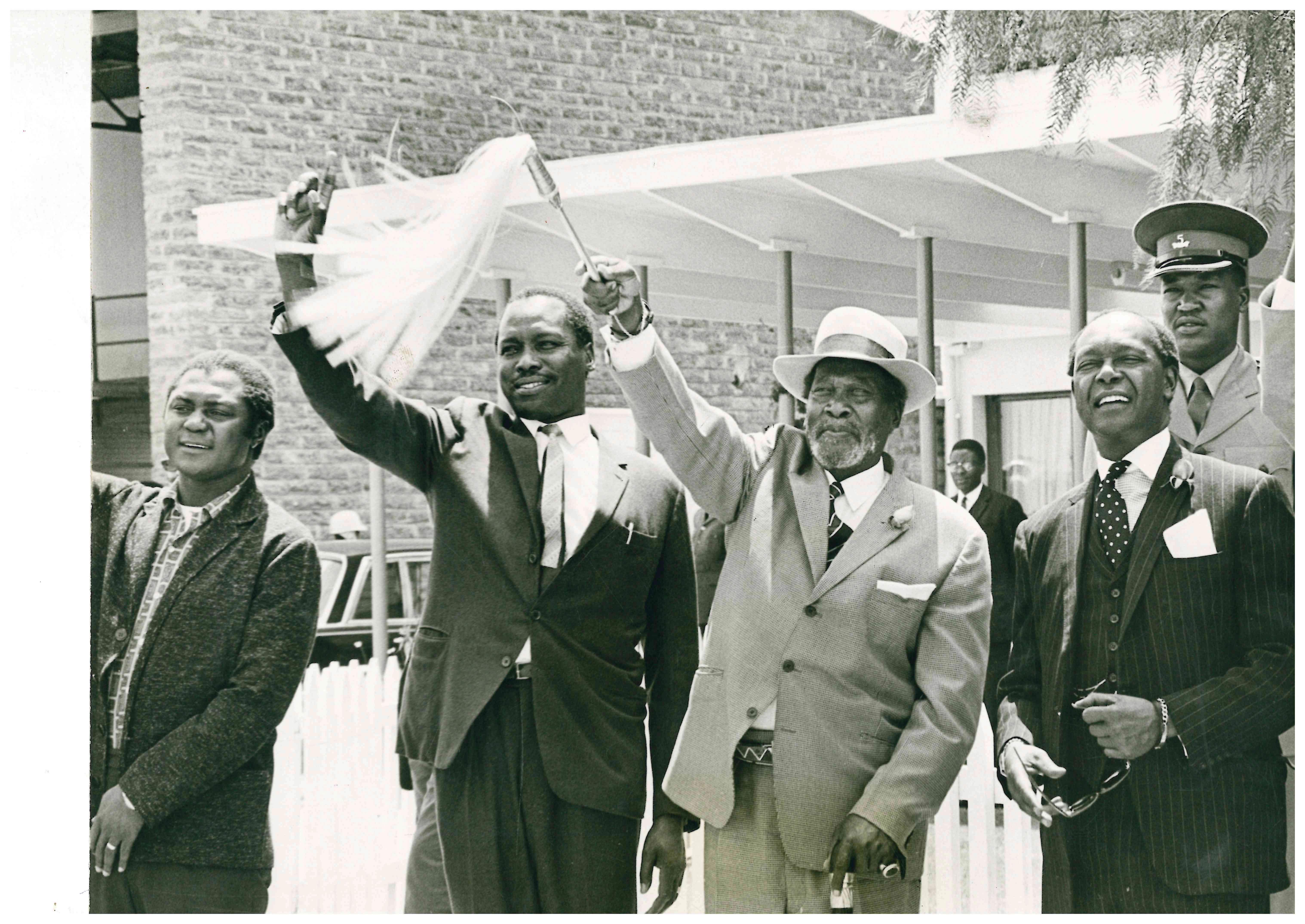
President Jomo Kenyatta with Vice President Daniel Moi Minister Tom Mboya and Attorney General Charles Njonjo at Harambee House Nairobi 1968
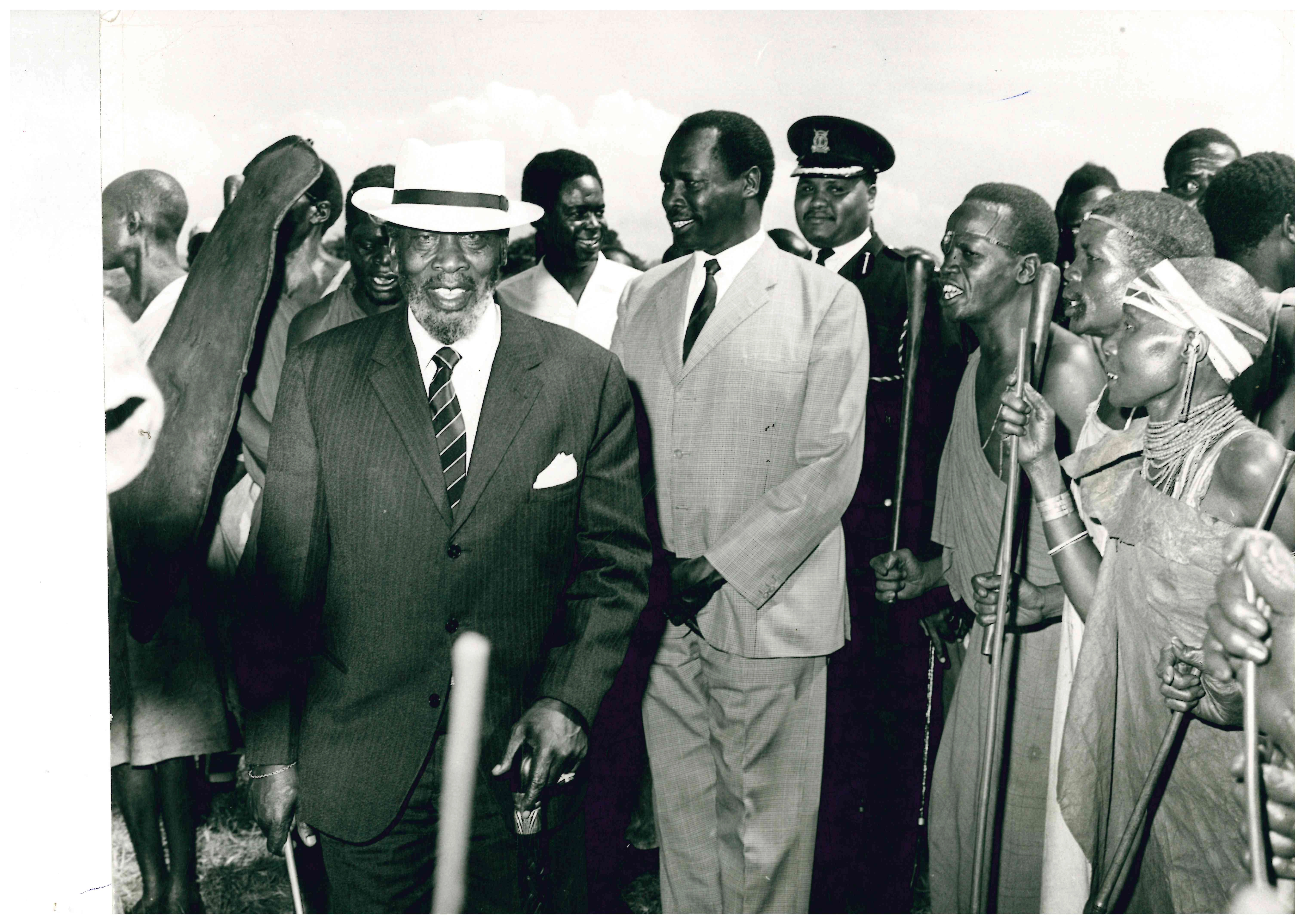
President Jomo Kenyatta with VP Daniel Arap Moi in 1970
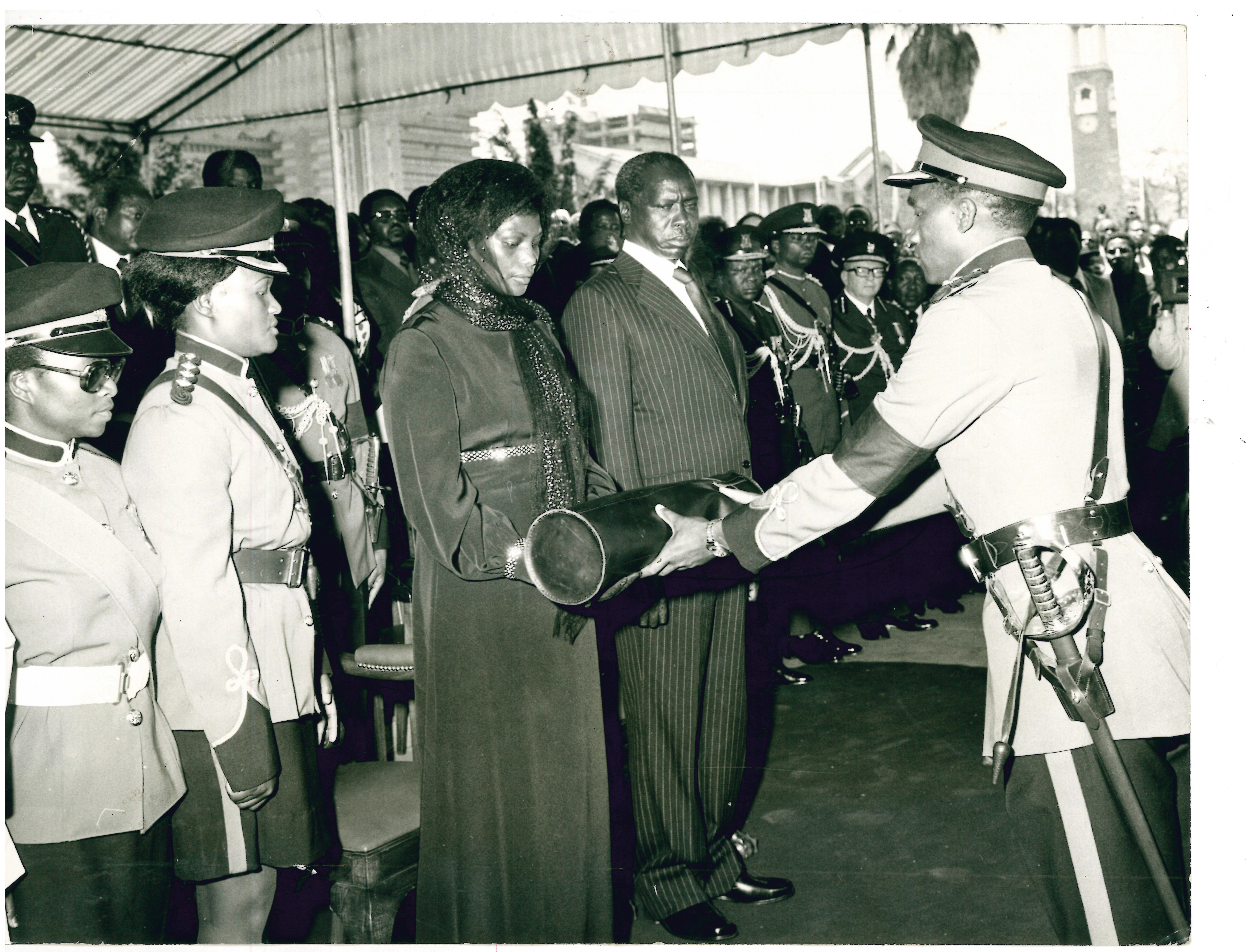
Kenya army officer presents Mzee Jomo Kenyatta presidential standard and the national flag to Mama Ngina Kenyatta while President Moi looks on during funeral mass
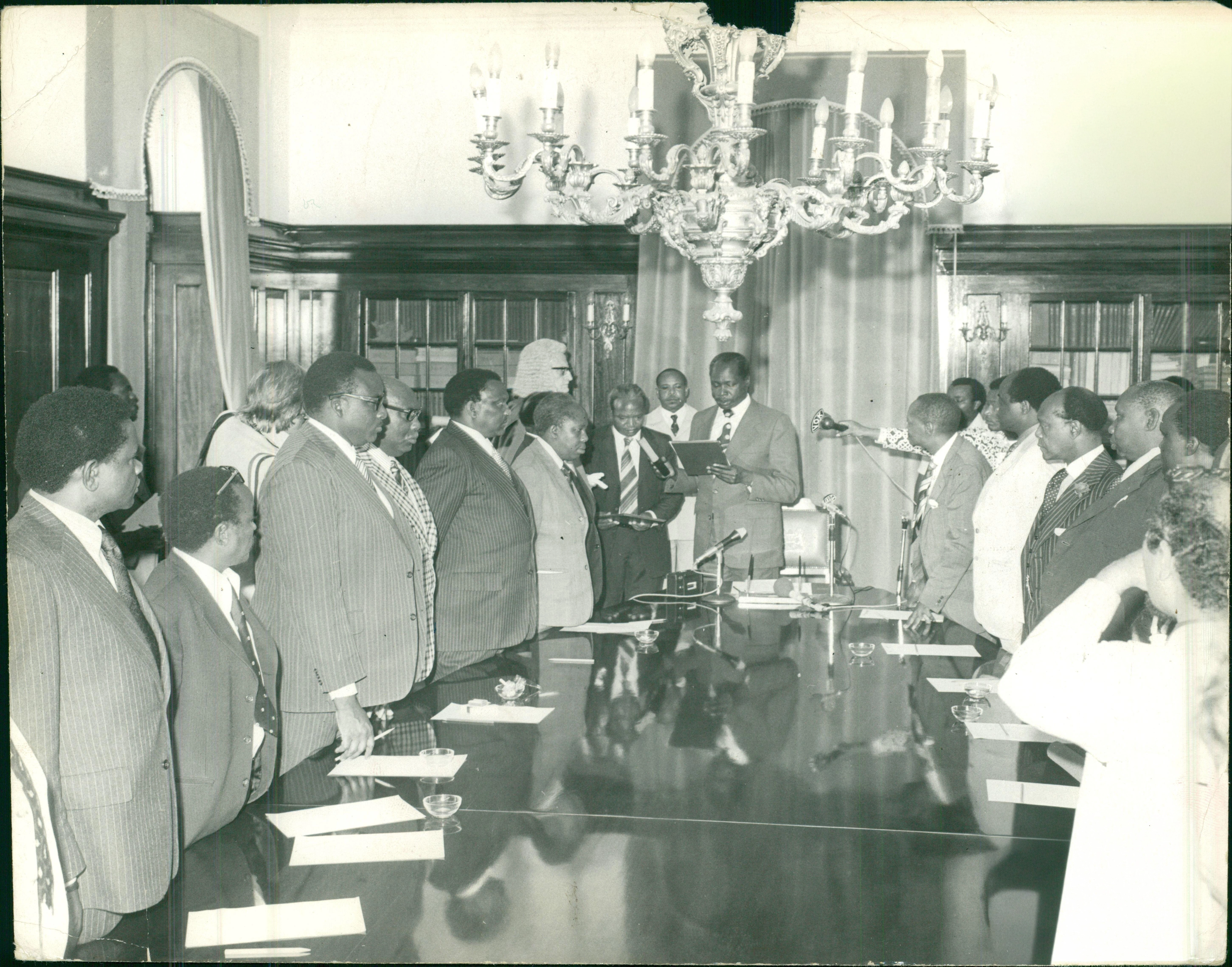
President Daniel Moi Swearing In with Cabinet 1978
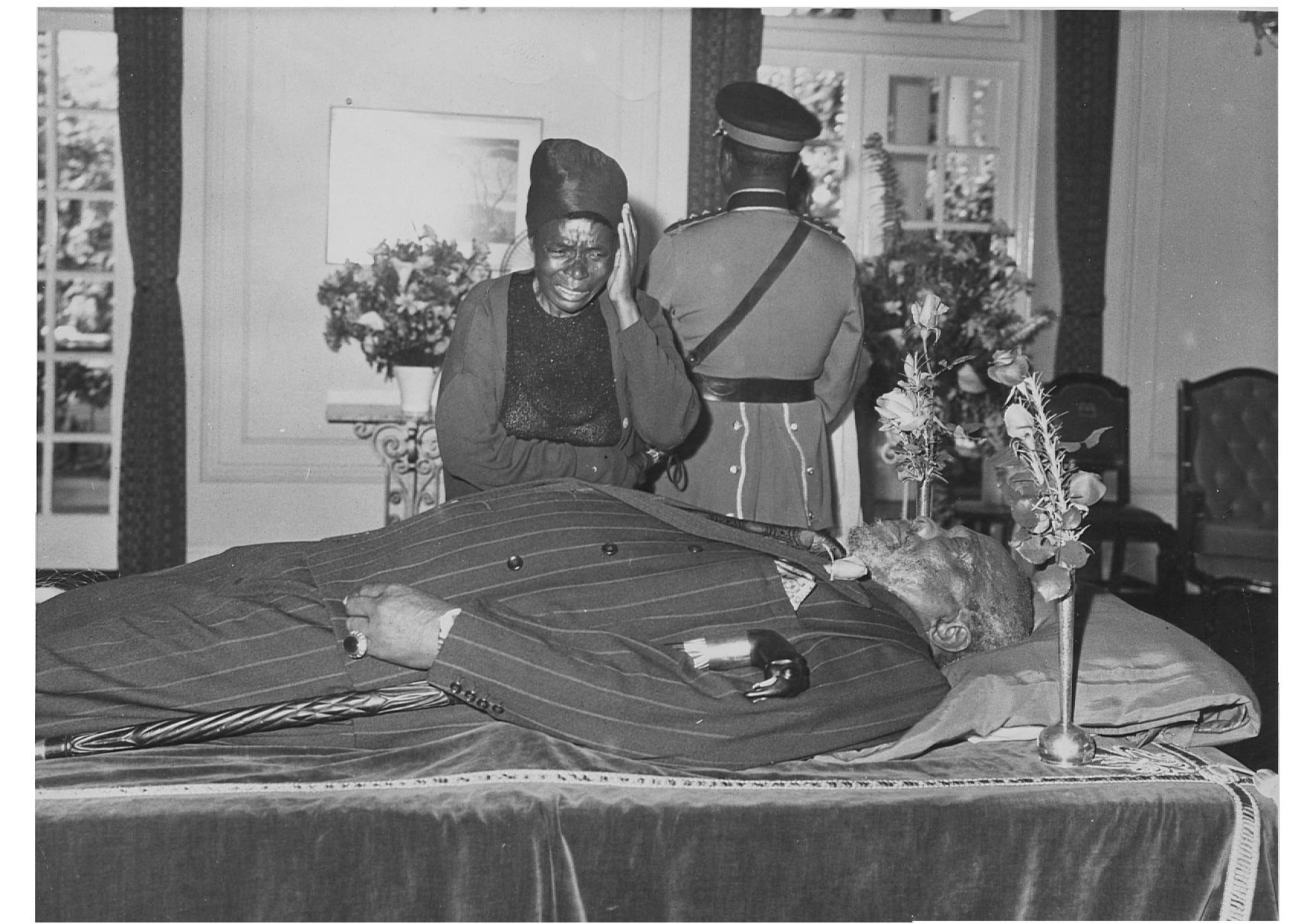
President Jomo Kenyatta body lying in state for Public viewing at State House Nairobi in August 1978
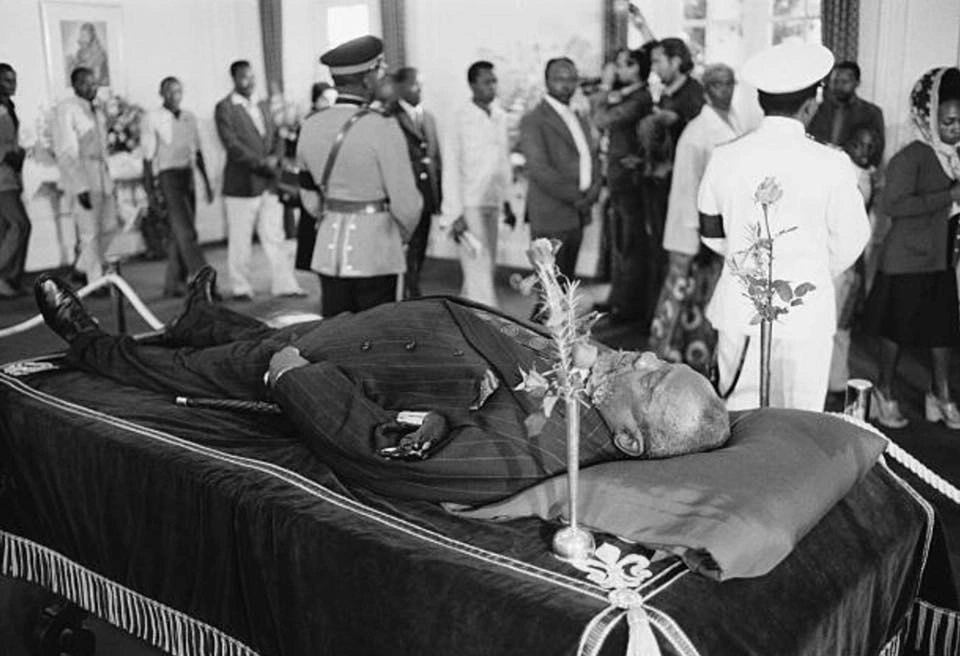
President Jomo Kenyatta Lying in State in 1978
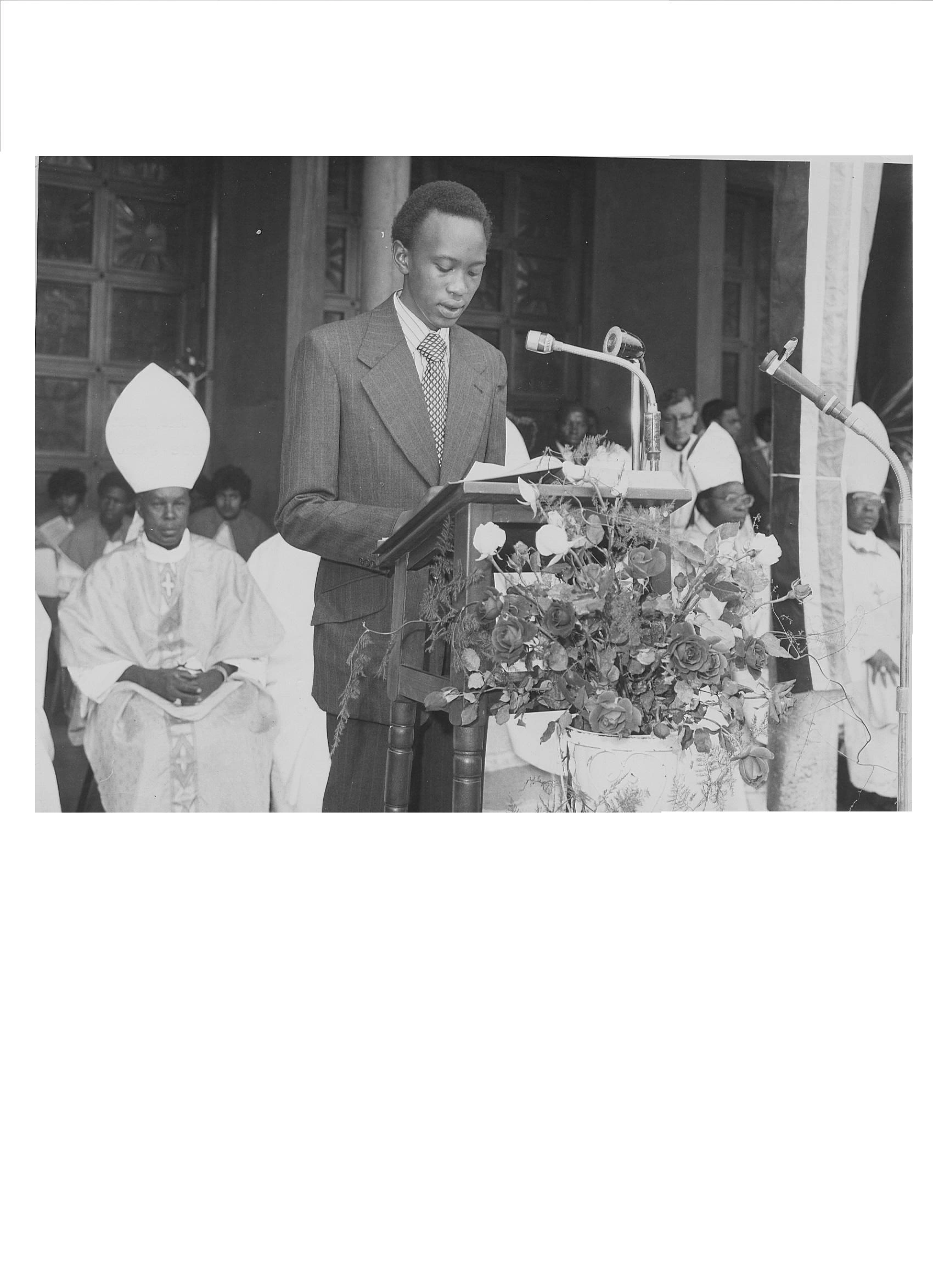
Uhuru Kenyatta reading his fathers-Mzee Jomo Kenyatta eulogy in August 1978
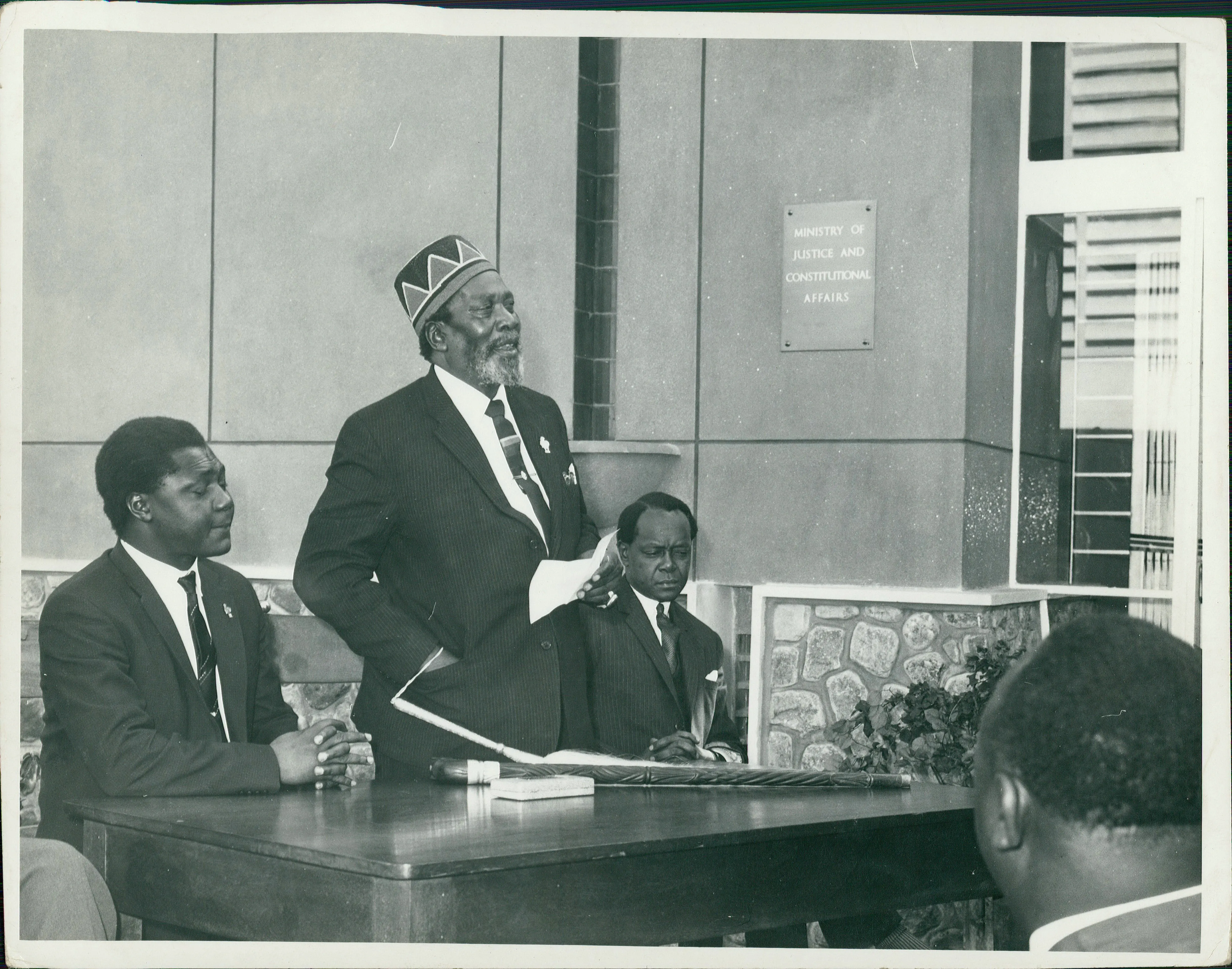
Prime Minister Jomo Kenyatta at the opening of Extensions to the Crown Law Offices in Nairobi accompanied by Mr Tom Mboya and Mr Charles Njonjo
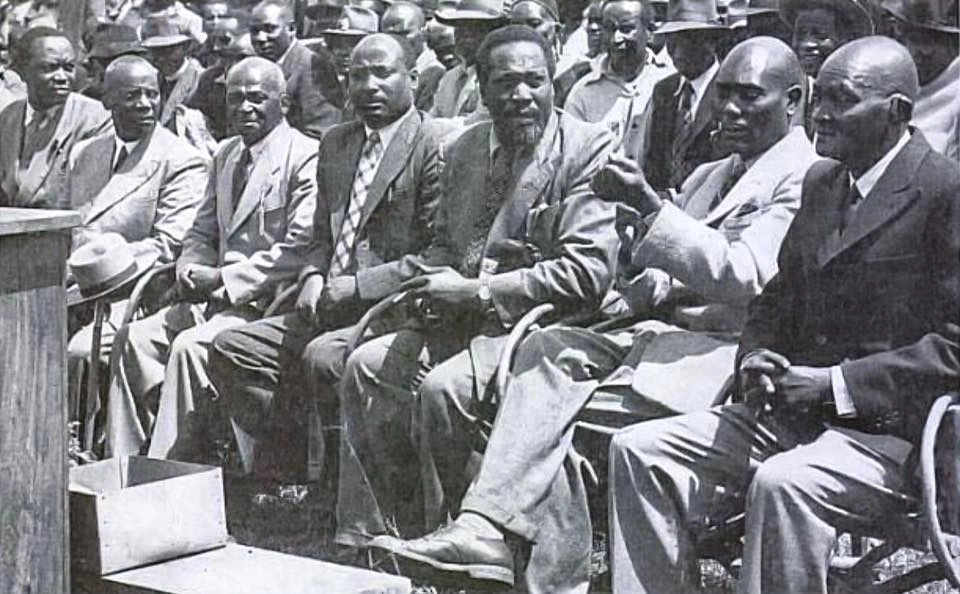
Jomo kenyatta in Kiambu during a KAU rally in August 1952.
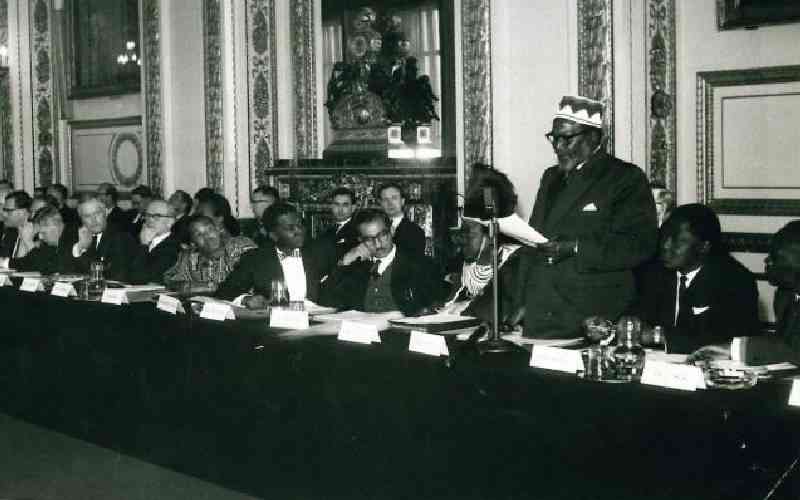
Jomo Kenyatta and Thomas Joseph Mboya attending the Second Lancaster Conference in London in 1962
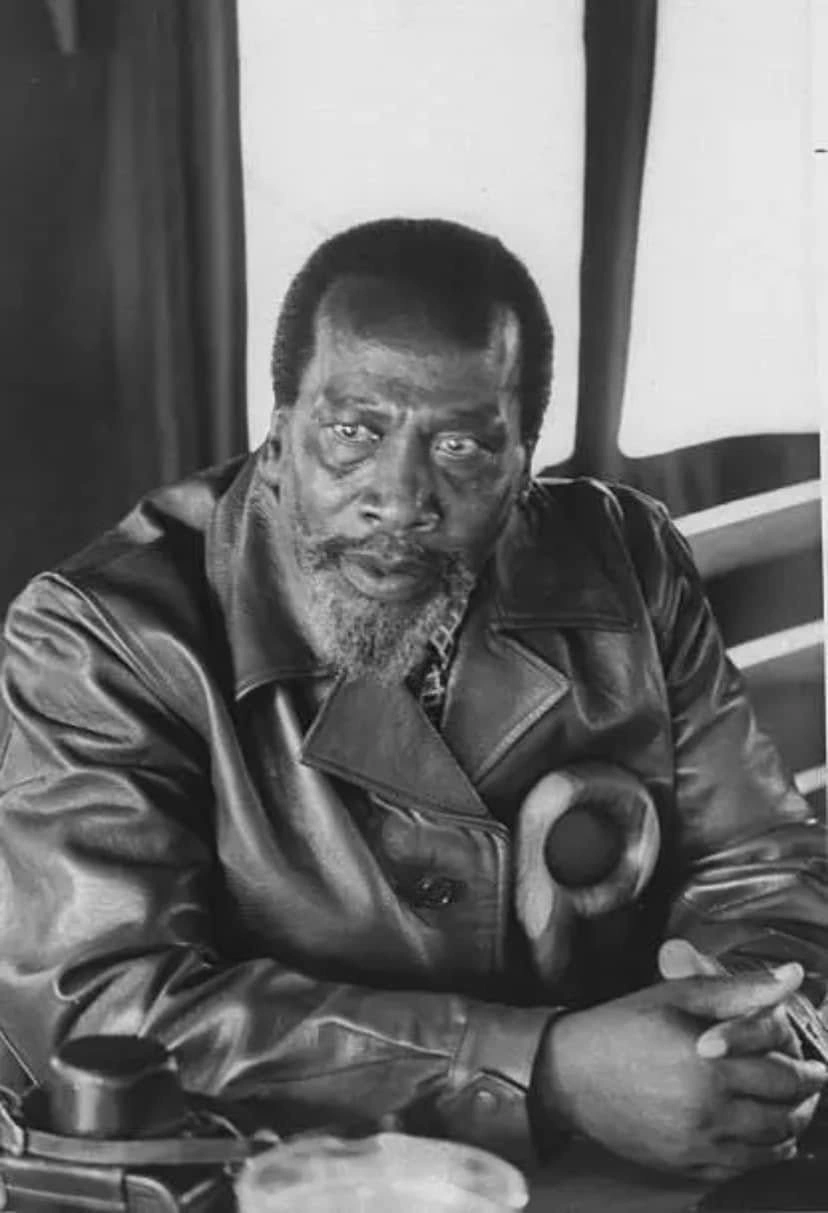
Jomo Kenyatta seated during Pre Independence
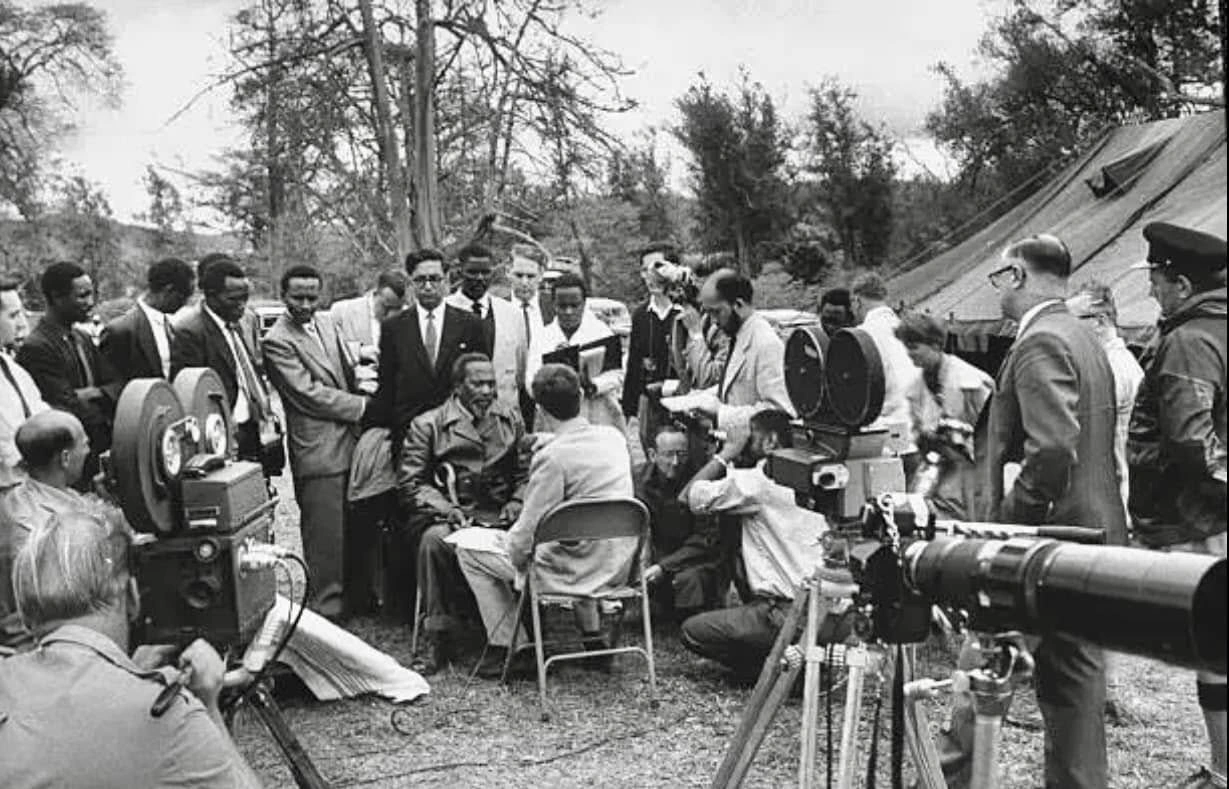
Jomo Kenyatta In Independence
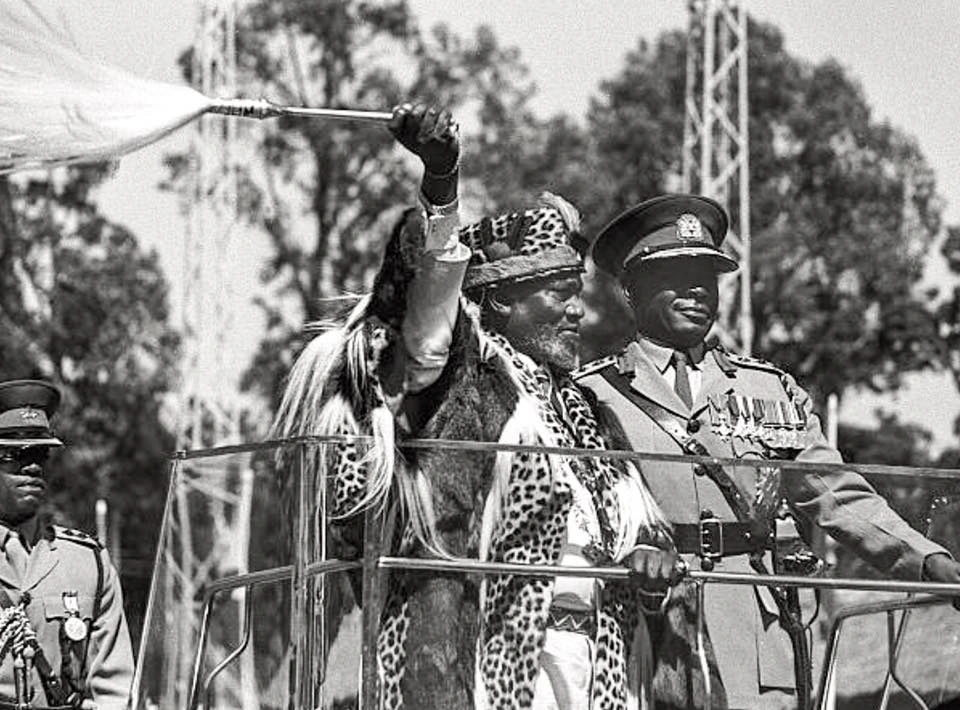
Mzee Jomo Kenyatta Fly Whisk
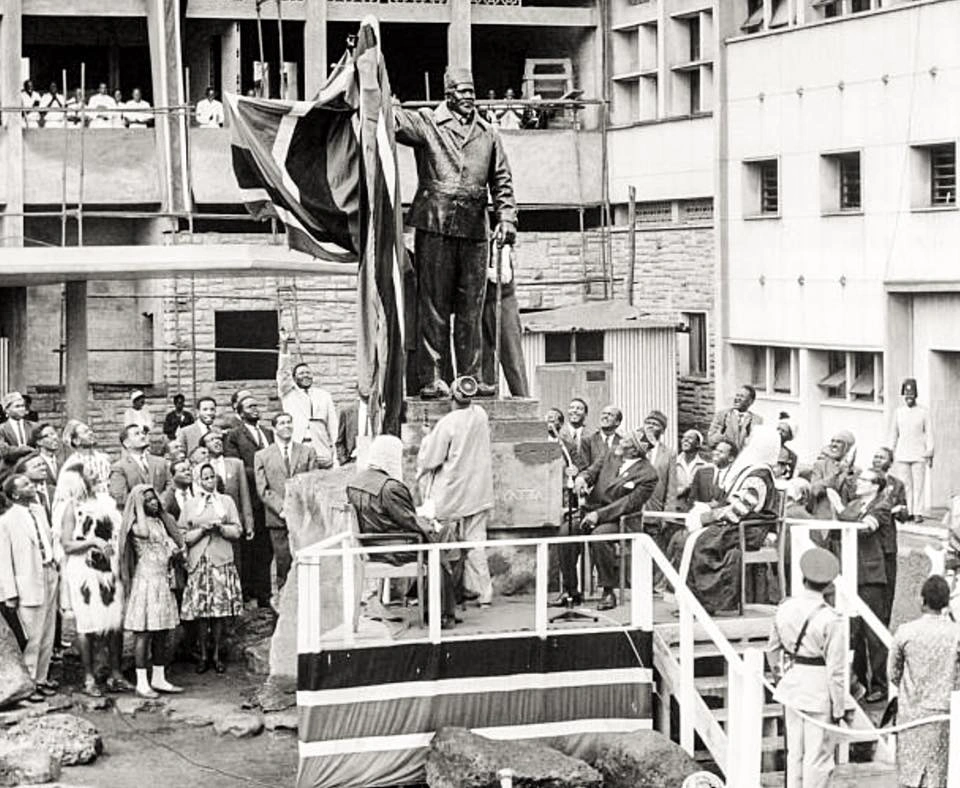
Mzee Jomo Kenyatta and other dignitaries look on as Oginga Odinga unveils the statue of the former at Parliament Bldgs
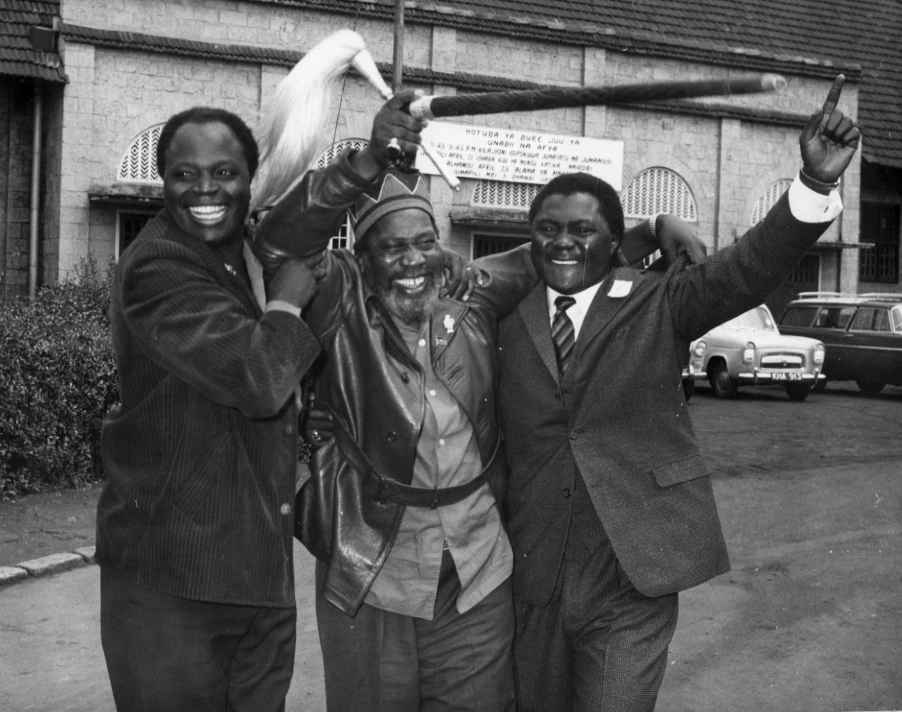
Jomo Kenyatta Mwai Kibaki and Thomas Joseph Mboya Celebrating General election 1963 Kanu win in Nairobi
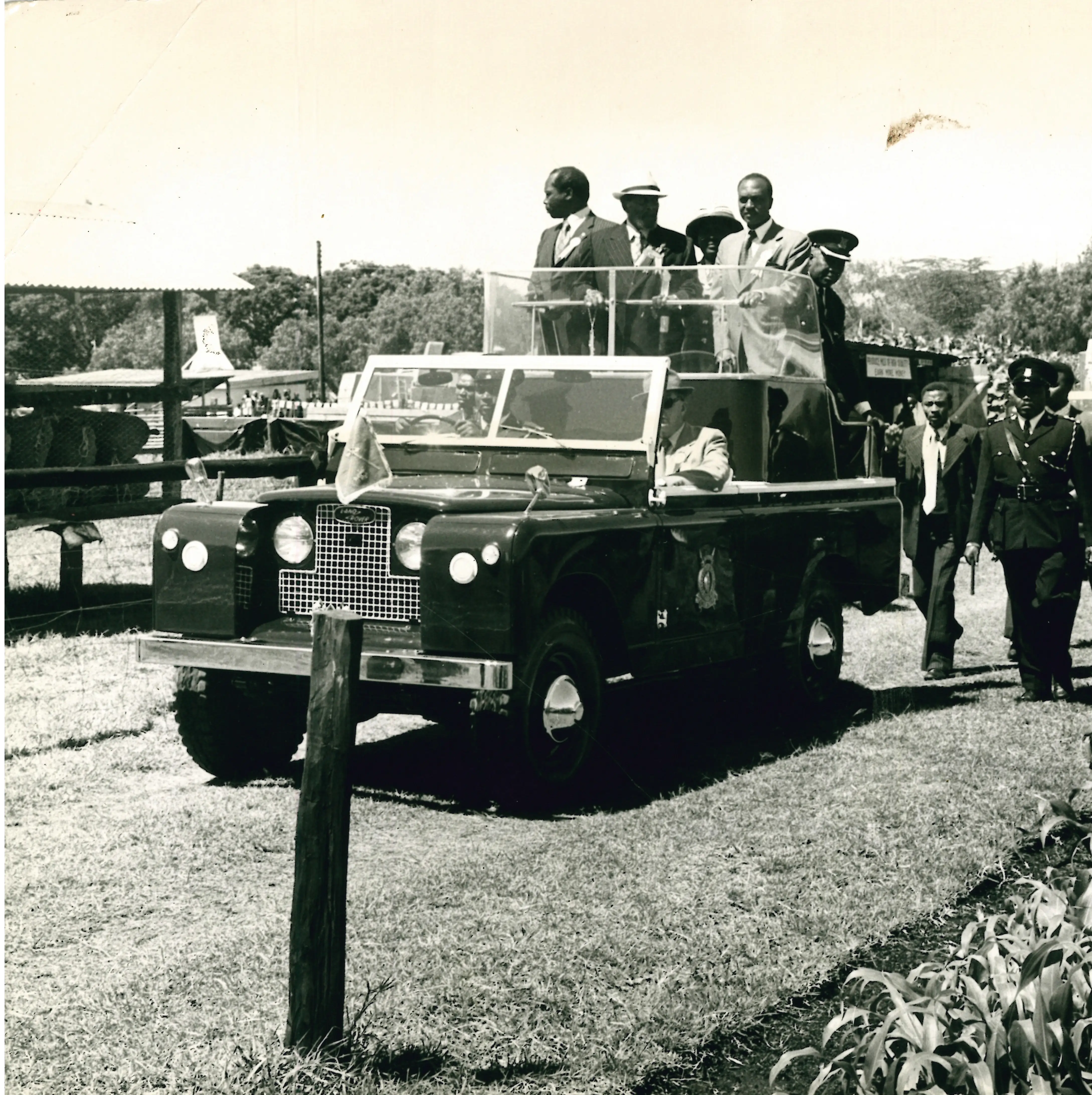
President Jomo Kenyatta and VP Moi share the Presidential Land-Rover at Nakuru show
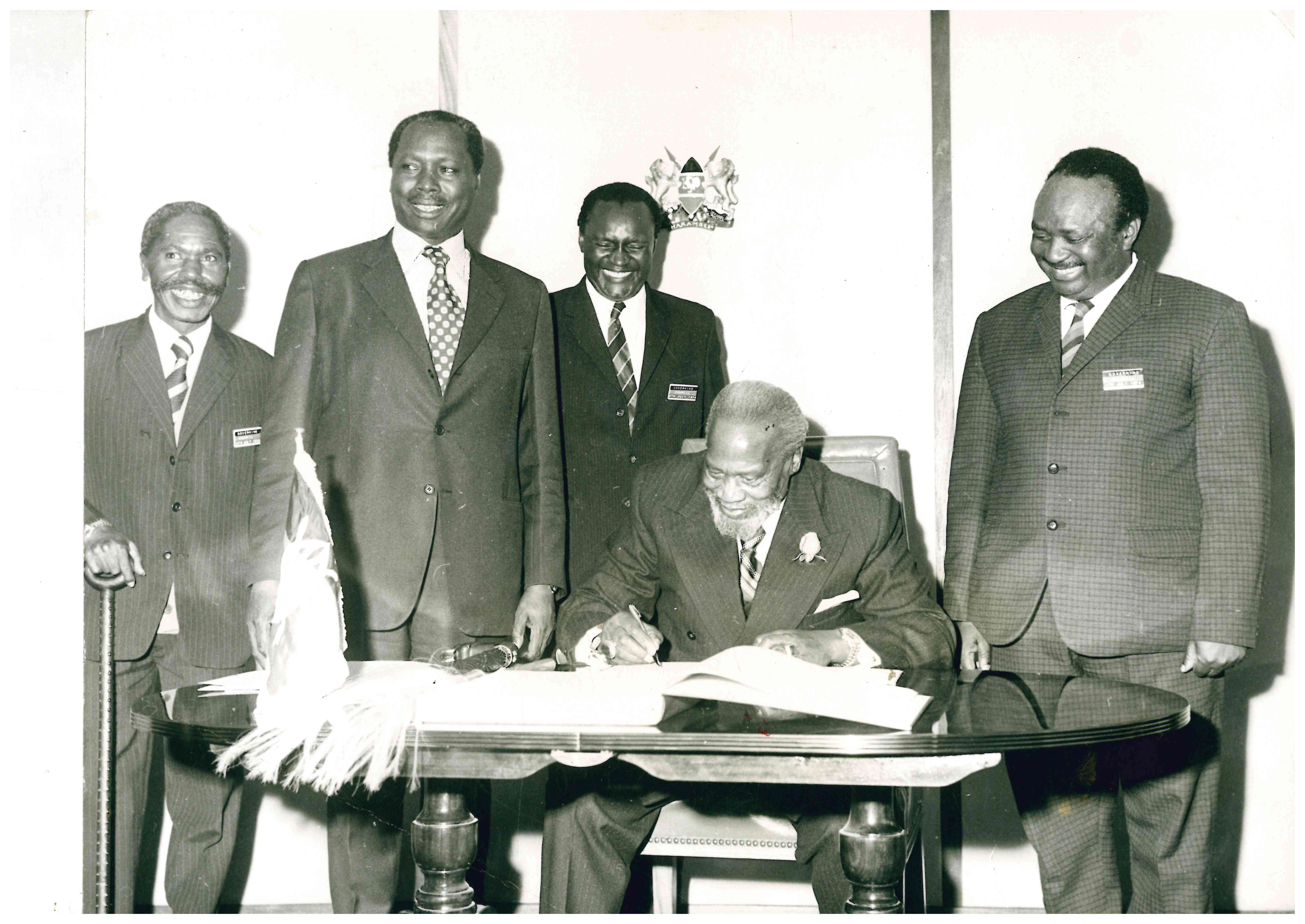
President Jomo Kenyatta signing Bills into Law in 1974
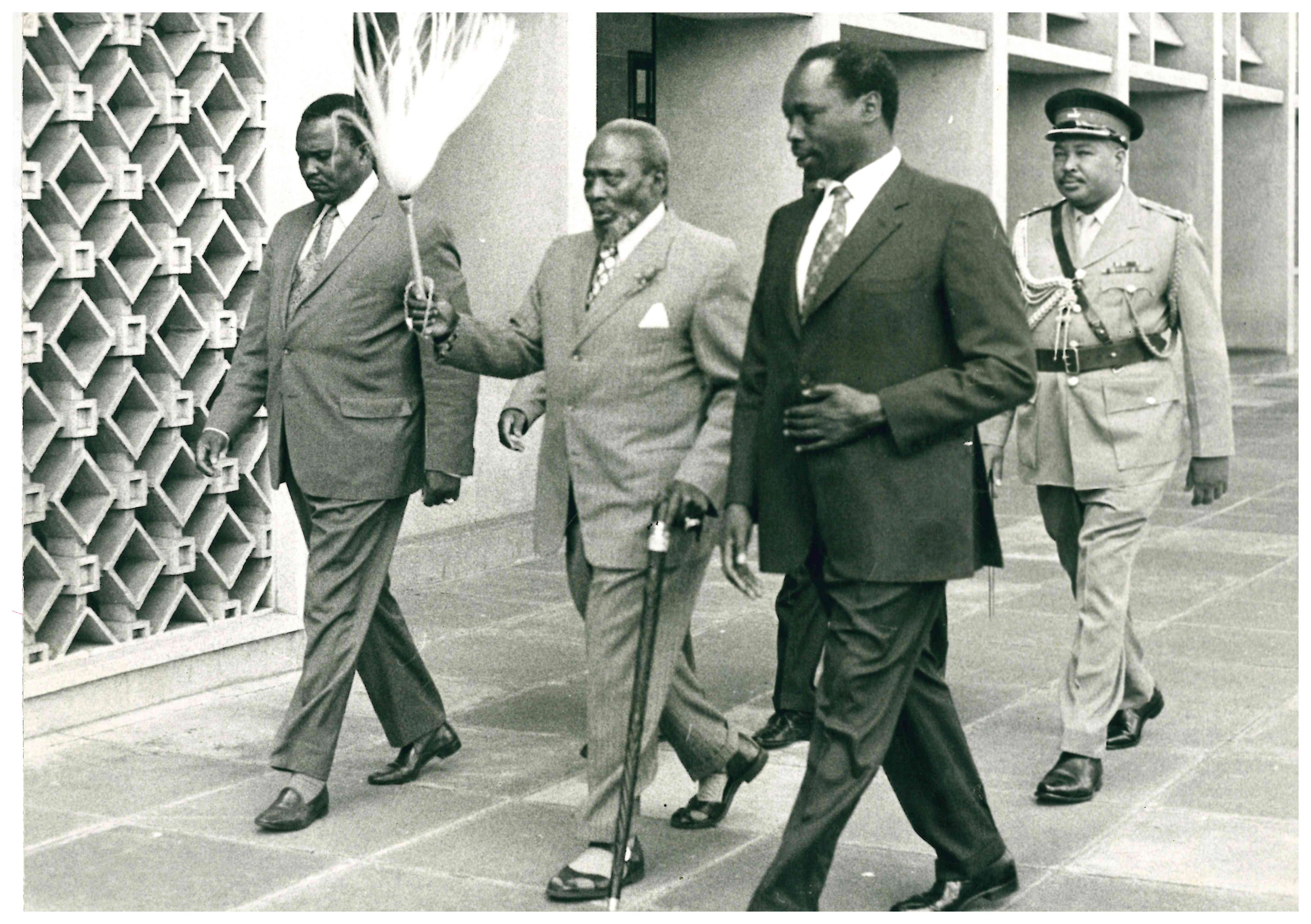
President Jomo Kenyatta with VP Moi in 1972
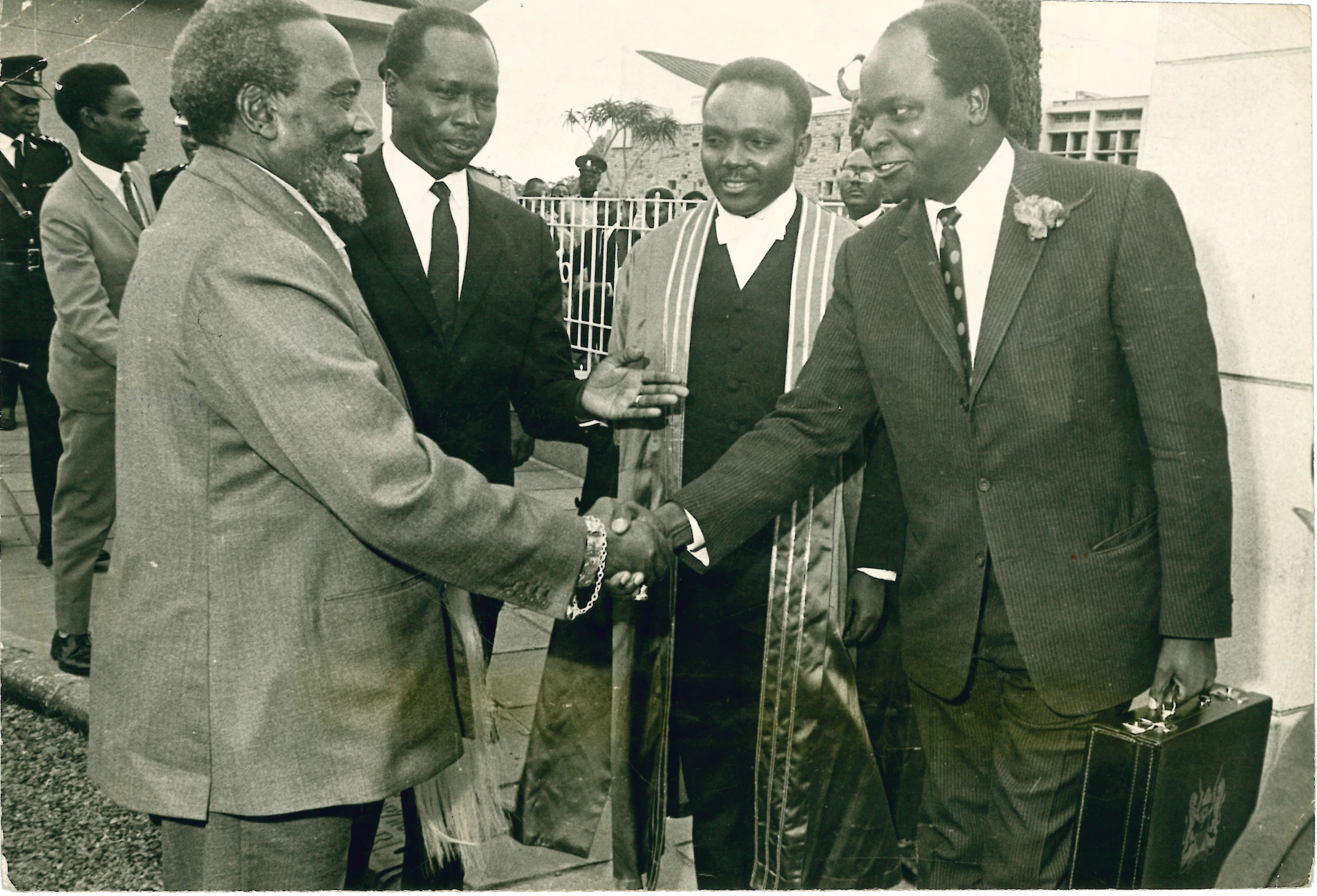
President Jomo Kenyatta with Finance Minister Kibaki on the 1971 budget day
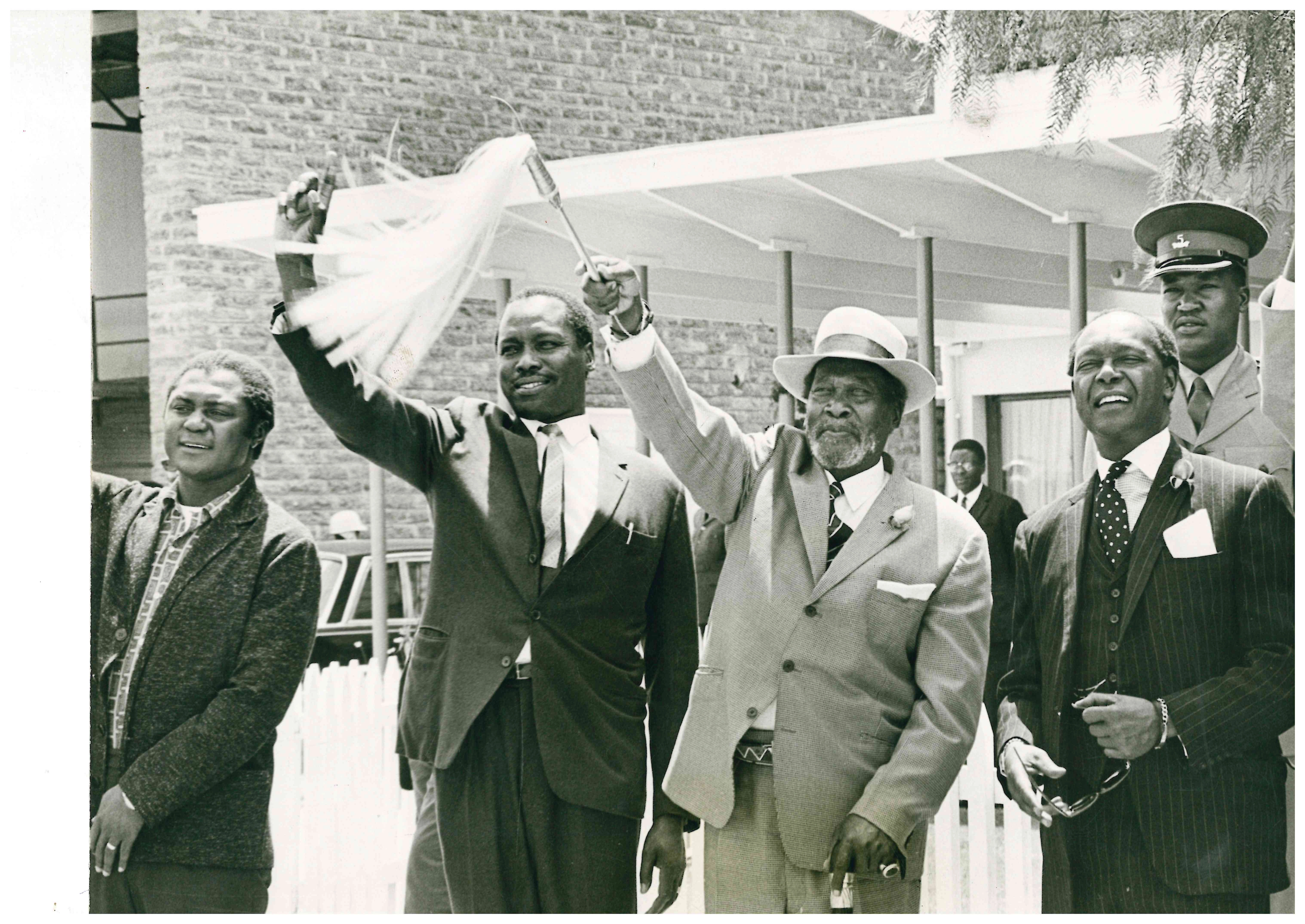
President Jomo Kenyatta with VP Moi and Ministers
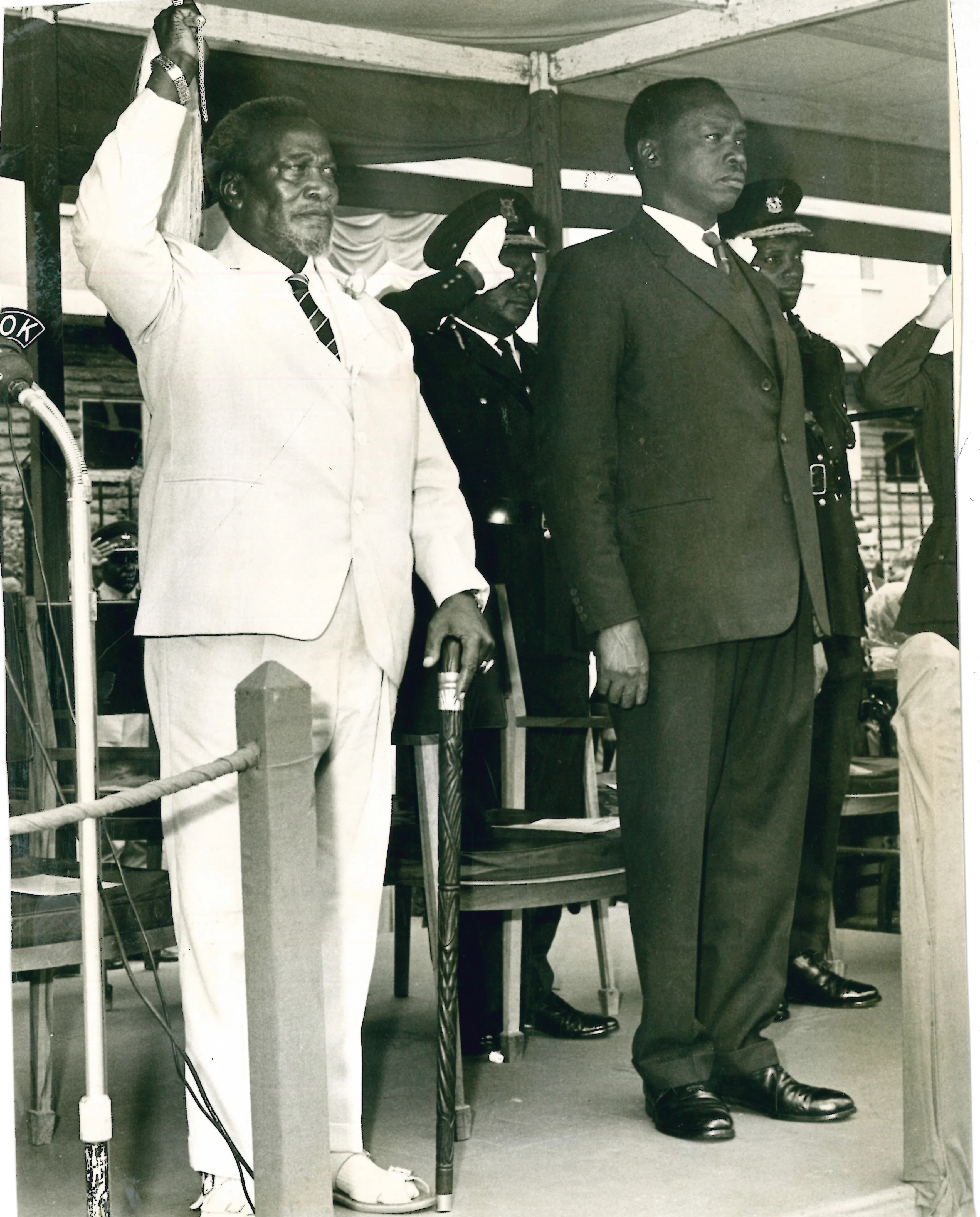
President Jomo Kenyatta with Vice President Moi at the 1967 Madaraka Day
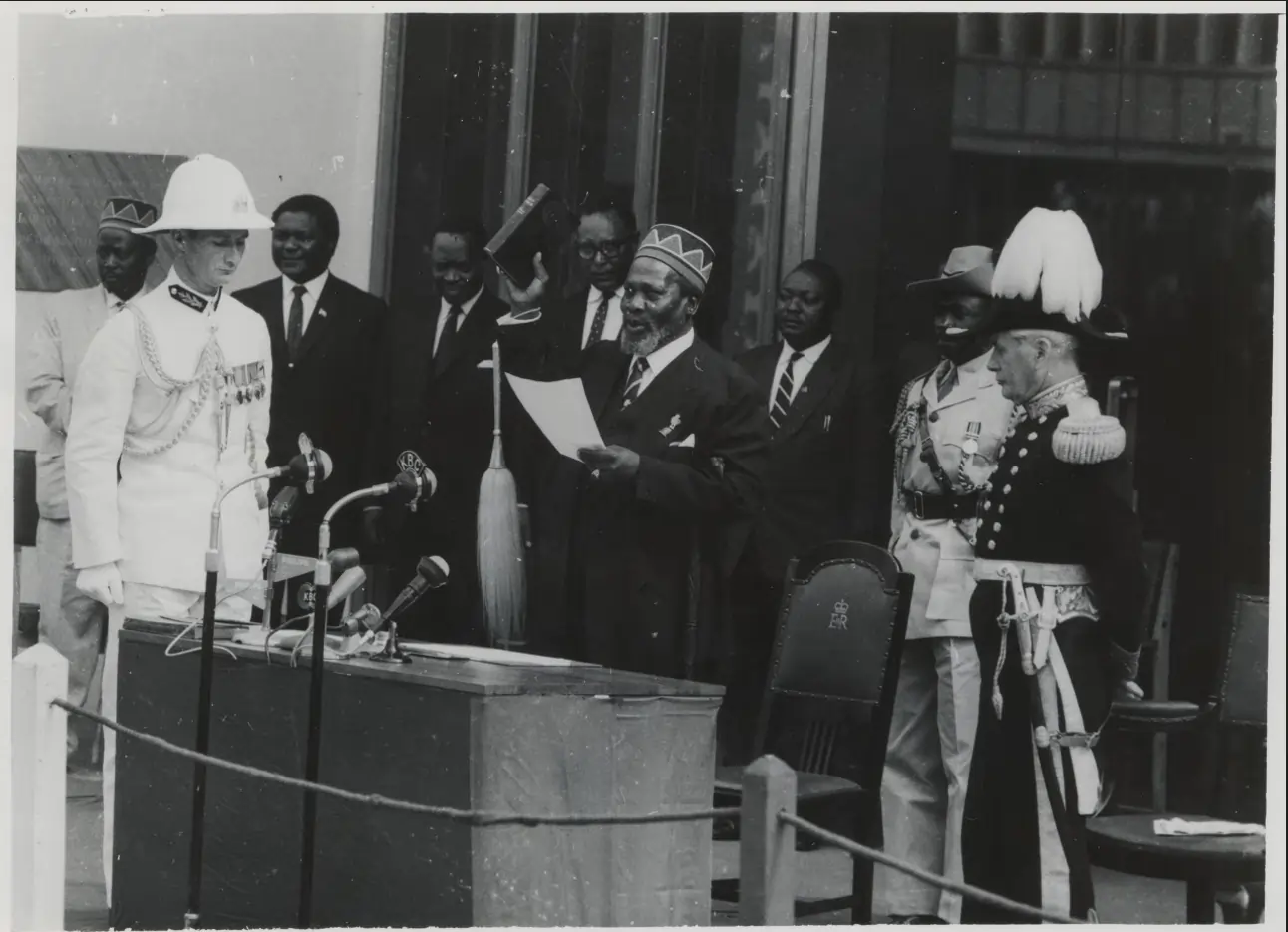
Jomo Kenyatta being sworn as Prime Minister
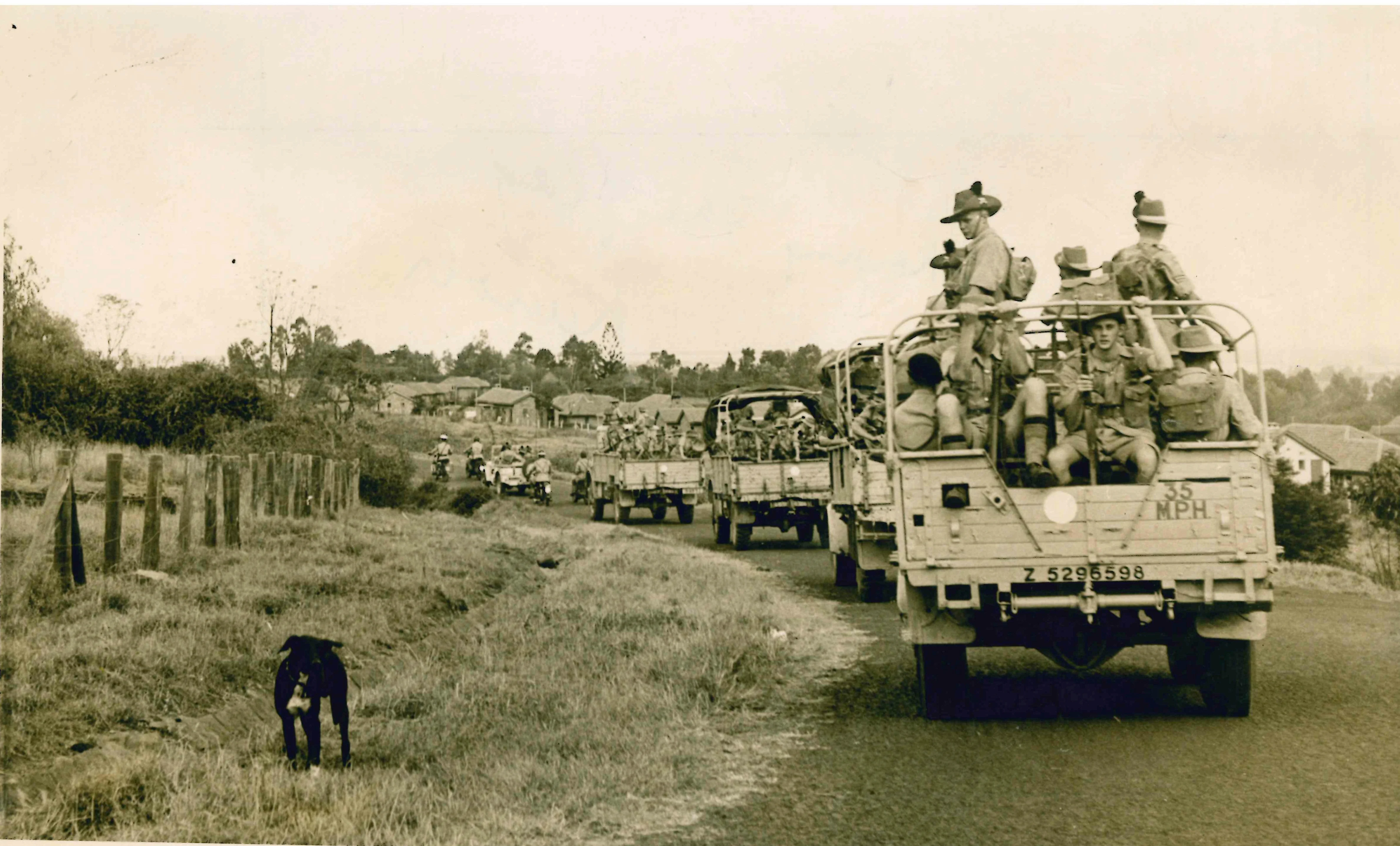
A Convoy of British Soldiers
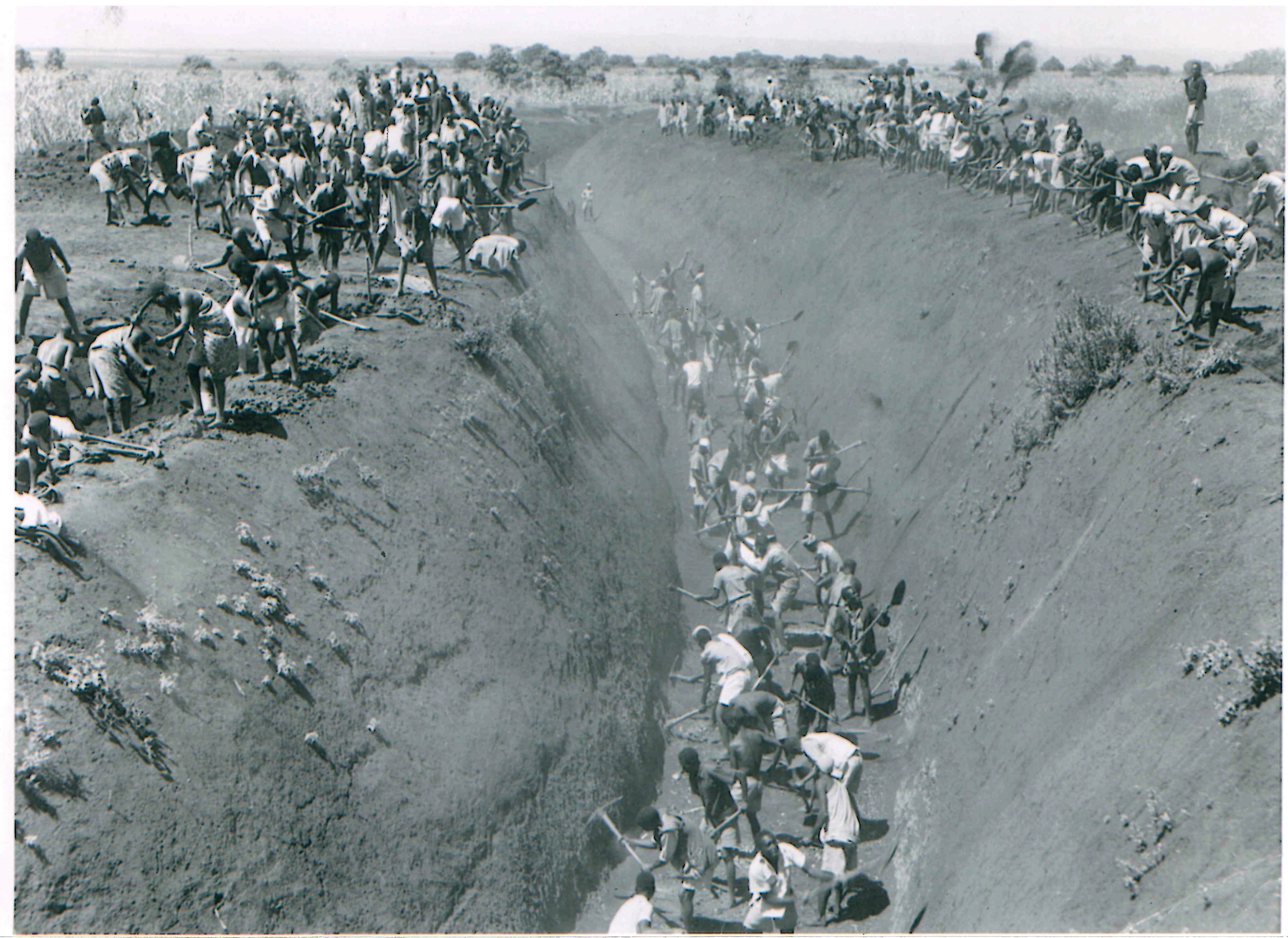
Kenyan Natives engaging in hard labour
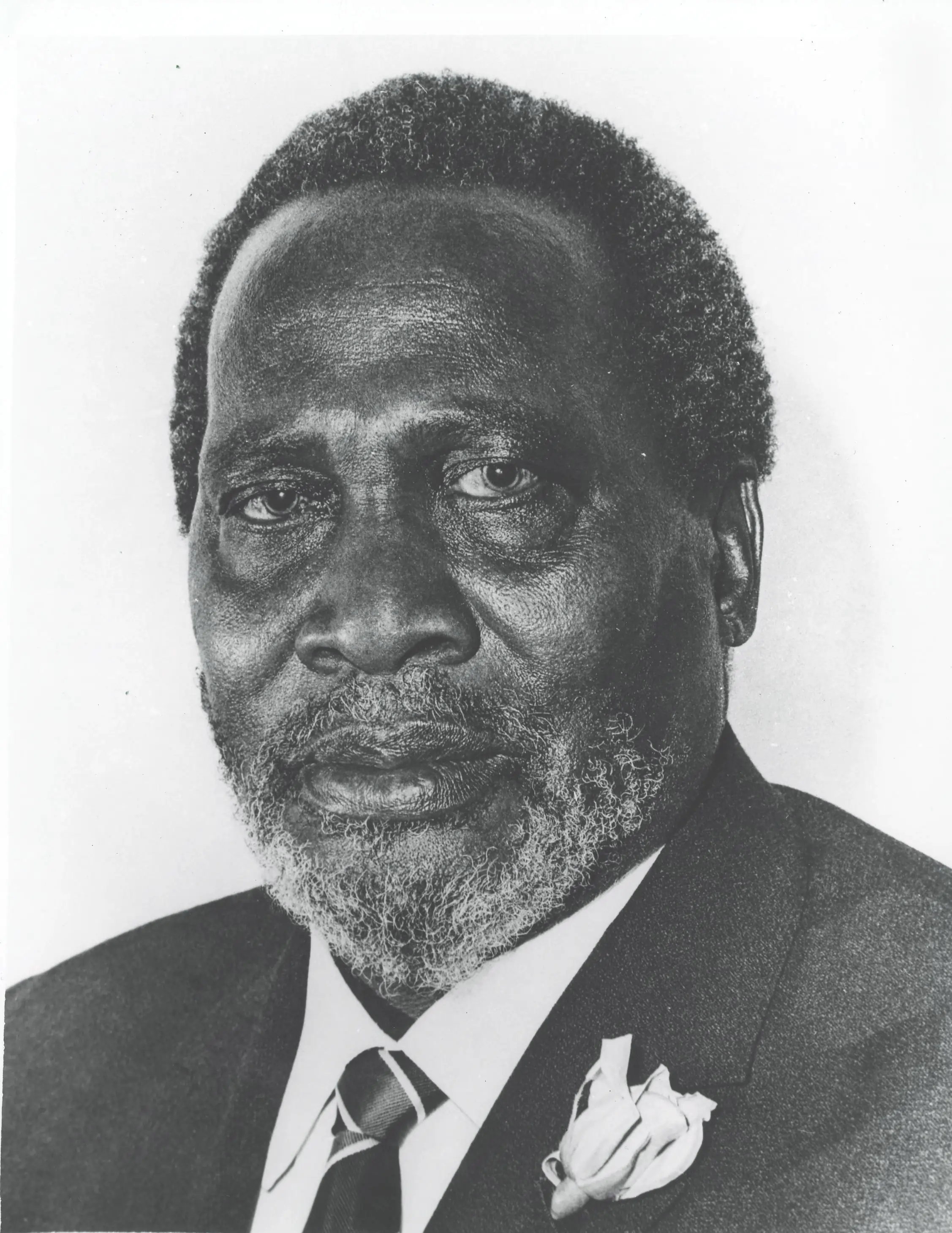
President Jomo Kenyatta Official Portrait
Speeches
President Jomo Kenyatta Speech on the Fourth Anniversary of Independence on Jamhuri Day_12.12.1967
Open Resource
President Jomo Kenyatta Speech on the Third Anniversary of Jamhuri Day_12.12.1966
Open Resource
President Jomo Kenyatta Speech Uhuru Second Anniversary on Jamhuri Day_12.12.1965
Open Resource
President Jomo Kenyatta Speech on the occasion of Madaraka Day_1.6.1965
Open Resource
President Jomo Kenyatta Speech on the occasion of Madaraka Day_1.6.1966
Open Resource
President Jomo Kenyatta Speech on the occasion of Madaraka Day_1.6.1967
Open Resource
President Jomo Kenyatta Speech on the occasion of Madaraka Day_1.6.1968
Open Resource
President Jomo Kenyatta Speech on the occasion of Madaraka Day_1.6.1970
Open Resource
Related Artifacts
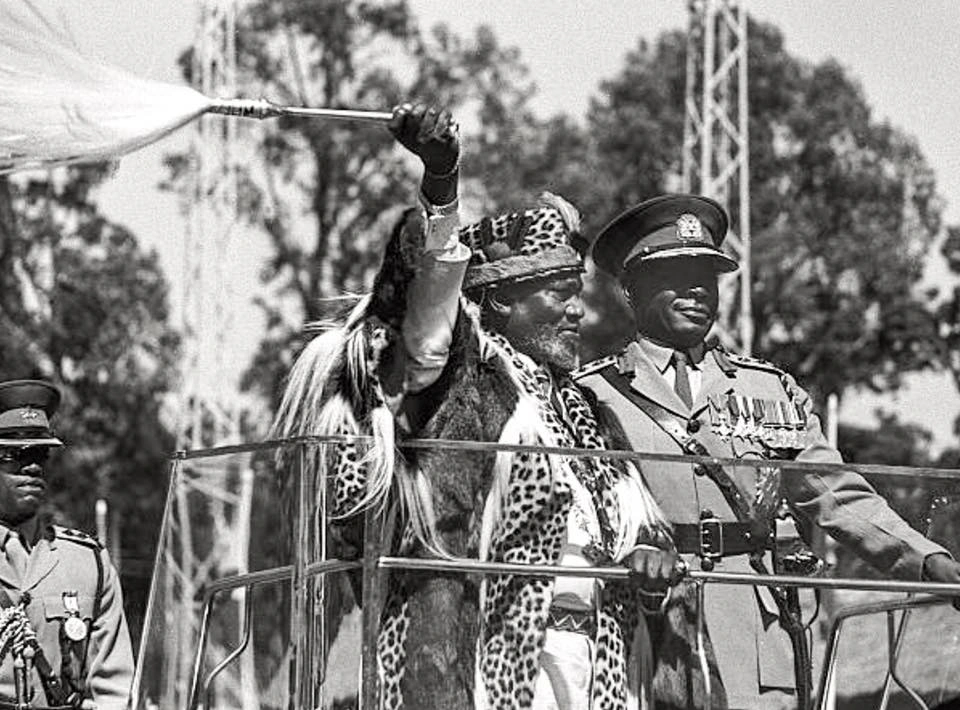
Jomo Kenyatta iconic Ceremonial fly whisk carried during state ceremonies
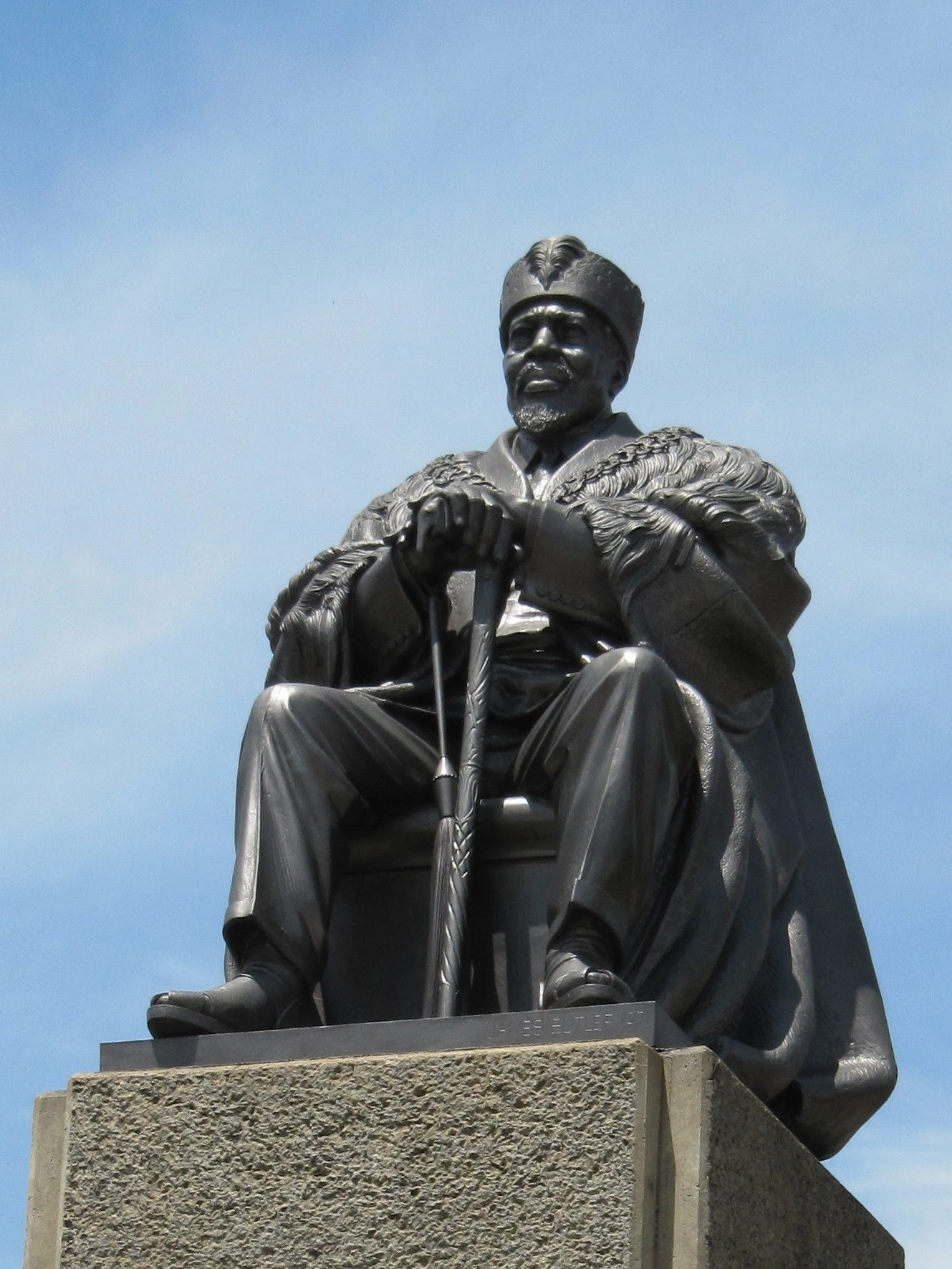
Jomo Kenyatta Statue Outside Kenyatta International Convention Centre KICC Nairobi_2015
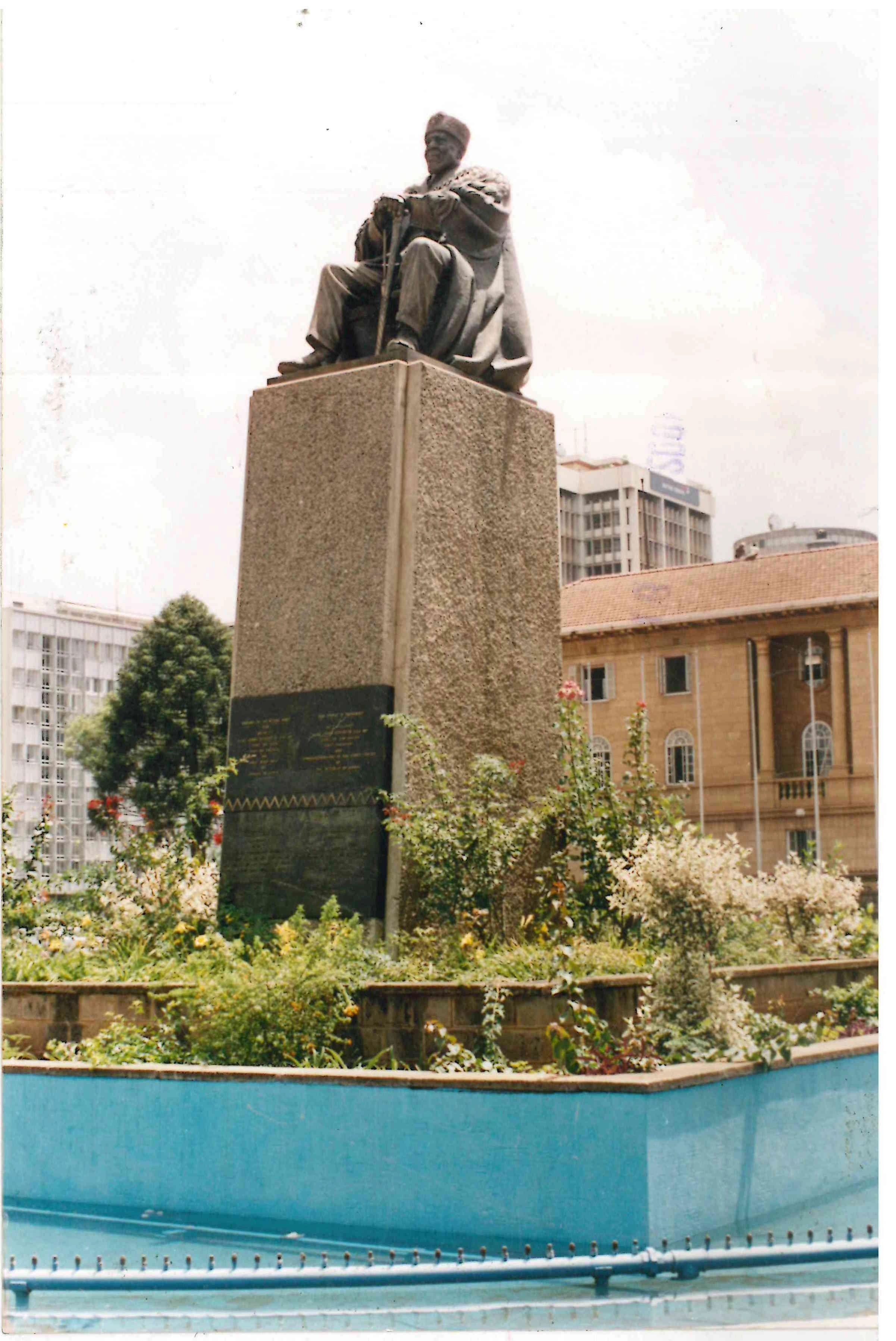
Jomo Kenyatta Statue Outside Kenyatta International Conference Centre KICC Nairobi_2000
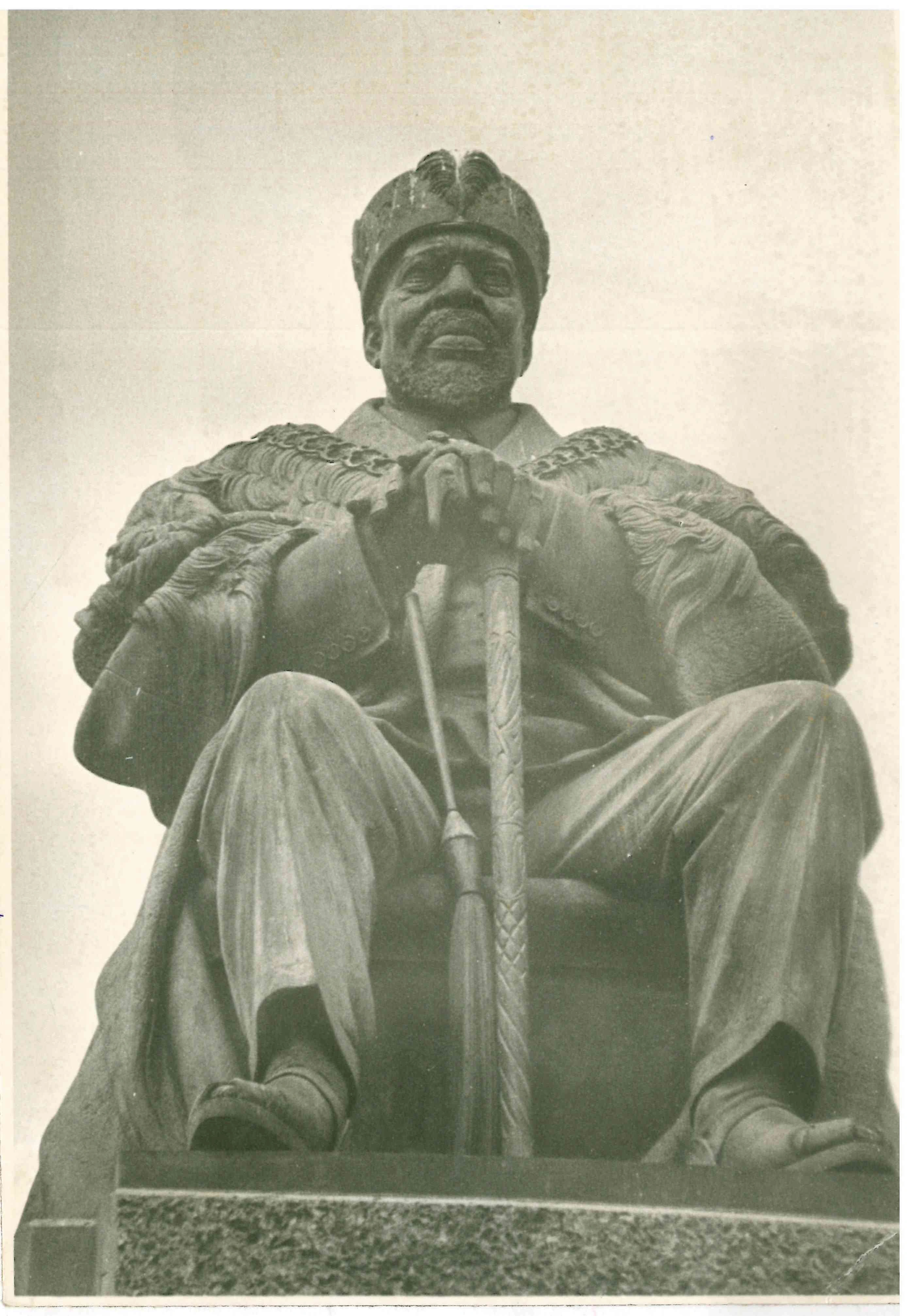
Jomo Kenyatta Statue Outside Kenyatta International Conference Centre KICC Nairobi_April 1984
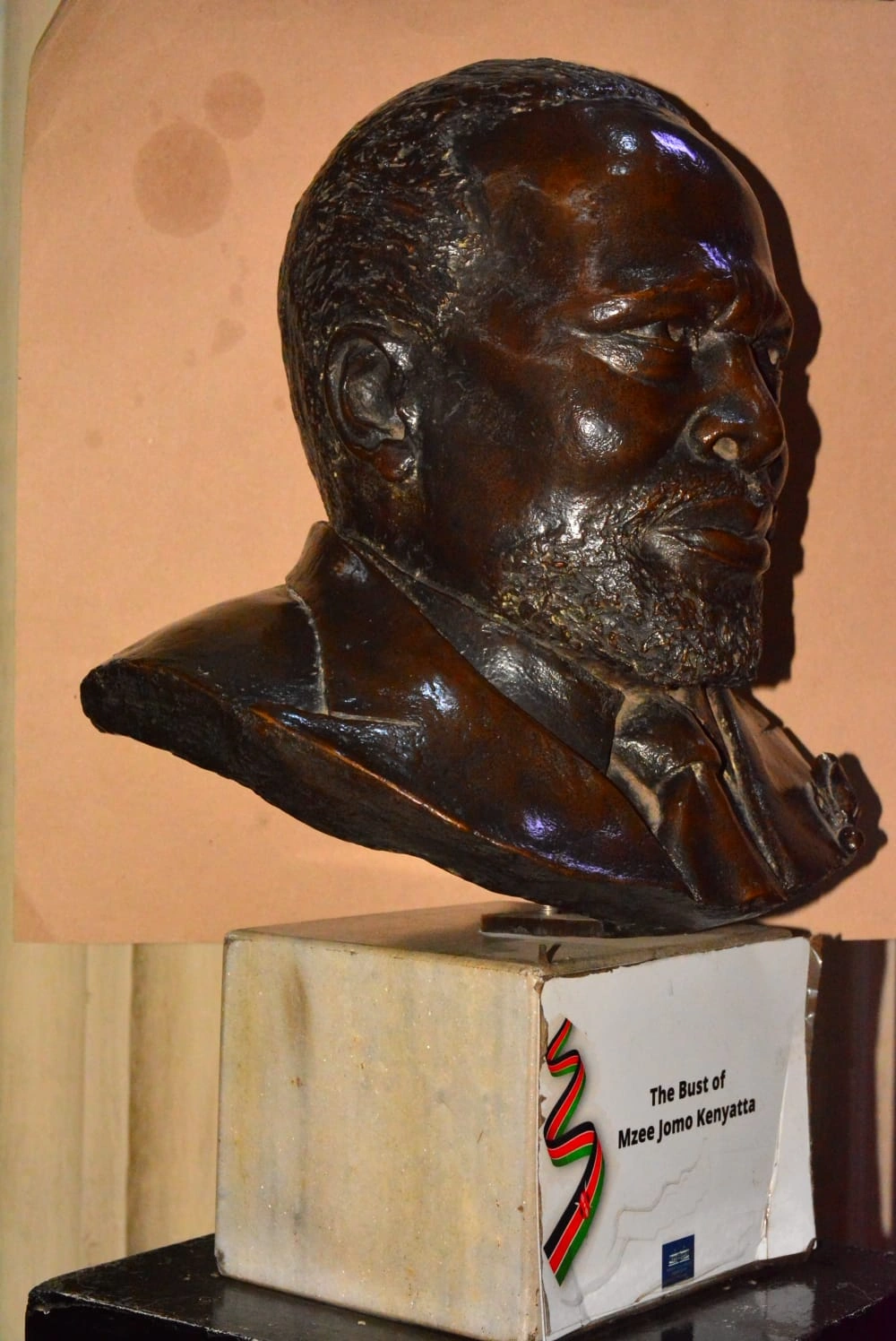
The Bust of Kenyan Founding President Mzee Jomo Kenyatta Side Cutaway_2000
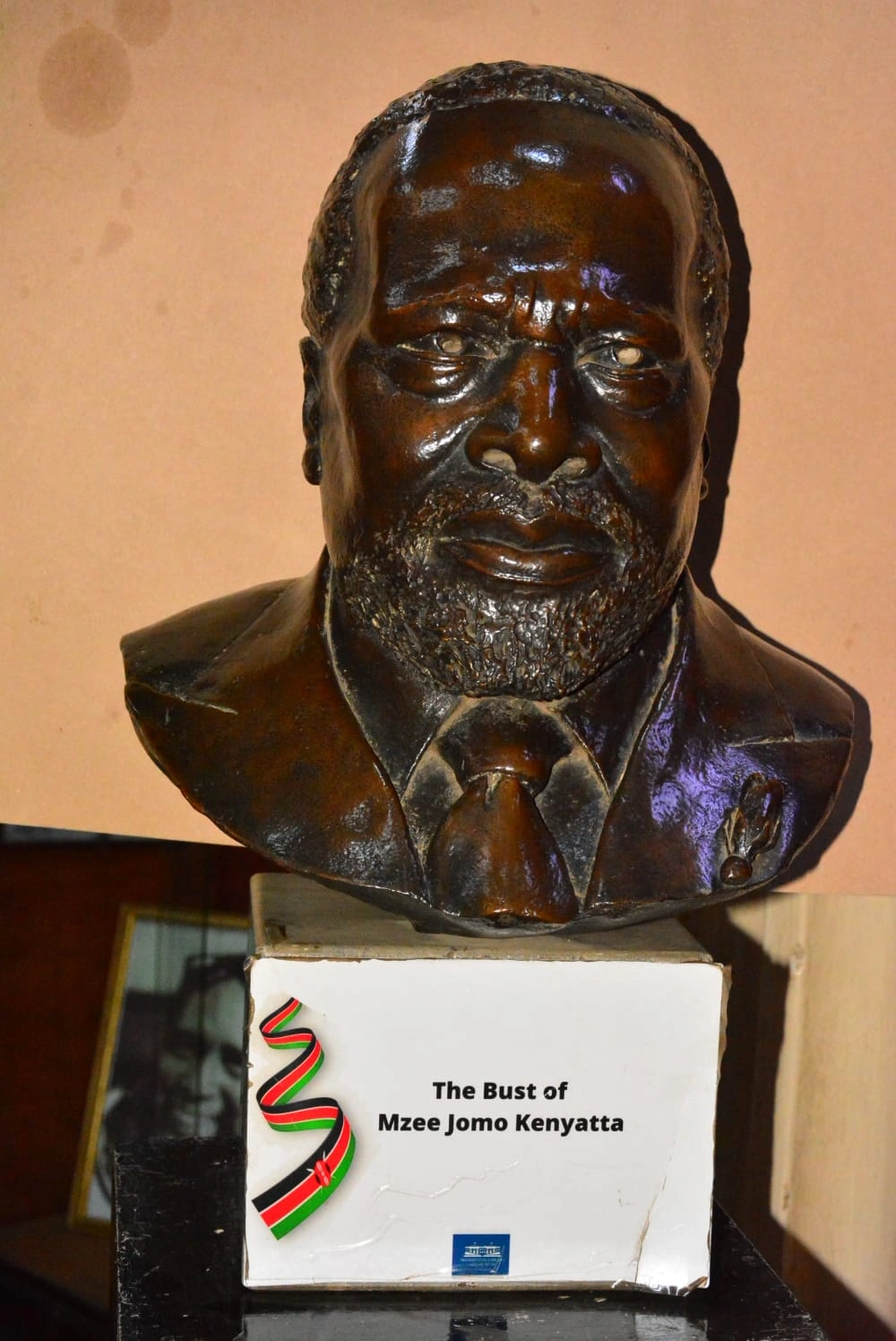
The Bust of Kenyan Founding President Mzee Jomo Kenyatta Long shot_2000
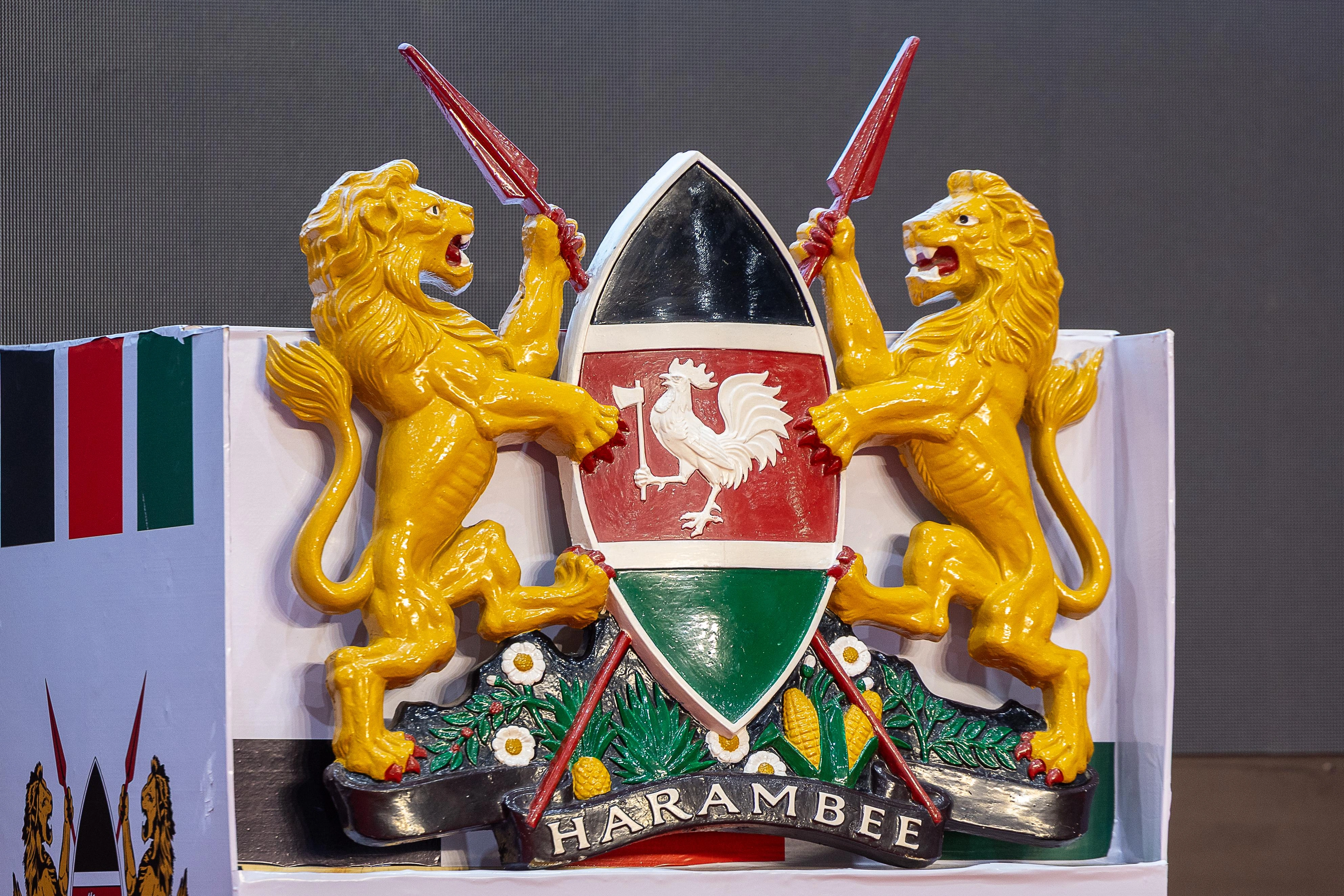
The Kenya Coat of Arms officially adopted in 1963 _12.12.1963
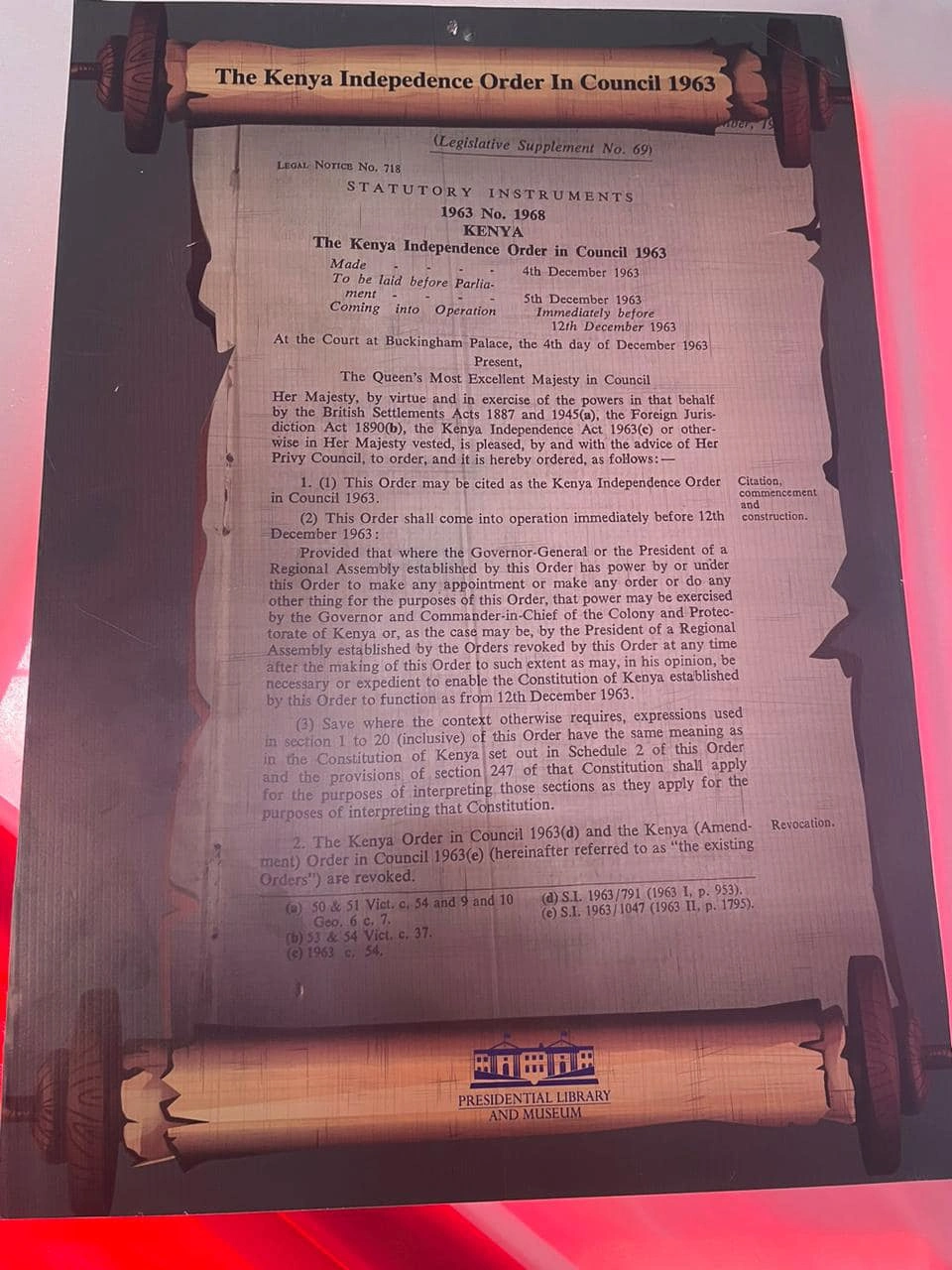
The Kenya Independence order in Council 1963_12.12.1963
Documents
PDF
The Making of the Kenyan Flag Cabinet Minutes Page 7_3.7.1963
PDF
The Making of the Kenyan Flag Cabinet Minutes Page 6_26.6.1963
PDF
The Making of the Kenyan Flag Cabinet Minutes Page 4_26.6.1963
PDF
The Making of the Kenyan Flag Cabinet Minutes Page 3_26.6.1963
PDF
The Making of the Kenyan Flag Cabinet Minutes Page 2_21.6.1963
PDF
The Making of the Kenyan Flag Cabinet Minutes Page 1_7.6.1963
PDF
Statutory Instruments 1963 No. 1968, known as the Kenya Independence Order in Council 1963, is the foundational British legislation that granted Kenya its independence. It was established by the Queen in Privy Council on December 4, 1963, and came into operation immediately before December 12, 1963.
PDF
A speech outlining Kenya's full independence from the British rule and gains made
PDF
A speech outlining Kenya's internal self rule
PDF
A speech outlining Kenya's internal self rule
PDF
A speech outlining Kenya's internal self rule
PDF
A speech outlining Kenya's internal self rule
PDF
A speech outlining Kenya's internal self rule
PDF
Statutory Instruments 1963 No. 1968, known as the Kenya Independence Order in Council 1963, is the foundational British legislation that granted Kenya its independence. It was established by the Queen in Privy Council on December 4, 1963, and came into operation immediately before December 12, 1963.
PDF
Kenya Sessional Paper No 10 of 1965 African Socialism_President Jomo kenyatta_1965
PDF
The Constitution of Kenya ACT 1969 Number 5 of 1969