Audio file
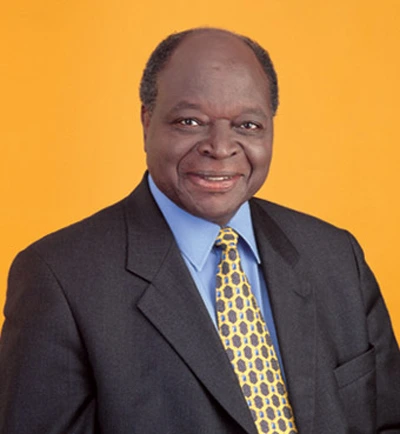
HE Emilio Mwai Kibaki
2002
–
2013
Mwai Kibaki was born on 15 November 1931 in Gatuyaini village, Othaya, Nyeri County, to Kibaki Gĩthĩnji and Teresia Wanjikũ. Raised in a farming family, he developed a strong appreciation for education and hard work from an early age. His academic excellence and disciplined upbringing laid the foundation for a distinguished career in economics, public service, and national leadership.
Overview
Long before he became Kenya's third President and one of the country's most respected statesmen, Mwai Kibaki was a village boy growing up in the green highlands of Othaya.
Mwai Kibaki was born on November 15, 1931, in Gatuyaini village, Othaya, to Kibaki Gĩthĩnji and Teresia Wanjiku. He was the youngest child in a large peasant Kikuyu family and grew up alongside his eight siblings in a close-knit rural community.
As a young boy, Mwai spent much of his time under the care of his elder sister, Waitherero, while his mother worked in the family gardens. Like many children of his generation, he quickly became part of the daily rhythm of village life. His childhood was shaped by farm work, family responsibilities, and the values of discipline and hard work that were deeply rooted in Kikuyu society.
Because traditional gender roles assigned different duties to boys and girls, Mwai's responsibilities were largely outdoors. He helped cultivate the family's land, tended livestock, and participated in the everyday tasks that sustained the household. These experiences exposed him early to the realities of rural life and the importance of perseverance.
Around this time, Catholic missionaries operating from the nearby Karima Mission began visiting surrounding villages in search of children who could attend school. Formal education was still uncommon in many rural areas, and families often had to decide which of their children would be given the opportunity to study.
According to family accounts, it was Mwai's father, who had several wives, who nominated the young boy to attend the mission school. The decision was partly practical: Mwai was considered less useful in the gardens than some of his siblings. Yet what seemed like an ordinary choice at the time would prove to be a pivotal moment in his life.
The path from a small village school in Othaya would eventually lead Mwai Kibaki to some of the world's finest institutions of learning, and, decades later, to the presidency of Kenya.
Mwai Kibaki’s educational journey began at Gatuyaini Village School in the late 1930’s, a modest institution established by the Italian Consolata Fathers, who had arrived in Nyeri in the early twentieth century. Initially hoping to establish vineyards and olive farms, the missionaries soon shifted their focus to education, healthcare, and evangelism, building schools, churches, and dispensaries throughout the region.
For two years’s the young Kibaki attended the village school at a cost of just fifty cents per term during the early years of the Second World War. Alongside reading, writing and arithmetic, he also received instruction in Catholic catechism. The Consolata Fathers competed for pupils with schools established by the Kikuyu Independent School Association (KISA), reflecting the growing demand for education in Central Kenya.
After completing his early grades, Kibaki transferred to Karima Mission School, now Karima Primary School. His years at Karima proved formative. The discipline, emphasis on learning, and values instilled by the Catholic missionaries helped shape the quiet, methodical character for which he would later become known.
In 1944, Kibaki joined Mathari Boarding School, today's Nyeri High School, where he studied until 1946. Boarding school exposed him to a broader world beyond his village and equipped him with practical vocational skills such as carpentry and masonry. Students were expected to help maintain school facilities, repair furniture, and cultivate their own plots of land, reinforcing the values of self-reliance and hard work.
Even as a teenager, Kibaki displayed an entrepreneurial streak. During school holidays, he worked as a bus conductor for the now-defunct Othaya African Buses, which operated between Nyeri and Nairobi, earning extra income while gaining firsthand experience of responsibility and commerce.
His academic excellence earned him admission in 1947 to Holy Ghost College, now Mang'u High School, then one of the most prestigious secondary schools in East Africa. There, Kibaki distinguished himself as one of the school's brightest students. In 1950, he sat the Cambridge School Certificate examinations and achieved six Grade One distinctions, the highest possible result under the system, cementing his reputation as an exceptional scholar.
Like many young men of his generation, Kibaki briefly dreamed of joining the military, inspired by veterans of the First and Second World Wars from his village. However, colonial policies barred members of the Kikuyu, Embu, and Meru communities from military recruitment during the State of Emergency, bringing those ambitions to an abrupt end.
Fate, however, had something different in store. Rather than pursuing a military career, the brilliant young student would soon earn admission to one of Africa's leading universities, beginning a journey that would establish him as one of the continent's foremost economists.
In 1951, Mwai Kibaki crossed Kenya's borders for the first time to join Makerere University College in Kampala, Uganda. It marked the beginning of an academic journey that would establish him as one of East Africa's finest economists and shape the philosophy that later guided his presidency.
Founded in 1922 as a technical college, Makerere had evolved into the premier institution of higher learning in East Africa. Following recommendations by the Asquith Commission, the college entered into a special relationship with the University of London and, by 1949, had become the University College of East Africa. Its students would now graduate with internationally recognised University of London degrees, placing Makerere among the continent's most prestigious universities.
Kibaki enrolled to study Economics, History and Political Science between 1951 and 1955. An outstanding student, he belonged to the first generation of Africans to earn a University of London degree through Makerere, a milestone that reflected both his academic ability and the expanding educational opportunities available to Africans in the final years of colonial rule.
But Kibaki's education extended beyond the lecture halls. At Makerere, he immersed himself in student leadership, serving as Chairman of the Kenya Students Association and later as Vice-Chairman of the Makerere Students' Guild. These roles sharpened his leadership, negotiation and organisational skills while exposing him to the growing nationalist movement sweeping across East Africa. Like many of his contemporaries, he became an active voice in discussions about decolonisation and the future of Kenya.
Kibaki graduated in 1955 with a First Class Honours degree in Economics, an achievement that immediately distinguished him among his peers. Several of his lecturers encouraged him to pursue the renowned Philosophy, Politics and Economics (PPE) programme at Oxford University. Instead, he accepted a scholarship to the London School of Economics to specialise in Public Finance.
Before leaving for Britain, Kibaki briefly worked as an Assistant Sales Manager with the Uganda division of Shell Company of East Africa, gaining practical experience in the private sector. It was a short but valuable interlude before returning to academic life.
At the London School of Economics (LSE), Kibaki excelled once again, graduating with distinction in 1958. His time in London proved transformative. There, he was introduced to the economic ideas of the British economist John Maynard Keynes, whose theories on government investment, affordable credit, infrastructure development and employment would leave a lasting impression on the young scholar.
Keynes argued that governments should play an active role in stimulating economic growth, particularly during periods of slow economic activity. He advocated investment in public infrastructure, access to affordable credit, and policies that encouraged business expansion and job creation. These principles resonated deeply with Kibaki and would later be reflected in many of the economic policies pursued during his presidency, including large-scale investment in roads, education and public infrastructure.
Armed with an exceptional academic record, Kibaki returned to East Africa in 1958 to join his alma mater as an Assistant Lecturer in the Department of Economics at Makerere University. Between 1958 and 1960, he taught the next generation of East African students while building a reputation as a thoughtful economist and gifted teacher.
More than five decades later, while receiving an honorary Doctor of Laws degree from Makerere University in January 2012, President Kibaki reflected on the institution's lasting influence on his life.
"Makerere is where my academic and intellectual foundation was laid. Many of my leadership skills were developed and nurtured here."
The quiet village who, through a fortunate twist of fate, found his way into a mission school in Othaya, had become an internationally trained economist, respected lecturer and emerging public leader. It was only a matter of time before his talents would be called upon in the service of a nation preparing for independence.
By 1960, Mwai Kibaki had established himself as one of East Africa's brightest young economists. He was lecturing at Makerere University, enjoying a promising academic career and earning a reputation as a gifted teacher. Yet history was moving quickly, and Kenya's march towards independence would soon call him away from the classroom.
The man who changed the course of Kibaki's life was Tom Mboya.
Like Kibaki, Mboya was a former student of Mang'u High School, a devout Catholic and an exceptionally gifted leader. Recognising Kibaki's intellect and organisational ability, Mboya persuaded him to leave academia and help build the political movement that would lead Kenya to independence.
In December 1960, Kibaki resigned from Makerere University and became the Executive Officer of the newly formed Kenya African National Union (KANU).
His arrival came at a pivotal moment. The party was still finding its footing, and its founders faced resistance from the colonial administration. When KANU's registration papers were first submitted, officials refused to register the party because Jomo Kenyatta, then still detained by the colonial government, had been named its president, and because trade unions formed part of its membership. The setback only strengthened the resolve of those working behind the scenes to prepare the party for self-government.
As Executive Officer, Kibaki played a central role in building KANU into a national political organisation. Working alongside Tom Mboya, James Gichuru and other independence leaders, he helped establish the party's administrative structures, coordinate its activities and prepare it for the responsibilities of governing an independent nation.
Beyond party politics, Kibaki also contributed to the broader nation-building effort. He joined the Kenya Education Trust, which coordinated the second East African student airlift programme to the United States. The initiative enabled hundreds of talented young Africans to pursue higher education abroad, helping prepare the skilled workforce that the country would need after independence.
Kibaki's expertise soon extended beyond administration into public policy. He became a member of the team that helped draft Kenya's first Independence Constitution, laying the legal foundations for the country's transition to self-rule in 1963.
He also worked closely with Tom Mboya on the landmark Sessional Paper No. 10 of 1965, African Socialism and Its Application to Planning in Kenya. The document became the blueprint for Kenya's post-independence economic development, advocating a mixed economy that encouraged both private enterprise and government investment. Many of the economic principles articulated in the paper would continue to influence Kenya's development for decades.
When KANU won the historic elections that ushered Kenya into independence, a photograph captured the jubilation of the moment: Tom Mboya and Mwai Kibaki embracing in celebration. It was more than a victory for a political party, it was the triumph of a generation that had dedicated itself to building a new nation.
Although still only in his early thirties, Kibaki had already helped shape the institutions, policies and constitutional framework of independent Kenya. The next step would be to seek a mandate from the people themselves.
As Kenya prepared for independence, Mwai Kibaki stepped from the world of policy and party organisation into elective politics. Having helped build the institutions of the new nation, he now sought the people's mandate to represent them in Parliament.
In the historic pre-independence General Election of 1963, Kibaki successfully contested the Donholm parliamentary seat in Nairobi, later known as Bahati Constituency and today part of Makadara Constituency. His victory marked the beginning of a parliamentary career that would span nearly five decades.
Although a first-time candidate, Kibaki entered Parliament with an advantage few new legislators possessed. His work at KANU had brought him into close contact with the country's independence leadership, while his academic background and expertise in economics made him one of the government's most promising young policymakers. Before long, he was appointed to the Cabinet, beginning what would become one of the longest and most distinguished ministerial careers in Kenya's history.
For more than a decade, Kibaki represented the rapidly growing urban constituency of Donholm, where he built a reputation as a thoughtful, well-prepared and effective parliamentarian. Unlike many of his contemporaries, he was known for measured debate, mastery of policy and careful attention to detail rather than fiery political rhetoric. His calm demeanour and command of economic issues earned him respect across the political divide.
The 1969 General Election, however, proved to be one of the toughest contests of his political career. Kibaki narrowly retained his seat after a fiercely fought race against Jael Mbogo, one of the country's pioneering women politicians. The closely contested election underscored the increasingly competitive nature of Kenya's politics and prompted Kibaki to reflect on his long-term political future.
In 1974, he made a significant decision: he transferred his political base from Nairobi to his ancestral home of Othaya in Nyeri District. The move reflected both personal conviction and the wishes of many people from his home area, who had long encouraged him to return and represent the community where he had been born and raised.
Looking back years later, Kibaki recalled that he had been under constant pressure to "come back home" ever since leaving Makerere University. Representing Othaya, he believed, allowed him to remain closely connected to the people and values that had shaped his early life.
The decision proved to be one of the defining moments of his political career. Othaya would become Kibaki's political home for the next thirty-eight years. Election after election, its voters renewed their confidence in him, returning him to Parliament until his retirement from elective politics in 2013 following the completion of his second presidential term.
By the mid-1970s, Mwai Kibaki had firmly established himself as one of Kenya's leading public servants, a respected parliamentarian, an accomplished Cabinet minister and a trusted figure within government. Yet even greater responsibilities lay ahead as he assumed some of the country's most influential ministerial portfolios and emerged as one of the principal architects of Kenya's economic management.
When Kenya attained independence in 1963, Mwai Kibaki was just 31 years old. Yet despite his youth, he quickly became one of the country's most trusted economic minds, helping shape the policies that would guide Kenya's development during its formative years.
President Jomo Kenyatta appointed Kibaki Parliamentary Secretary to the Treasury immediately after independence. Within months, he was promoted to Assistant Minister for Economic Planning and Development and became Chairman of the Economic Planning Commission. The rapid rise reflected the confidence that the new government placed in his intellect and technical expertise.
Working under Minister for Economic Planning Tom Mboya, Kibaki helped produce one of the most influential policy documents in Kenya's history: Sessional Paper No. 10 of 1965, African Socialism and Its Application to Planning in Kenya. The paper advocated a mixed economy that combined private enterprise with strategic government investment. It rejected wholesale state control while affirming the state's responsibility to invest in education, infrastructure and social services. For decades, it remained the foundation of Kenya's economic planning.
The young economist soon found himself dealing with challenges that tested the new nation's resilience. In 1965, Tanzania announced its intention to withdraw from the East African Currency Board, triggering the dissolution of the common East African currency system. Kenya, Uganda and Tanzania subsequently established separate central banks and introduced their own national currencies in 1966. Kibaki played an important role in helping Kenya navigate this complex monetary transition as the country strengthened its economic sovereignty.
Political developments also reshaped his career. Following the split between President Jomo Kenyatta and Vice President Oginga Odinga in 1966, Kibaki was appointed Minister for Commerce and Industry. At a time when Cold War rivalries influenced African politics, he joined Tom Mboya and Bruce McKenzie on a mission to Moscow to renegotiate Kenya's economic agreements with the Soviet Union. The revised arrangements ultimately facilitated the completion of the New Nyanza Hospital in Kisumu, now the Jaramogi Oginga Odinga Teaching and Referral Hospital.
The assassination of Tom Mboya in July 1969 profoundly affected both the nation and Kibaki personally. Mboya had been his mentor, colleague and close friend. At a time of heightened political and ethnic tensions, Kibaki was among the few senior leaders from Central Kenya who attended Mboya's burial on Rusinga Island, a gesture widely viewed as one of respect and national unity. More than four decades later, as President, Kibaki unveiled a monument in Mboya's honour in Nairobi.
Following the 1974 General Election, Kibaki was appointed Minister for Finance and Economic Planning, a position he would hold for the next thirteen years. His tenure coincided with a period of strong economic performance, expanding infrastructure, increased school enrolment and growing investor confidence. Kenya's economy recorded some of its highest growth rates during the 1970s, while policies promoting industrialisation, agricultural development and employment helped establish the country as one of the region's leading economies.
Among the initiatives associated with Kibaki's ministry were continued implementation of the ‘Kenyanisation’ policy, expansion of access to agricultural and industrial credit through institutions such as the Agricultural Finance Corporation and the Industrial and Commercial Development Corporation, and measures to support small-scale enterprises and the emerging Jua Kali sector. Many of these programmes sought to broaden economic participation by encouraging local entrepreneurship and employment.
Kibaki also played a prominent role in managing regional economic affairs. As disagreements intensified within the East African Community, he led negotiations aimed at preserving regional cooperation. Although the Community ultimately collapsed in 1977 amid political and economic differences among the partner states, Kibaki's efforts helped manage Kenya's interests during a difficult period of transition.
Internationally, his reputation as a capable economic manager continued to grow. His disciplined approach to fiscal policy and economic planning attracted attention beyond Kenya, and by the late 1970s he had established himself as one of Africa's most respected finance ministers.
A record of growth and its limits
Kibaki's years at the Treasury are widely remembered as a period of economic expansion, but they were not without criticism. While the economy grew steadily, the benefits were unevenly distributed. Development tended to concentrate in areas that already had relatively strong infrastructure and agricultural potential, leaving many arid and marginalised regions lagging behind.
The government's emphasis on market-led growth also contributed to widening income disparities, as wealth accumulated faster among established commercial farmers, businesses and urban centres than among poorer rural communities. Although employment expanded, population growth and rapid urbanisation meant that poverty and unemployment remained significant challenges.
Critics also argued that the economic model outlined in Sessional Paper No. 10, while effective in promoting growth, prioritised efficiency over equity and did not sufficiently address historical inequalities inherited from the colonial period. These debates would continue to shape discussions about Kenya's development long after Kibaki left the Finance Ministry.
Even so, by the time President Jomo Kenyatta died in August 1978, Mwai Kibaki had become one of the principal architects of Kenya's post-independence economy. His next chapter would see him move from economic stewardship to the second-highest office in the land, as Vice President under President Daniel arap Moi.
When President Jomo Kenyatta died on 22 August 1978, Kenya entered a new political era. Vice President Daniel arap Moi constitutionally assumed the presidency, inheriting a government in which Mwai Kibaki had already established himself as one of the country's most experienced and respected Cabinet ministers.
Just weeks before Kenyatta's death, Kibaki had strengthened his standing within the ruling Kenya African National Union (KANU) by winning the party's National Chairman position, the third most powerful office in the party hierarchy. Despite pressure to step aside, he contested the election and defeated Cabinet Minister Jeremiah Nyagah after James Gichuru withdrew from the race. The victory demonstrated his growing influence within both the party and government.
Recognising his experience and reputation for competence, President Moi appointed Kibaki as Kenya's Vice President while allowing him to retain the influential Finance portfolio until 1982. The dual role placed him at the centre of government during a period of both economic opportunity and mounting political uncertainty.
The early years of the Moi administration were characterised by relative economic stability. High international coffee prices, prudent fiscal management and continued investment in agriculture and infrastructure contributed to sustained economic growth. Kibaki remained the government's principal economic strategist, helping maintain investor confidence at a time when many African economies were experiencing severe financial difficulties.
Yet the political landscape was becoming increasingly turbulent.
On 1 August 1982, a section of the Kenya Air Force attempted to overthrow President Moi's government. The coup was suppressed by loyal units of the armed forces after hours of intense fighting, leaving significant loss of life and property, particularly in Nairobi. The failed coup profoundly altered Kenya's political trajectory.
In the aftermath, President Moi reorganised his Cabinet. Kibaki retained the vice presidency but was moved from the Treasury to become Minister for Home Affairs. As Leader of Government Business in Parliament, he became one of the administration's principal defenders in the National Assembly, helping steer government legislation through an increasingly centralised political system.
The years that followed saw the consolidation of one-party rule. Constitutional amendments strengthened KANU's position as the country's sole legal political party, while restrictions on political opposition, the press and civil liberties became more pronounced. Detentions without trial, allegations of torture and growing intolerance of dissent increasingly attracted criticism from human rights organisations, religious leaders and sections of civil society.
Throughout this period, Kibaki remained publicly loyal to President Moi and rarely challenged government policy in public. Supporters argued that his calm temperament and preference for consensus helped provide stability during a volatile period, while critics contended that, as Vice President, he bore collective responsibility for policies that weakened democratic institutions and curtailed political freedoms.
Unlike many senior politicians of the era, however, Kibaki generally avoided confrontational rhetoric and ethnic mobilisation. He had earlier declined to associate himself with the powerful Gikuyu, Embu and Meru Association (GEMA), despite pressure to do so, preferring to cultivate a national rather than ethnic political profile. His measured style earned him respect across political divides, even among those who disagreed with the government's direction.
Economically, the 1980s presented new challenges. Falling commodity prices, rising external debt and global recession placed increasing pressure on Kenya's economy. Like many developing countries, Kenya began implementing economic reforms encouraged by international financial institutions, including fiscal restraint and structural adjustment measures. While intended to restore economic stability, these policies also contributed to rising living costs, reduced public spending and growing social discontent.
By the late 1980s, Kenya's political and economic environment had changed dramatically from the optimism that had characterised the first years of independence. Kibaki remained one of the country's most experienced public servants, but his long association with the Moi administration increasingly shaped public perceptions of his leadership.
In 1988, following the controversial General Election and the introduction of the mlolongo (queue-voting) system, President Moi removed Kibaki from the vice presidency and reassigned him as Minister for Health. Although the move marked the end of his decade as the country's second-in-command, it also marked the beginning of a new phase in his political journey, one that would eventually see him break ranks with KANU and emerge as the leading figure in Kenya's struggle for multiparty democracy.
Kibaki's years as Vice President remain one of the most debated periods of his public life. They demonstrated his administrative competence, loyalty and steady leadership, but also exposed him to criticism for remaining within a government whose democratic record became increasingly contested. It was a decade of achievement, compromise and difficult choices, one that profoundly shaped the leader he would later become.
For nearly three decades, Mwai Kibaki had been at the heart of government. He had helped draft policies, managed Kenya's economy, served as Vice President, and become one of the country's most experienced public servants. Yet the journey that ultimately led him to the presidency began not in government, but in opposition.
The transition was gradual.
In 1983, President Daniel arap Moi removed Kibaki from the influential Ministry of Finance and reassigned him to the Ministry of Home Affairs while retaining him as Vice President. Five years later, following the controversial 1988 General Election, Moi dropped Kibaki as Vice President altogether and appointed him Minister for Health. Although he continued serving in Cabinet, it became increasingly evident that his influence within the government was diminishing.
The political landscape changed dramatically in 1991 when Kenya reintroduced multiparty politics after years of domestic pressure and international calls for democratic reform. Sensing that the country's political future had entered a new phase, Kibaki resigned from the Cabinet and left KANU in December 1991, ending a nearly three-decade association with the party that had led Kenya to independence.
Just two days later, he launched the Democratic Party (DP).
Several prominent politicians, including Njenga Karume, Kyale Mwendwa, Eliud Mwamunga and John Keen, joined the new party. Unlike many opposition movements of the time, the Democratic Party projected itself as a moderate, constitutional and policy-oriented alternative to KANU.
Kibaki's decision not to join the Forum for the Restoration of Democracy (FORD), then the country's largest opposition movement, attracted criticism from some pro-democracy activists who feared that a divided opposition would benefit President Moi. Yet Kibaki maintained that political competition required strong institutions and principled leadership rather than expedient alliances.
Events would partly vindicate that strategy. Internal disagreements soon split FORD into FORD-Kenya, led by Oginga Odinga, and FORD-Asili, led by Kenneth Matiba, fracturing the opposition vote ahead of the 1992 General Election.
Running on the Democratic Party ticket, Kibaki contested the presidency for the first time in 1992. He finished third behind President Moi and Kenneth Matiba. The fragmented opposition enabled Moi to retain the presidency despite receiving well under half of the total votes cast.
Although defeated, Kibaki emerged from the election with his reputation enhanced. In Parliament, he quickly established himself as one of the country's most effective opposition leaders. His measured debating style, command of public finance and willingness to challenge government policy through facts rather than rhetoric earned him respect across the political spectrum.
He also sought to demonstrate that opposition meant more than criticism. Under his leadership, the Democratic Party established a shadow cabinet to scrutinise government policy and present alternative proposals. Kibaki became an active advocate for constitutional reform, joining other political leaders and civil society organisations in calling for the replacement of the independence-era Constitution with a more democratic constitutional order.
Kibaki again contested the presidency in 1997 and this time finished second behind President Moi, significantly improving his national standing. Once again, however, the opposition remained divided, allowing KANU to retain power.
By 2002, many opposition leaders had concluded that defeating KANU would require unprecedented unity.
In September that year, Kibaki's Democratic Party joined Kijana Wamalwa's FORD-Kenya and Charity Ngilu's Social Democratic Party to form the National Alliance of Kenya (NAK), with Kibaki selected as the coalition's presidential candidate.
Meanwhile, tensions within KANU were reaching breaking point. President Moi's decision to endorse Uhuru Kenyatta as his preferred successor sparked deep divisions within the ruling party. A reformist faction led by Raila Odinga broke away to form the Liberal Democratic Party (LDP), which soon entered into an alliance with NAK.
The two groupings united to create the National Rainbow Coalition (NARC), bringing together political leaders who, only a few years earlier, had often been rivals.
At a packed rally in Nairobi's Uhuru Park, Raila Odinga delivered the now-famous words that would become one of the defining moments in Kenya's political history:
"Kibaki Tosha."
The declaration effectively united the opposition behind a single candidate and transformed the election into the most competitive presidential contest since independence.
The campaign nearly ended in tragedy. On December 3, 2002, Kibaki was seriously injured in a road accident and was flown to London for specialised treatment. Unable to campaign extensively during the final weeks before the election, he relied on the NARC leadership, including Raila Odinga, Kijana Wamalwa, Charity Ngilu and other coalition partners, to carry the campaign across the country.
On 27 December 2002, Kenyan voters delivered a historic verdict. Kibaki won the presidency with more than 60 per cent of the vote, ending KANU's uninterrupted 39-year hold on power and overseeing the country's first peaceful democratic transfer of power from one ruling party to another.
For many Kenyans, the victory represented more than an electoral change. It symbolised the triumph of coalition politics, constitutional democracy and the belief that political power could change hands through the ballot box. For Mwai Kibaki, it marked the culmination of an eleven-year journey in opposition, a journey defined by patience, resilience and an unwavering conviction that leadership could be earned through democratic means.
On 29 December 2002, Mwai Kibaki was sworn in as Kenya's third President while seated in a wheelchair, still recovering from the road accident that had nearly derailed his election campaign just weeks earlier. Addressing the nation during his inauguration, he described the occasion as "a critical moment in the history of our country," reflecting the immense public optimism that accompanied the first transfer of power from the independence-era ruling party to the opposition.
The new administration inherited an economy that had experienced years of sluggish growth, declining investor confidence and deteriorating public infrastructure. Determined to reverse the trend, President Kibaki's government launched the Economic Recovery Strategy for Wealth and Employment Creation (2003–2007), supported by the newly established National Economic and Social Council (NESC), which brought together government, business and civil society to advise on long-term national development.
The results were quickly reflected in key economic indicators. Economic growth accelerated from less than one per cent in 2002 to sustained expansion over the following years. The government invested heavily in rehabilitating roads, expanding electricity generation, improving telecommunications, modernising port facilities and revitalising the railway network. These investments laid the foundation for Kenya's renewed economic growth during the decade.
One of the administration's most celebrated achievements was the introduction of Free Primary Education in 2003. The policy enabled more than a million additional children to enrol in school within its first year, dramatically expanding access to basic education and earning international recognition. The government also strengthened programmes providing treatment for malaria, tuberculosis and HIV/AIDS, while increasing investment in public health services.
The Kibaki administration also sought to strengthen public accountability. Investigations were initiated into major financial scandals, including the Goldenberg affair, which had resulted in the loss of billions of shillings through fraudulent export compensation schemes during the 1990s. Although prosecutions proved difficult and many Kenyans felt accountability remained incomplete, the inquiries reflected growing public demand for transparency in government.
Despite these early successes, political tensions within the National Rainbow Coalition (NARC) steadily intensified.
The coalition had brought together diverse political parties united by the goal of ending KANU's four-decade rule. Once in government, however, disagreements emerged over the implementation of a pre-election power-sharing agreement between the National Alliance of Kenya (NAK) and the Liberal Democratic Party (LDP). Leaders within LDP argued that they had been denied an equitable share of senior Cabinet positions and accused the President's allies of dominating key ministries.
The death of Vice President Kijana Wamalwa in August 2003 further weakened the coalition. President Kibaki appointed Moody Awori to succeed him, but underlying political divisions continued to deepen.
The disagreements came to a head during the constitutional review process. While many coalition leaders supported creating an executive Prime Minister alongside a significantly reduced presidency, the proposed "Wako Draft" retained substantial executive powers for the President. Raila Odinga and the LDP faction opposed the draft and joined forces with KANU to campaign for its rejection in the 2005 constitutional referendum.
The referendum became, in effect, a vote on the future of the coalition itself. When the proposed constitution was rejected by a majority of voters, it marked a major political setback for President Kibaki and exposed the depth of divisions within NARC.
Days later, Kibaki dismissed several ministers aligned with Raila Odinga and reorganised his Cabinet, bringing in members from opposition parties to form what became known as the Government of National Unity. While the reshuffle restored the President's control over government, it effectively brought the NARC coalition to an end.
Recovery, reform…and unfinished promises
President Kibaki's first term is widely credited with restoring economic growth, rebuilding public confidence in government and expanding access to education and infrastructure after years of stagnation. Many of the economic reforms introduced during this period would continue to influence Kenya's development long after he left office.
At the same time, several promises that had united the NARC coalition remained unfulfilled. Expectations of a new constitutional order, comprehensive anti-corruption reforms and a more inclusive style of coalition governance were only partially realised. Critics argued that old patterns of political competition and executive power had begun to re-emerge, while supporters maintained that the administration had restored stability and laid the groundwork for future reforms.
As the country prepared for the 2007 General Election, Kenya stood at a crossroads. The economy was stronger than it had been five years earlier, but the political alliance that had brought President Kibaki to power had fractured. The next election would become one of the most consequential in the nation's history.
President Mwai Kibaki entered the 2007 General Election seeking a second and final term in office. To broaden his political support, he brought together several parties under a new alliance known as the Party of National Unity (PNU), whose campaign was built around the slogan Kazi Iendelee ("Let the work continue"). Having largely recovered from the injuries sustained during the 2002 campaign, Kibaki actively traversed the country, defending his government's record of economic recovery and promising to accelerate Kenya's development.
The election was one of the closest and most fiercely contested in Kenya's history. Opinion polls throughout the campaign suggested a tight race between President Kibaki and Orange Democratic Movement (ODM) candidate Raila Odinga.
Following the vote on 27 December 2007, the Electoral Commission of Kenya declared Kibaki the winner. The results were immediately disputed by the opposition, which alleged widespread irregularities in the tallying process. International and domestic observer missions also raised concerns about aspects of the electoral process, while later investigations concluded that serious shortcomings had undermined confidence in the outcome, though they did not establish a definitive winner.
What followed was one of the darkest chapters in Kenya's post-independence history.
Violence erupted across several parts of the country, fuelled by political grievances, long-standing ethnic tensions and disputes over land and historical injustices. More than 1,000 people lost their lives, hundreds of thousands were displaced from their homes, and businesses, schools and livelihoods were destroyed. The crisis shook Kenya's international reputation and exposed deep social and political divisions that had accumulated over decades.
Shortly after his swearing-in, President Kibaki appointed Kalonzo Musyoka as Vice President in a move that strengthened his administration but was criticised by ODM leaders, who maintained that the election outcome remained unresolved. As violence persisted, regional and international efforts intensified to find a negotiated settlement.
The breakthrough came through mediation led by former United Nations Secretary-General Kofi Annan under the auspices of the African Union's Panel of Eminent African Personalities. After weeks of negotiations, President Kibaki and Raila Odinga signed the National Accord and Reconciliation Agreement on 28 February 2008, creating a Grand Coalition Government.
Under the agreement, Kibaki remained President while Raila Odinga became Kenya's first Prime Minister since independence. Although relations between the two leaders were frequently strained, the coalition government succeeded in restoring relative stability and ensuring that state institutions continued to function during a period of national uncertainty.
Reflecting on the agreement years later, President Kibaki said:
"Kenyans will always prefer peace over conflict, prosperity over desolation, unity over discord and justice over injustice. That is why on February 28, 2008, Hon. Raila Odinga and I signed the National Accord because our people had spoken clearly that they wanted one Kenya in which all lived in peace, justice and harmony."
The coalition government went on to oversee one of the most significant periods of institutional reform since independence.
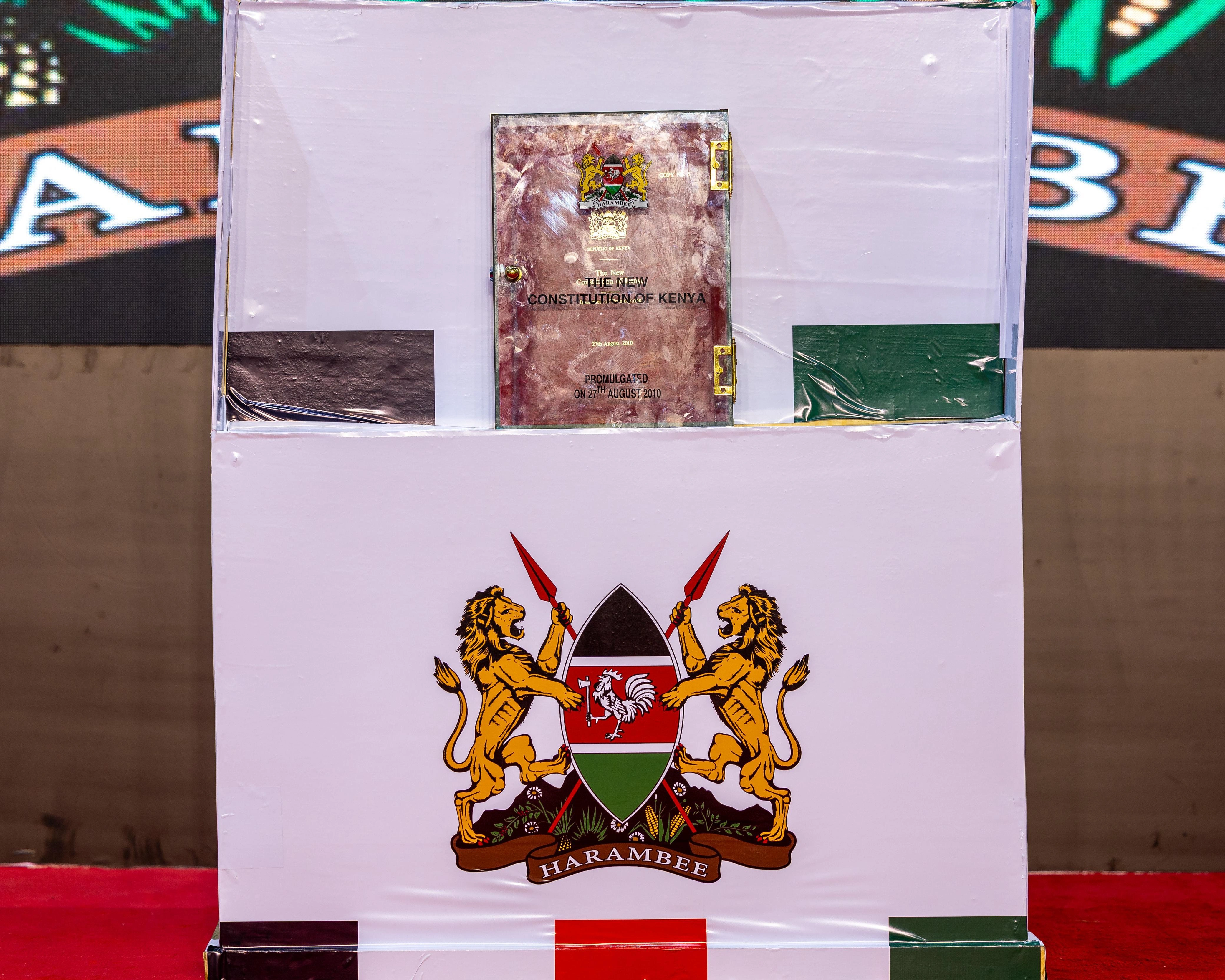
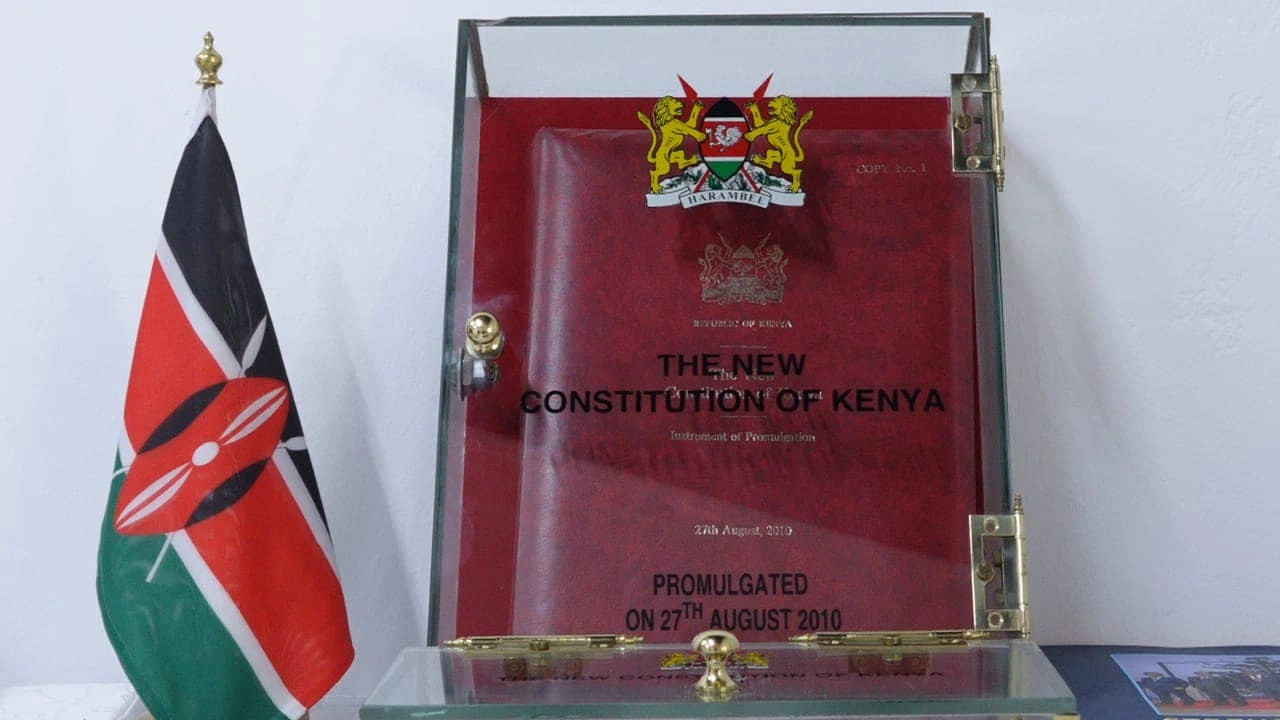
Its most enduring achievement was the adoption of the Constitution of Kenya, 2010. Following decades of debate and several failed attempts at constitutional reform, Kenyans overwhelmingly approved the proposed Constitution in a national referendum. Promulgated on 27 August 2010, the new Constitution fundamentally restructured the country's governance by introducing a more robust Bill of Rights, creating a devolved system of county governments, strengthening the independence of the Judiciary, establishing new constitutional commissions and placing greater limits on executive authority.
President Kibaki and Prime Minister Raila Odinga campaigned together in support of the new Constitution, demonstrating rare political unity despite their differences. The promulgation ceremony, attended by numerous African leaders and international dignitaries, marked a defining moment in Kenya's democratic journey.
Alongside constitutional reform, the coalition government continued to pursue an ambitious development agenda. Major investments were made in roads, energy generation, education, information and communications technology, and public infrastructure. Programmes to expand electricity access accelerated, fibre-optic connectivity transformed Kenya's digital landscape, and increased investment in higher education contributed to the rapid growth of universities across the country. These initiatives complemented the economic recovery that had begun during Kibaki's first term and helped position Kenya as one of Africa's fastest-growing economies in the early 2010s.
Nevertheless, significant challenges remained. The coalition government was often hampered by internal rivalry, with disagreements between PNU and ODM frequently slowing decision-making. Efforts to combat corruption produced mixed results, while implementation of key recommendations arising from the post-election violence, including justice for victims and accountability for those responsible, remained incomplete. The indictments issued by the International Criminal Court against several prominent Kenyan leaders also underscored the lasting consequences of the crisis.
As President Kibaki's second term drew to a close in 2013, his legacy reflected both extraordinary achievement and profound national challenge. His administration presided over the promulgation of a transformative Constitution, sustained economic growth and unprecedented investment in infrastructure. Yet it also bore the burden of one of the gravest political crises in Kenya's history.
Following the peaceful General Election of March 2013, Kibaki handed over power, keeping on with the precedent set by Moi of voluntarily transfering power to a democratically elected successor. His presidency had spanned a decade that transformed Kenya's institutions, economy and constitutional order, leaving a legacy that continues to shape the nation's development and political discourse.
On April 9, 2013, Mwai Kibaki formally handed over the presidency to President Uhuru Kenyatta, bringing to a close five decades of continuous public service that had seen him serve as civil servant, Cabinet minister, Vice President, Leader of the Opposition and, ultimately, Kenya's third President.
Unlike many former heads of state, Kibaki largely retreated from day-to-day politics after leaving office. He rarely commented on contemporary political debates, choosing instead to allow his record in public service to speak for itself. His retirement reflected the same reserved and understated character that had defined much of his career.
Although no longer holding elective office, Kibaki remained engaged in issues that had long interested him, particularly sustainable development.
In April 2016, the United Nations Educational, Scientific and Cultural Organization (UNESCO) appointed him as its Special Envoy for Water in Africa. In that role, he championed the sustainable management of water resources and advocated improved access to clean water and sanitation across the continent, recognising water security as a foundation for economic development, public health and peace.
As UNESCO's Special Envoy, Kibaki convened consultations with African ambassadors and high commissioners, delivered keynote addresses at regional water forums, supported Africa's participation in international conferences such as the World Water Week in Stockholm, and promoted dialogue on water security through initiatives including Kenya Water Week. He also continued to serve as Patron of the Millennium Water Alliance Kenya Chapter, supporting partnerships aimed at improving access to water, sanitation and nutrition in vulnerable communities.
Away from public engagements, Kibaki devoted more time to his family. He and his wife, Lucy Muthoni Kibaki, whom he married in 1961, had built a partnership that spanned more than five decades of public life. A trained teacher, Lucy left her teaching career to support the demands of her husband's political journey and became one of Kenya's most recognisable First Ladies.
Together, they raised four children; Judy Wanjiku, Jimmy Kibaki, David Kagai and Tony Githinji, while maintaining close ties to their home in Othaya, Nyeri County.
A lifelong Catholic, Kibaki remained deeply attached to his faith. Baptised Emilio Stanley by Italian missionaries during his childhood, he rarely used his baptismal names, preferring the name by which Kenyans had come to know him. Outside public life, he enjoyed golf, a pastime he had embraced as a young man, and remained a life member of Muthaiga Golf Club.
Even in retirement, Kibaki continued to attract admiration for his humility, wit and quiet intellect. While he largely stayed away from the political spotlight, his views on governance, economic management and national development continued to carry considerable weight among policymakers, scholars and the public.
His retirement was less a withdrawal from national life than a transition into the role of elder statesman, one whose influence was increasingly measured not by public office, but by the institutions he had helped build and the legacy he had left behind.
President Mwai Kibaki's presidency is widely regarded as one of the most transformative periods in Kenya's economic history. Assuming office in 2002 after nearly four decades in government and opposition politics, Kibaki inherited an economy characterized by slow growth, deteriorating infrastructure and declining public confidence in government institutions. Over the next ten years, his administration presided over a period of sustained economic expansion, major infrastructure development and significant investment in education and public services.
One of Kibaki's most enduring achievements was the introduction of Free Primary Education (FPE) in 2003, which enabled over a million additional children to enroll in school within the first year. The programme transformed access to education and remains one of the defining social policies in Kenya's post-independence history.
His administration also invested heavily in infrastructure. Hundreds of kilometres of roads were rehabilitated or constructed, electricity connectivity expanded dramatically into rural areas, and investments were made in ports, airports and telecommunications. These projects laid much of the foundation upon which later governments would build.
Economically, Kenya experienced remarkable growth under Kibaki. GDP growth rose from less than one per cent in 2002 to over seven per cent before the global financial crisis, with strong recoveries thereafter. His government pursued prudent fiscal management, encouraged private sector investment and restored investor confidence, helping position Kenya as one of East Africa's leading economies.
Kibaki also championed long-term national planning through the launch of Vision 2030, Kenya's ambitious development blueprint aimed at transforming the country into a newly industrializing middle-income economy. Many flagship infrastructure and institutional reforms initiated during his tenure continue to shape national development.
Perhaps his most significant constitutional legacy came in 2010 with the promulgation of Kenya's new Constitution. Emerging from years of constitutional debate and following the traumatic aftermath of the 2007 General Election, the Constitution fundamentally restructured governance by introducing devolution, strengthening the Bill of Rights, creating independent constitutional commissions and significantly reforming the judiciary.
Despite these achievements, Kibaki's presidency was not without major challenges and criticism.
Although elected on a strong anti-corruption platform, several high-profile scandals, including the Anglo Leasing affair, raised questions about his administration's commitment to fighting corruption. While some investigations were initiated, critics argued that accountability remained inconsistent and that few senior officials were successfully prosecuted.
The most serious crisis of Kibaki's presidency followed the disputed 2007 General Election. The violence that erupted after the declaration of presidential results left more than 1,000 people dead and hundreds of thousands displaced. The crisis exposed deep political and ethnic divisions and remains one of the darkest periods in Kenya's modern history. International mediation led to the formation of the Grand Coalition Government between President Kibaki and Prime Minister Raila Odinga, an arrangement that restored stability and paved the way for constitutional reforms.
Kibaki was often described as a quiet, reserved and technocratic leader. Admirers praised his focus on economic management and institution building, while critics argued that his hands-off leadership style sometimes allowed political disputes and governance challenges to escalate before decisive intervention.
Today, historians generally remember Mwai Kibaki as the architect of Kenya's economic resurgence in the early twenty-first century. His administration transformed infrastructure, including the Thika Road, expanded educational opportunities, strengthened public institutions and oversaw the adoption of the 2010 Constitution. At the same time, his legacy remains inseparable from the painful lessons of the 2007–2008 post-election crisis and the continuing struggle to eradicate corruption. Together, these achievements and challenges make Kibaki's presidency one of the most consequential and closely studied periods in Kenya's democratic journey.
On April 21, 2022, Kenya lost one of its longest-serving public servants when former President Mwai Kibaki passed away in Nairobi at the age of 90. President Uhuru Kenyatta announced the news, describing the country as having lost a distinguished statesman whose service had helped shape modern Kenya.
In recognition of his contributions, the nation accorded Kibaki a State Funeral. His body lay in state at Parliament Buildings, where thousands of Kenyans joined leaders from across Africa and beyond in paying their respects. A national funeral service was held at Nyayo National Stadium on 29 April 2022 before he was laid to rest the following day at his home in Othaya, Nyeri County.
Tributes reflected the many dimensions of his public life. To some, he was the economist who helped steer Kenya through decades of change. To others, he was the reformer who presided over economic recovery, expanded access to education, oversaw the promulgation of the Constitution of Kenya, 2010, and championed infrastructure development. Others remembered him as a calm, methodical leader whose quiet style contrasted with the more combative politics of his era.
Like all presidents, Kibaki's record continues to inspire both admiration and debate. His years in public office encompassed periods of remarkable economic progress, significant institutional reform and difficult national challenges, including the 2007–2008 post-election crisis. His legacy, therefore, is neither simple nor one-dimensional, but part of the broader story of Kenya's evolution as a nation.
From a village school in Gatuyaini to the presidency of the Republic, Mwai Kibaki's journey mirrored many of Kenya's defining moments, from colonial rule and the struggle for independence to nation-building, democratic transition and constitutional renewal. His life remains an enduring chapter in the story of modern Kenya and of a generation that shaped the country's first half-century of independence.
Legacy & Achievements
Reviving GDP Growth,Tax - self-reliance,Kenya vision 2030, Free Primary Education,Constituency Development Funds
Video Gallery
Up Next
Video file
1
President Mwai Kibaki Inauguration as the 3rd President of Kenya at Uhuru Park Nairobi_2002-12-30.mp4
Now Playing
Video file
2
President Mwai Kibaki farewell ceremony honour as CIC by The Kenya Defence Forces at Eastleigh Airbase Nairobi_22.3.2013
Video file
3
President Mwai Kibaki farewell by the Judiciary at the Supreme Court of Kenya Nairobi_3.4.2013
Video file
4
President Mwai Kibaki Commissioning Thika Road after completion_9.11.2012
Video file
5
President Mwai Kibaki Speech during the Promulgation of the New Constitution 2010 at Uhuru Park Nairobi_27.8.2010
Video file
6
President Mwai Kibaki taking the oath of office after signing the new Constitution 2010 at Uhuru Park Nairobi_27.8.2010
Video file
7
President Mwai Kibaki officially launching the Thika Road Construction_11.12.2009
Video file
8
President Mwai Kibaki Receiving The Kriegler Report at Harambee House Nairobi_17.9.2008
Video file
9
President Mwai Kibaki Meetin US Secretary of State Condoleezza Rice at Harambee House Nairobi_18.2.2008
Video file
10
President Mwai Kibaki during the Commencement of Trading of Safaricom Shares at NSE Nairobi
Video file
11
President Mwai Kibaki and ODM Leader Raila Odinga signing the agreement on grand coalition government at Harambee House
Video file
12
Inauguration of President Mwai Kibaki
Video file
13
President Mwai Kibaki during the Promulgation of the new Constitution 2010 at Uhuru Park Nairobi
Video file
14
Inauguration of Mwai Kibaki
Audio Gallery
Photo Gallery
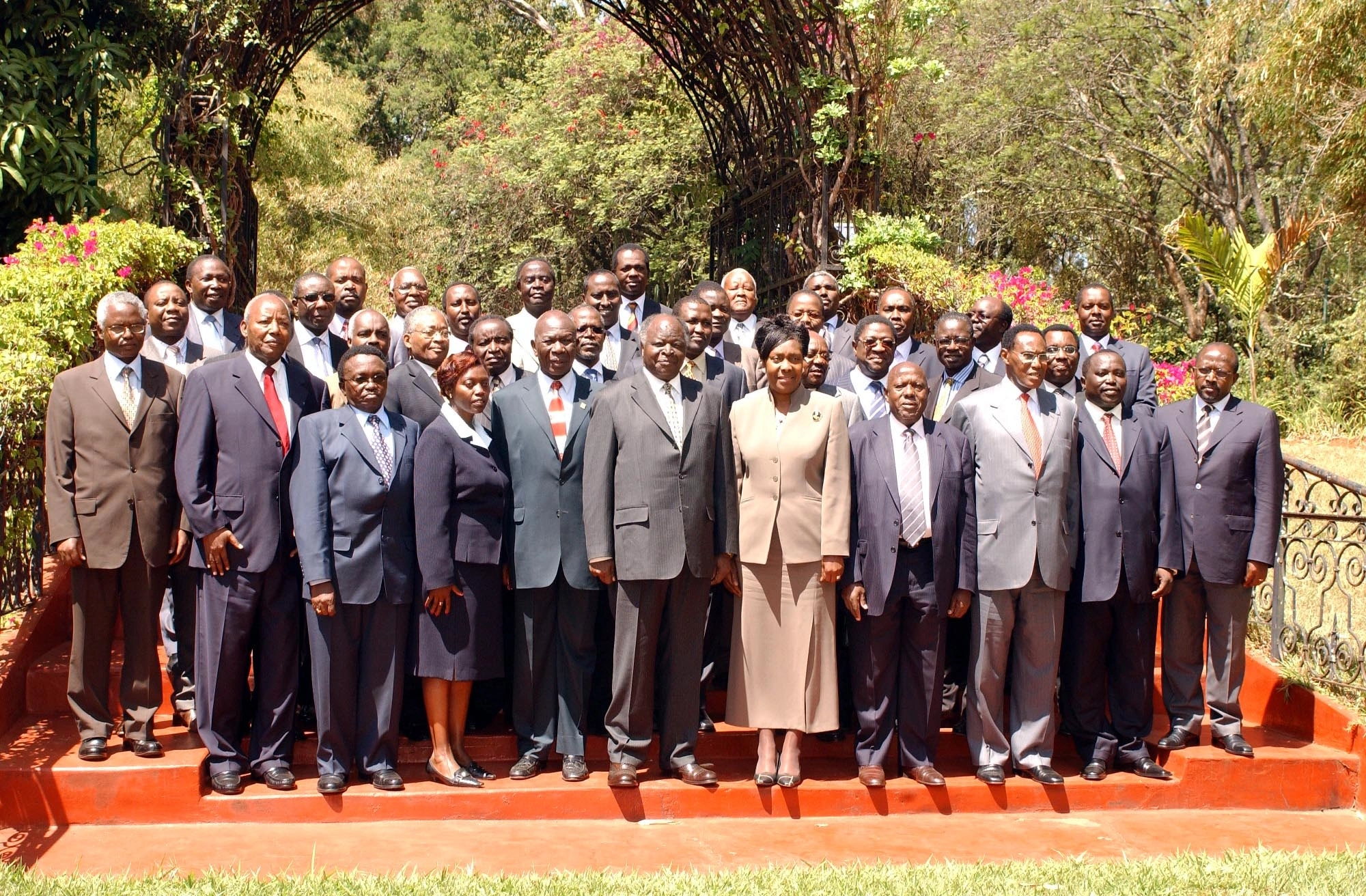
President Mwai Kibaki Cabinet group photo at State House Gardens in 2006
President Mwai Kibaki Cabinet group photo at State House Gardens in 2006
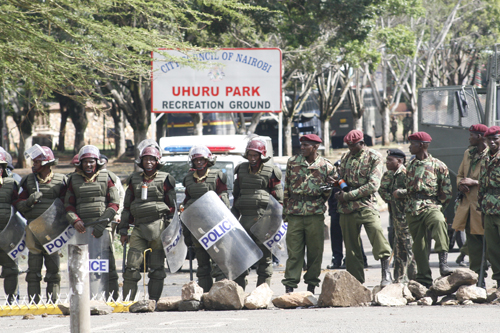
General Service Unit Officers cordon off Uhuru Park grounds Nairobi in January 2008
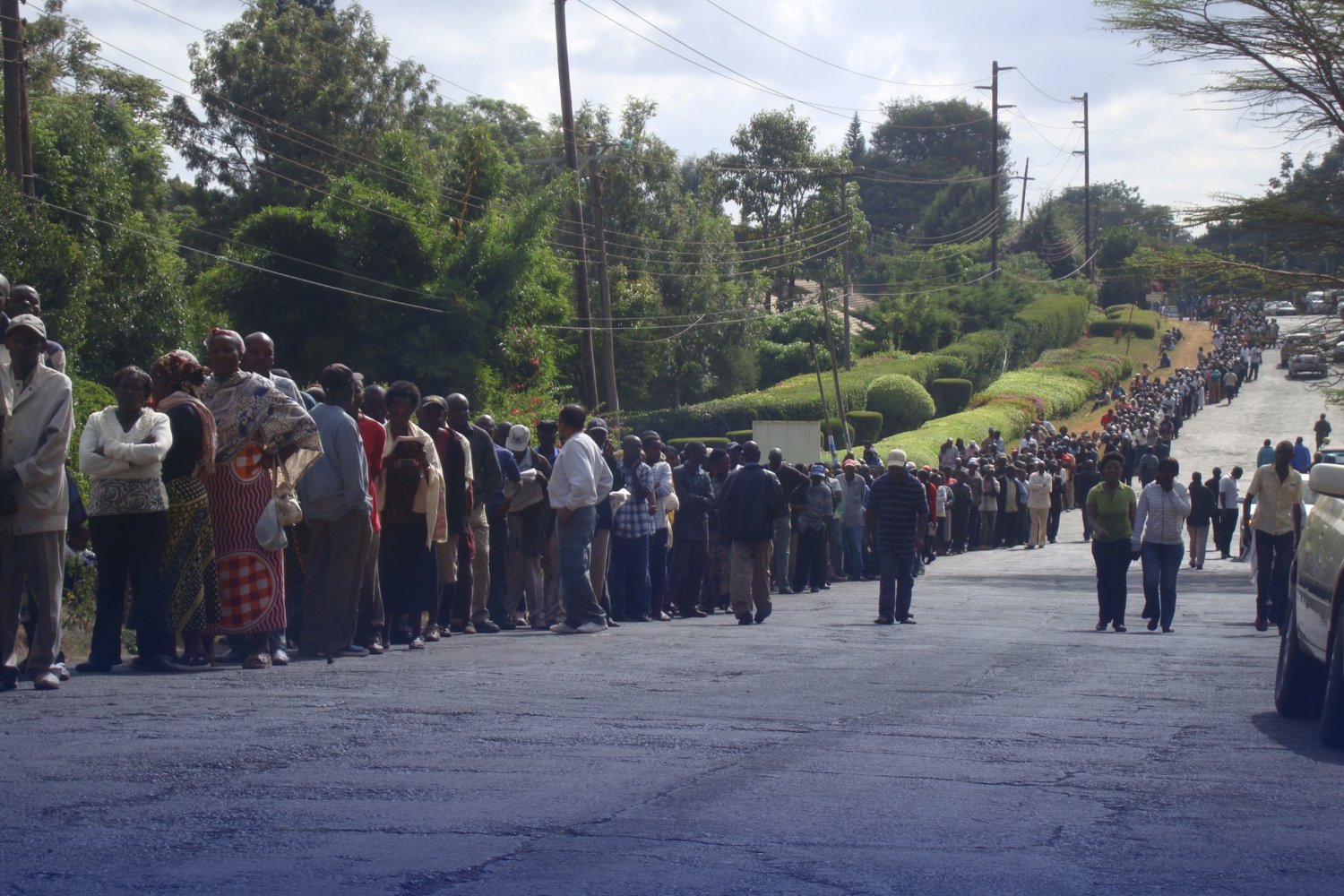
Kenyan queue to vote in the Presidential election of 2007_27.12.2007
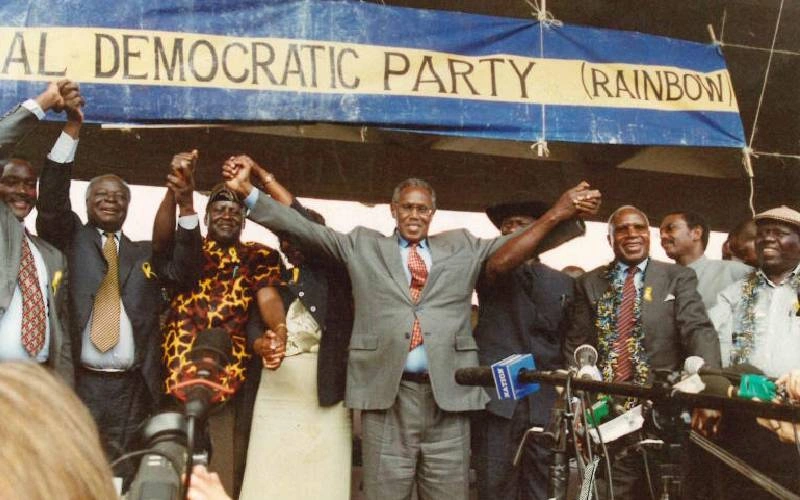
Rainbow coalition victory_NARC Rally endorse Mwai Kibaki as the Presidential Candidate at Uhuru Park in October 2002
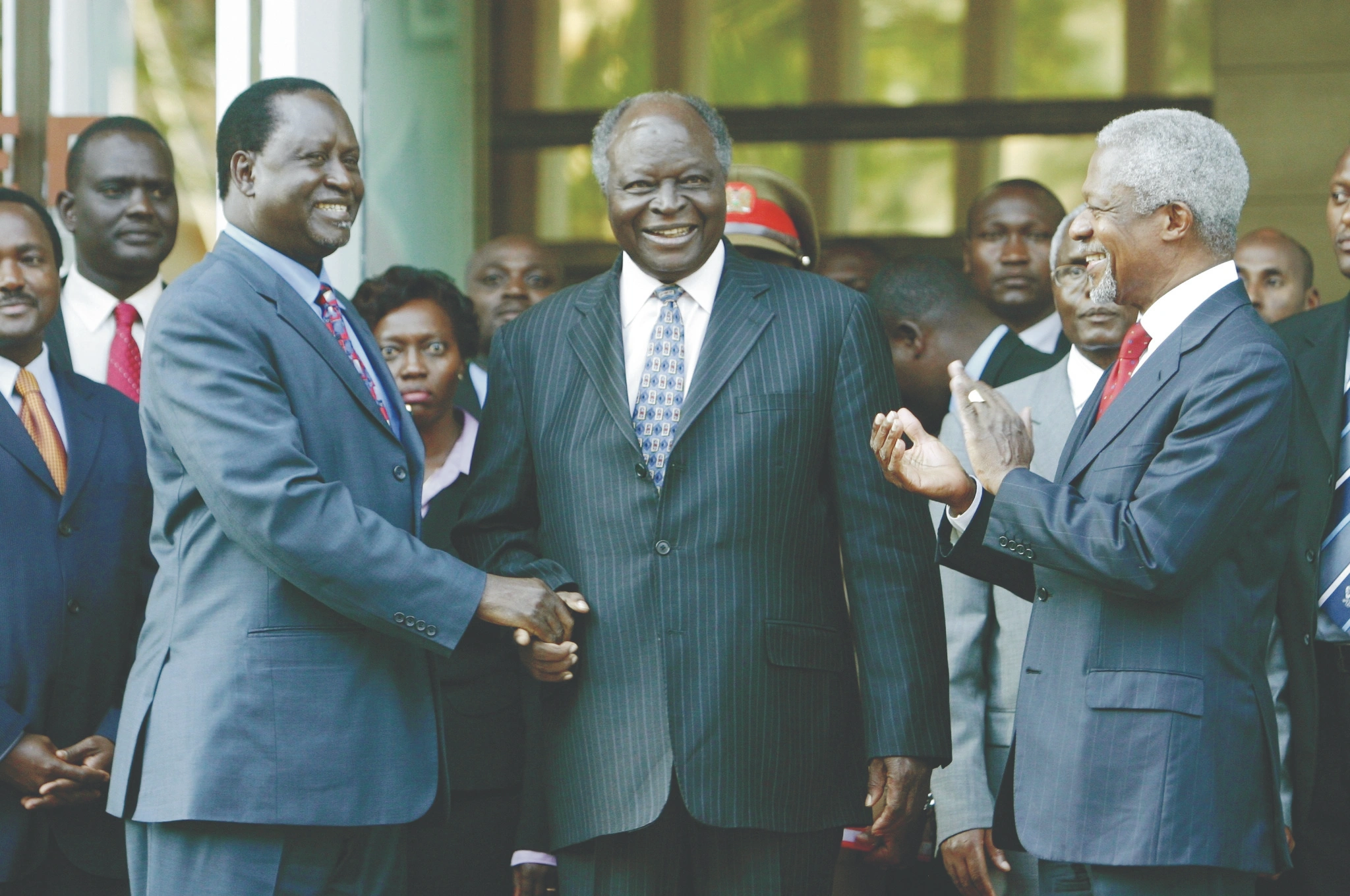
President Mwai Kibaki and opposition leader Raila Odinga handshake flanked by Kofi Annan after signing the Power Sharing Deal at Harambee House Nairobi_28.2.2008
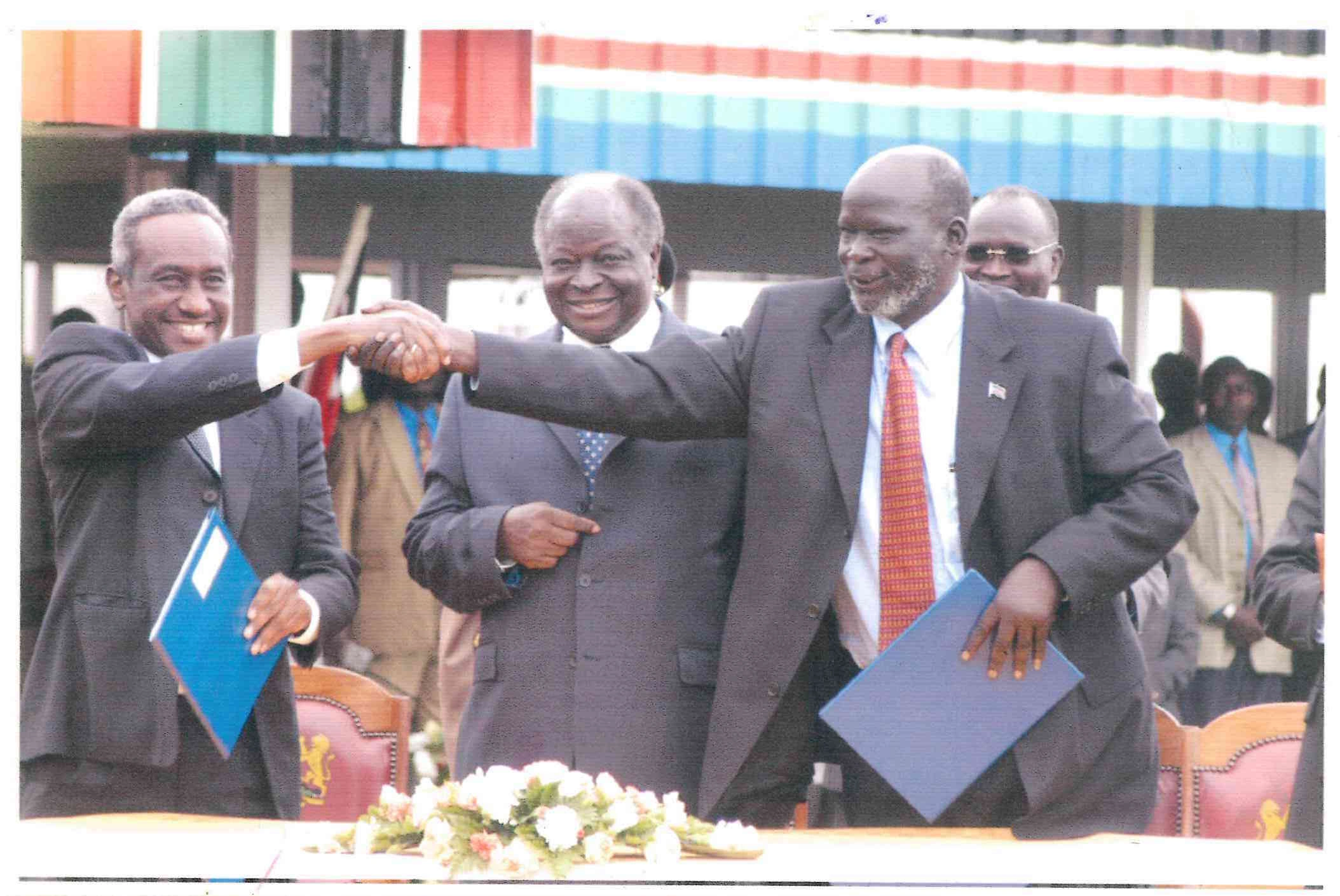
President Mwai Kibaki witnessing the signing of Sudan Comprehensive Peace Agreement at State House Nairobi_9.1.2005
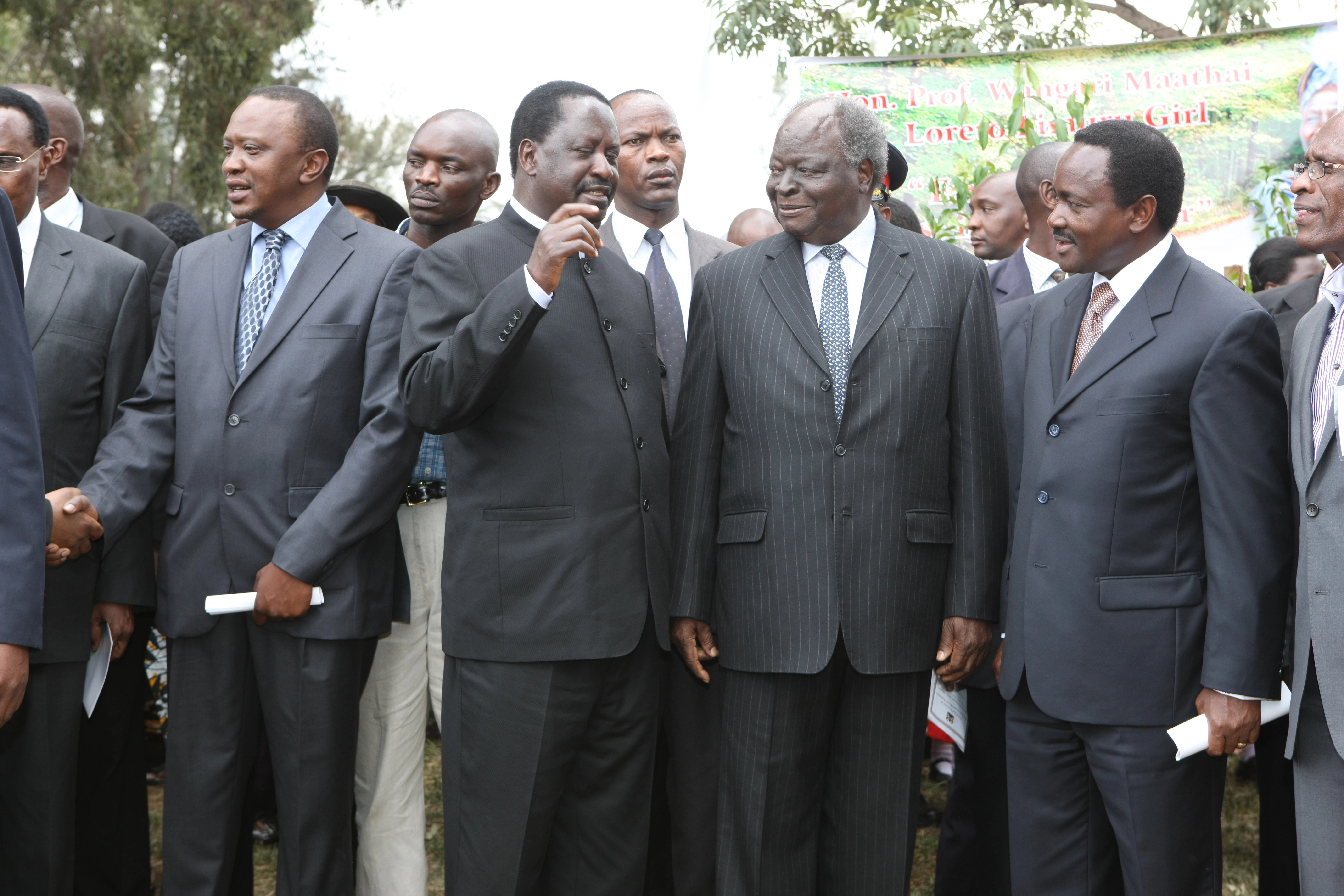
President Mwai Kibaki attending Professor Wangari Maathai funeral at Uhuru Park Nairobi
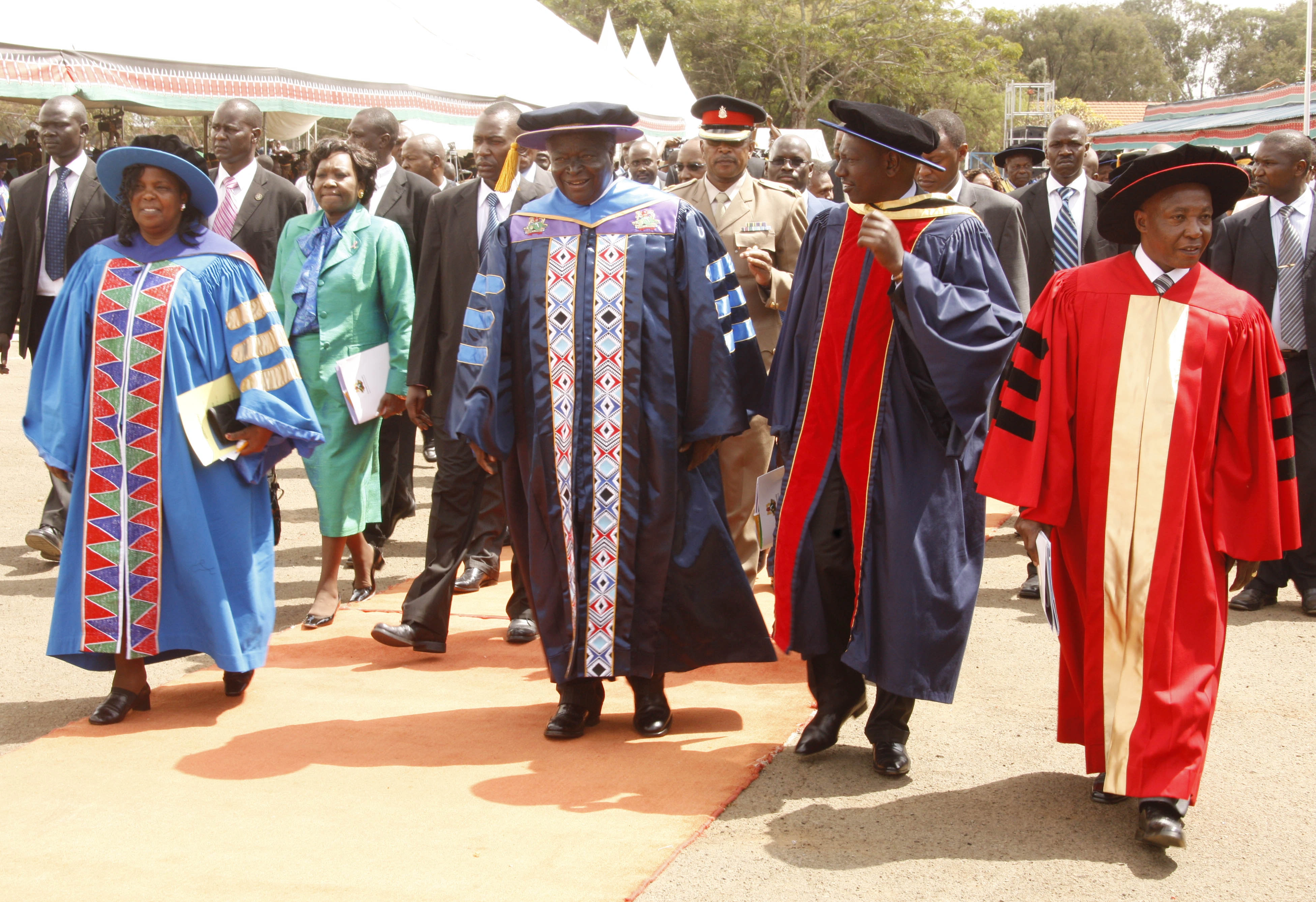
President Mwai Kibaki with Higher Education Minister William Ruto and Kenyatta University VC Prof Olive Mugenda during graduation ceremony
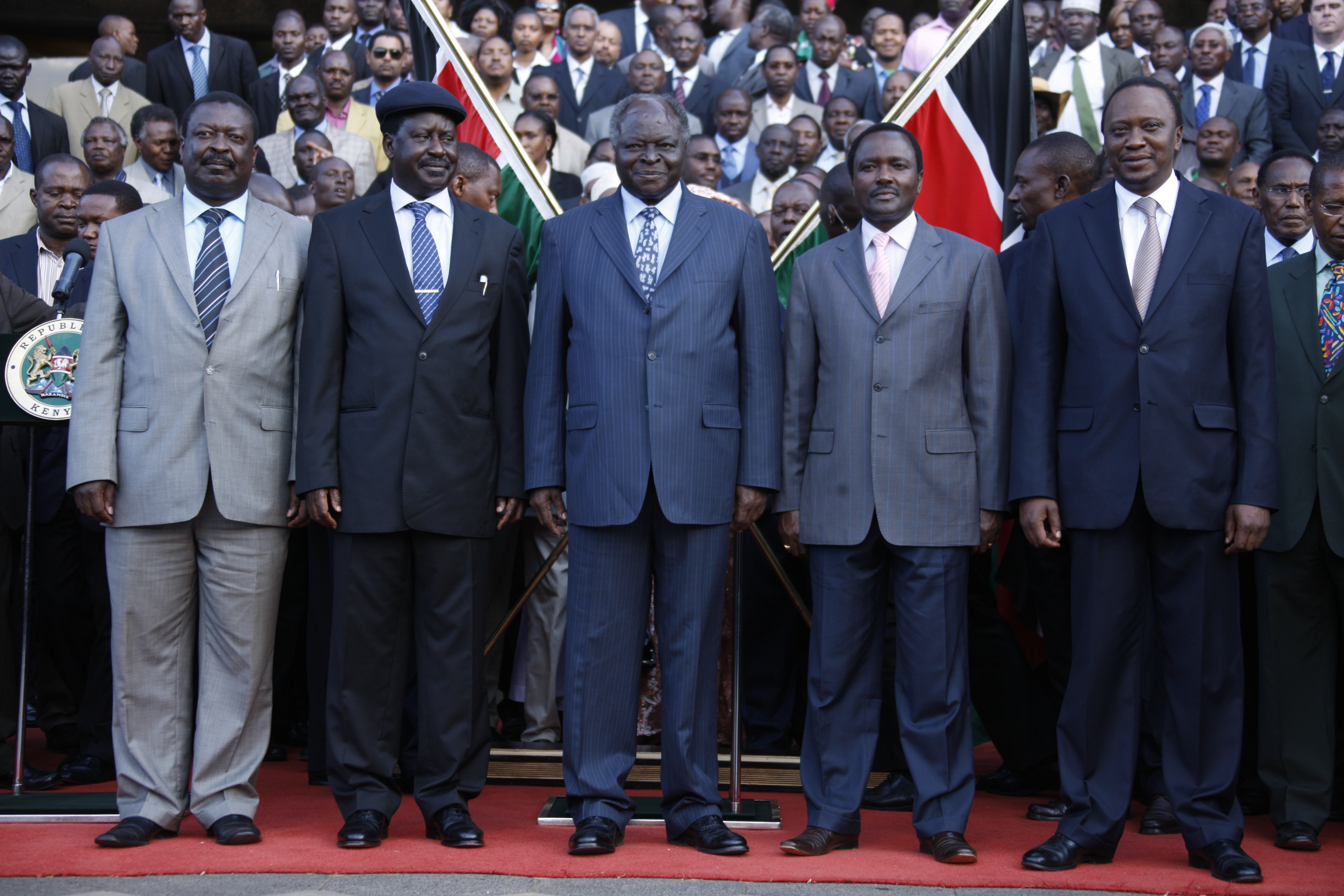
President Mwai Kibaki with PM Raila Odinga VP Kalonzo Musyoka and DPMs Uhuru Kenyatta and Musalia Mudavadi at KICC Nairobi
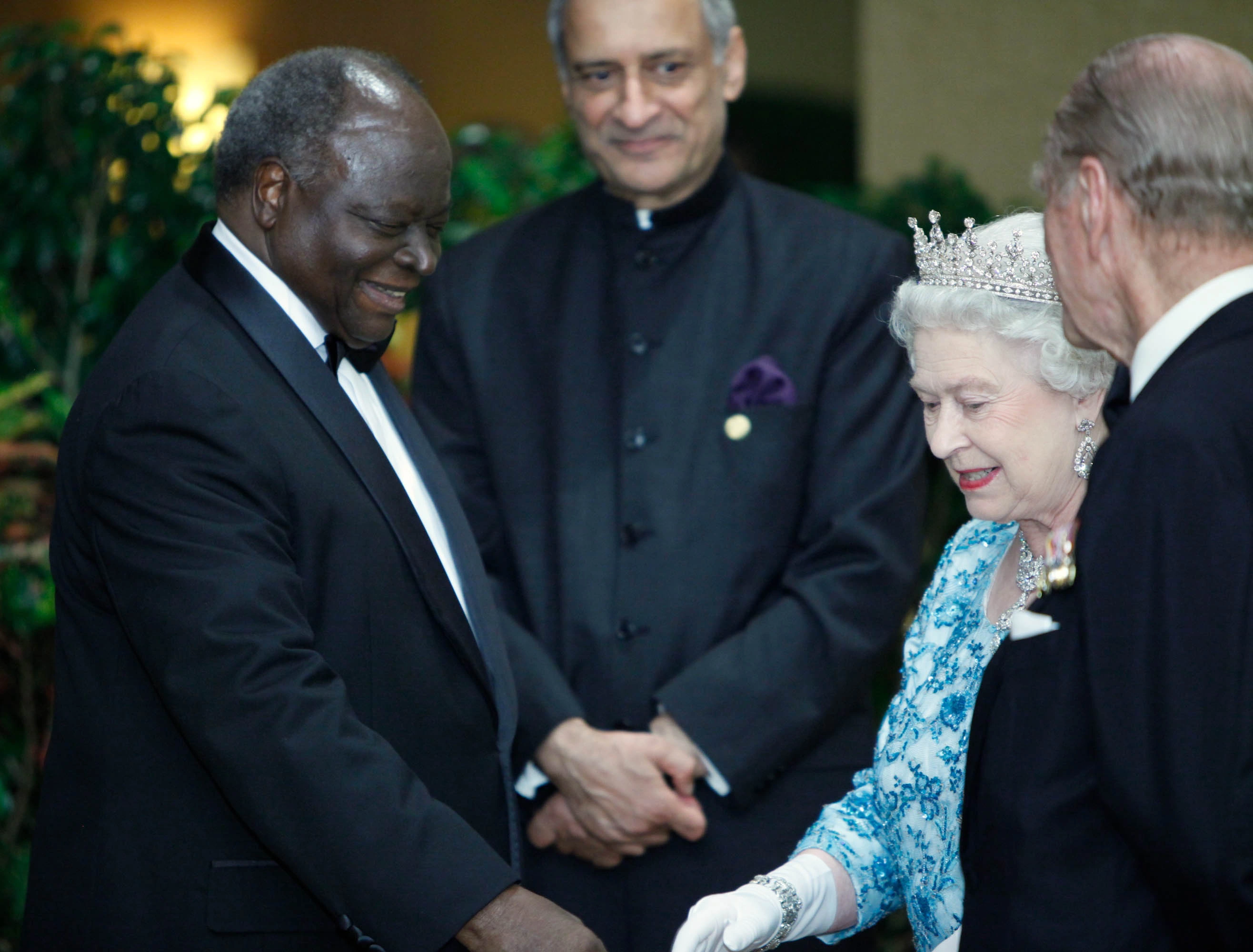
President Mwai Kibaki meeting with Queen Elizabeth II during the Commonwealth Summit dinner hosted for Heads of Government in Trinidad and Tobago
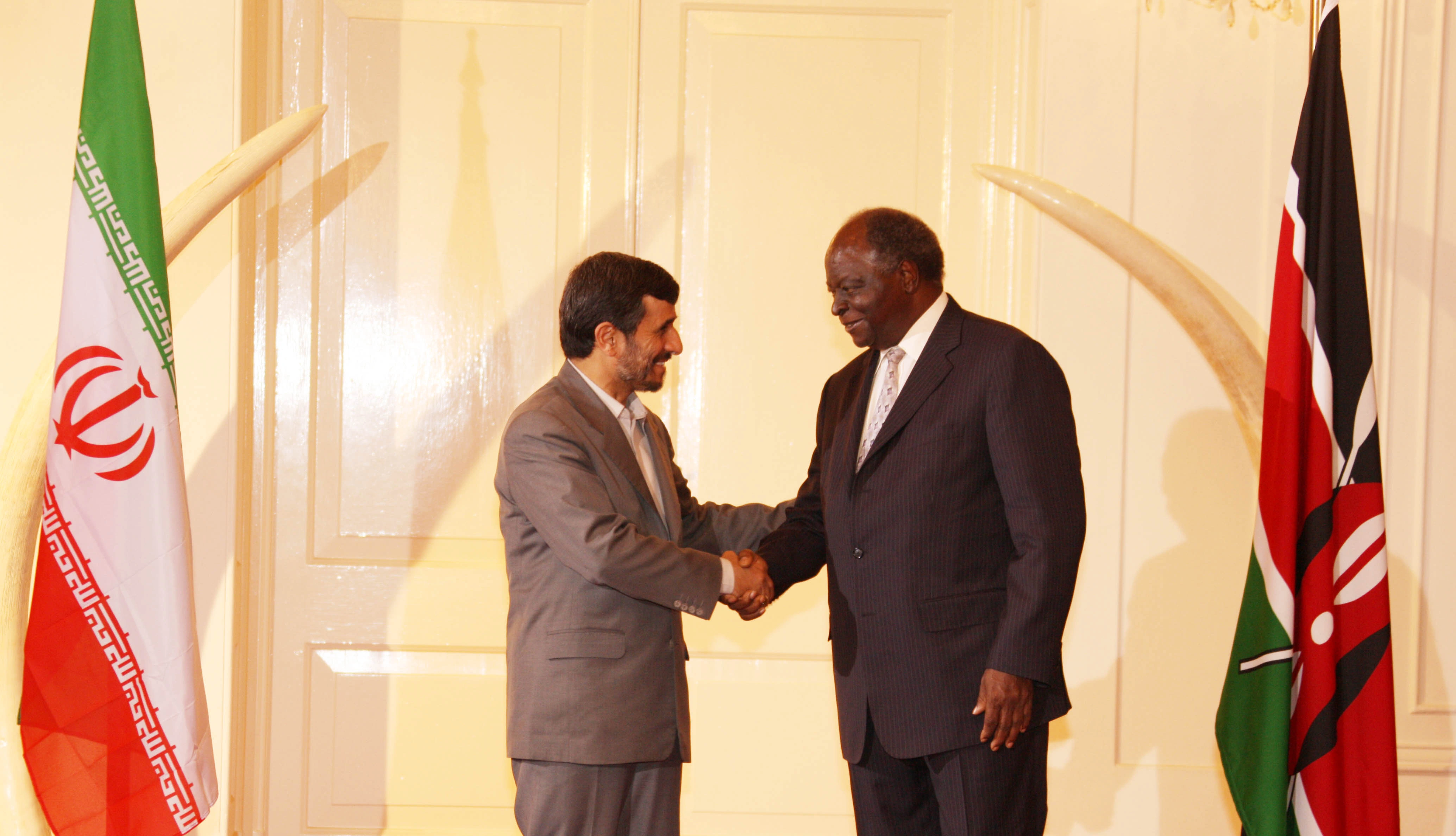
President Mwai Kibaki hosting Iranian President Mahmoud Ahmadinejad at State House Nairobi
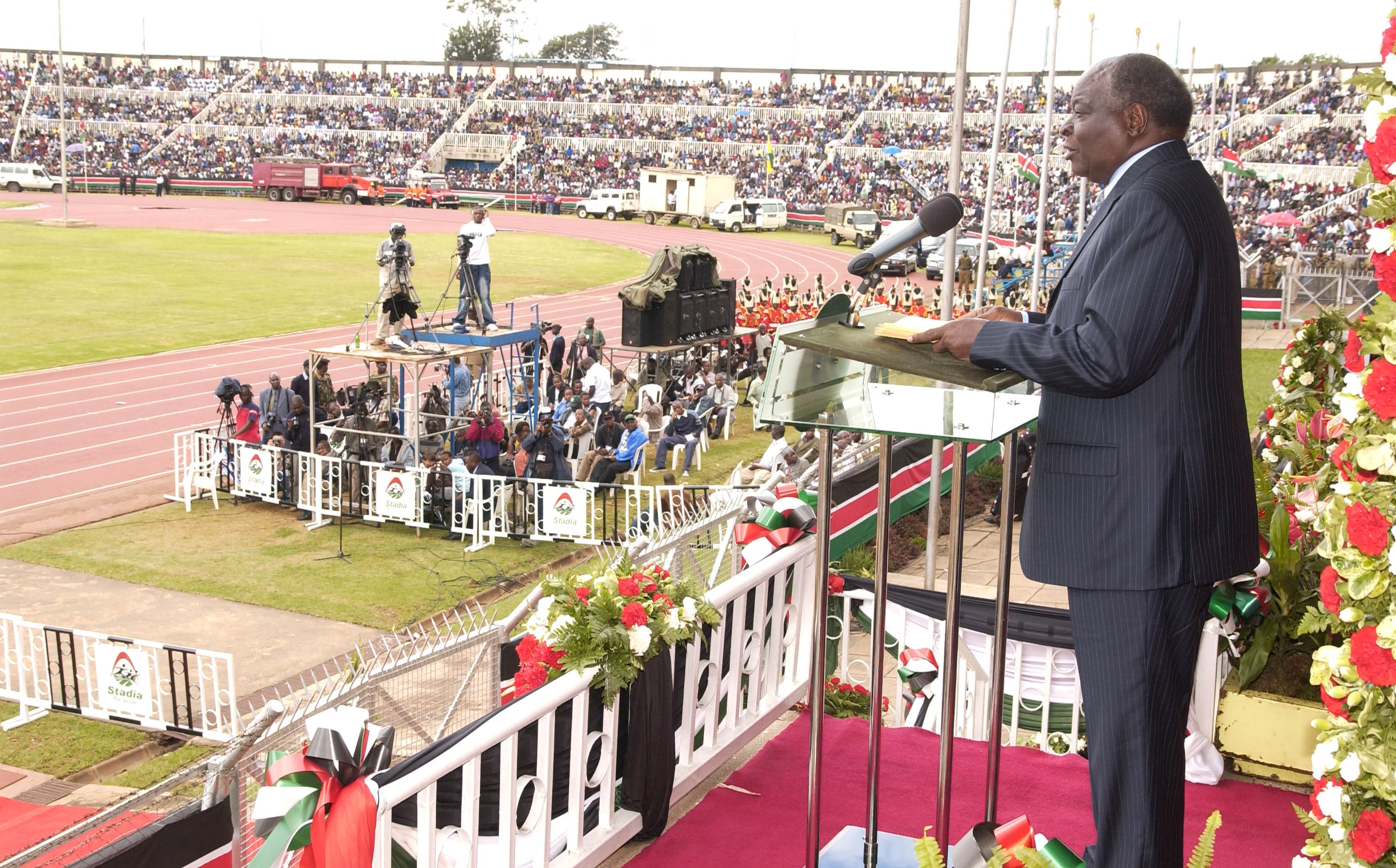
President Mwai Kibaki addressing the nation during Madaraka Day at Nyayo National Stadium Nairobi
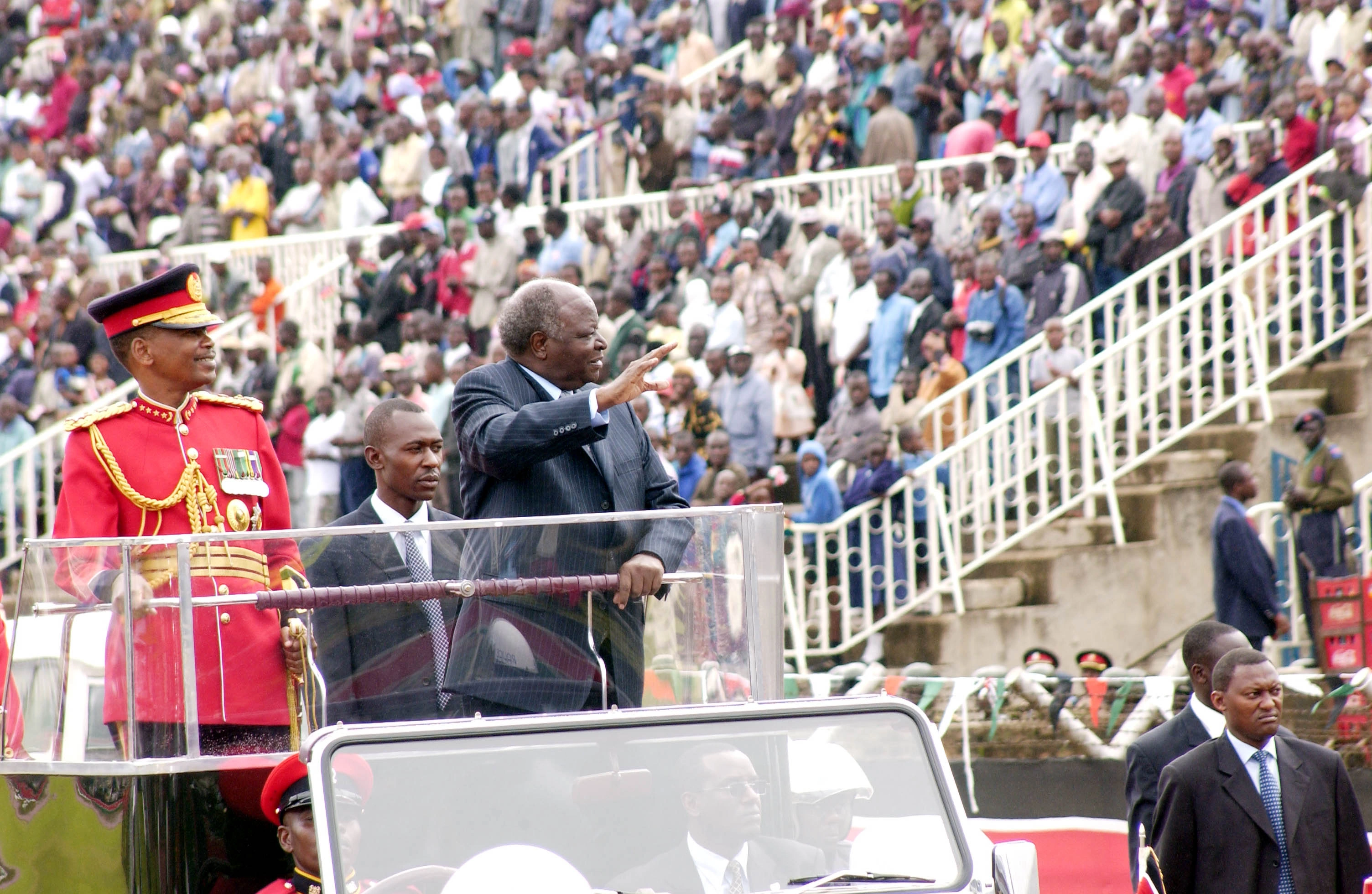
President Mwai Kibaki acknowledging greetings from Kenyans during Madaraka Day Celebrations at Nyayo National Stadium
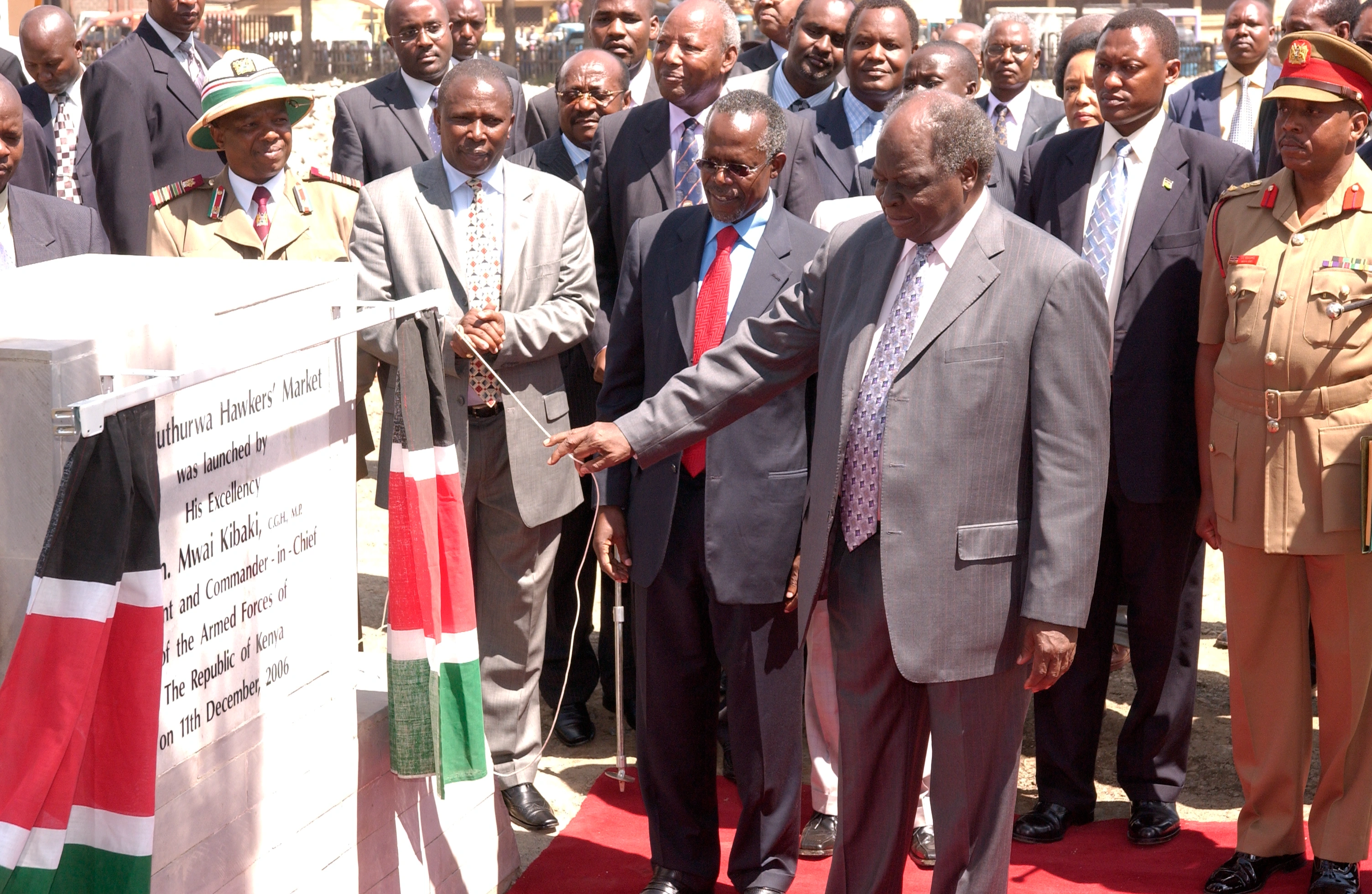
President Mwai Kibaki officially opening Muthurwa Hawkers Market in Nairobi
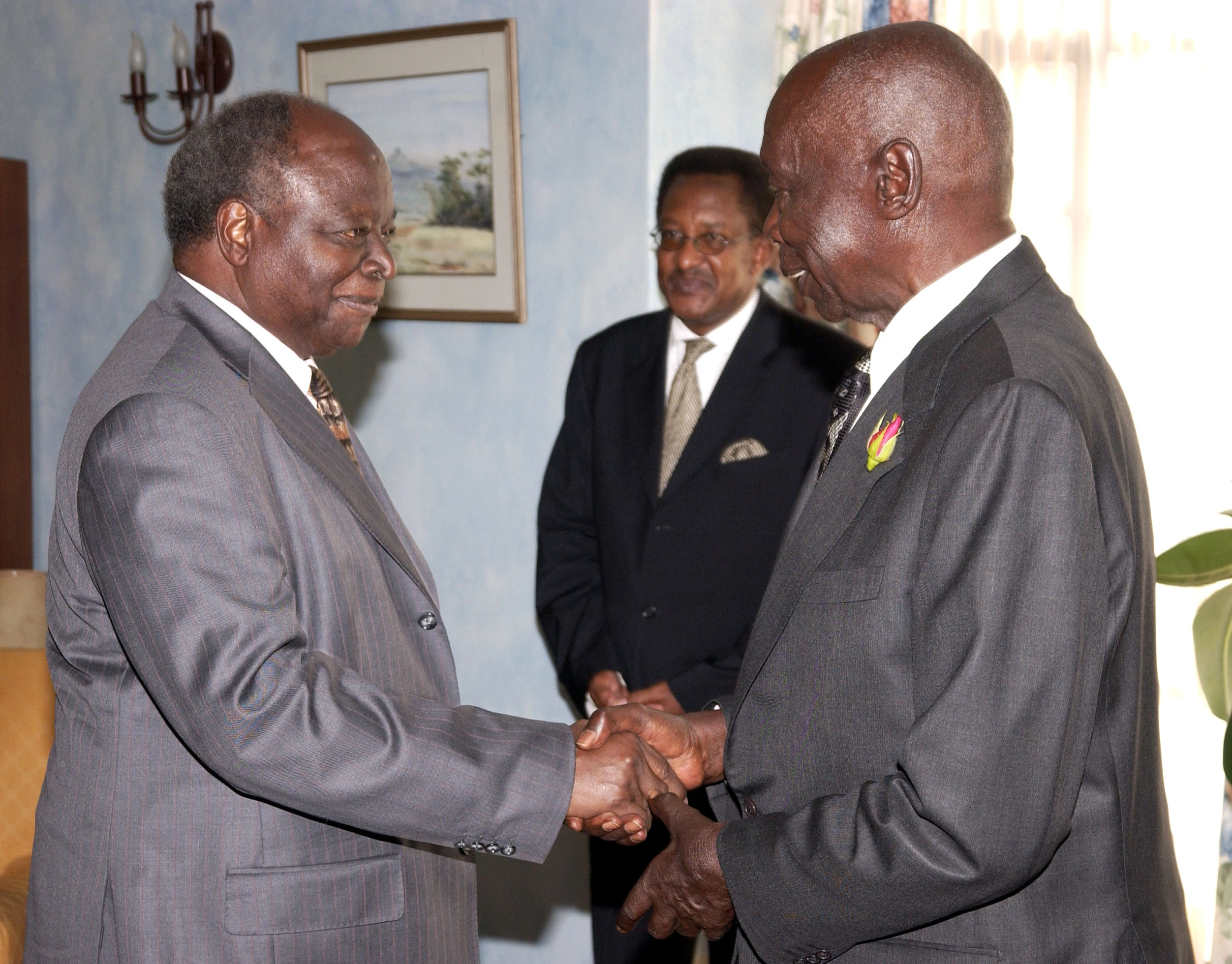
President Mwai Kibaki greeting Former President Daniel Arap Moi as Nahashon Nyagah looks on
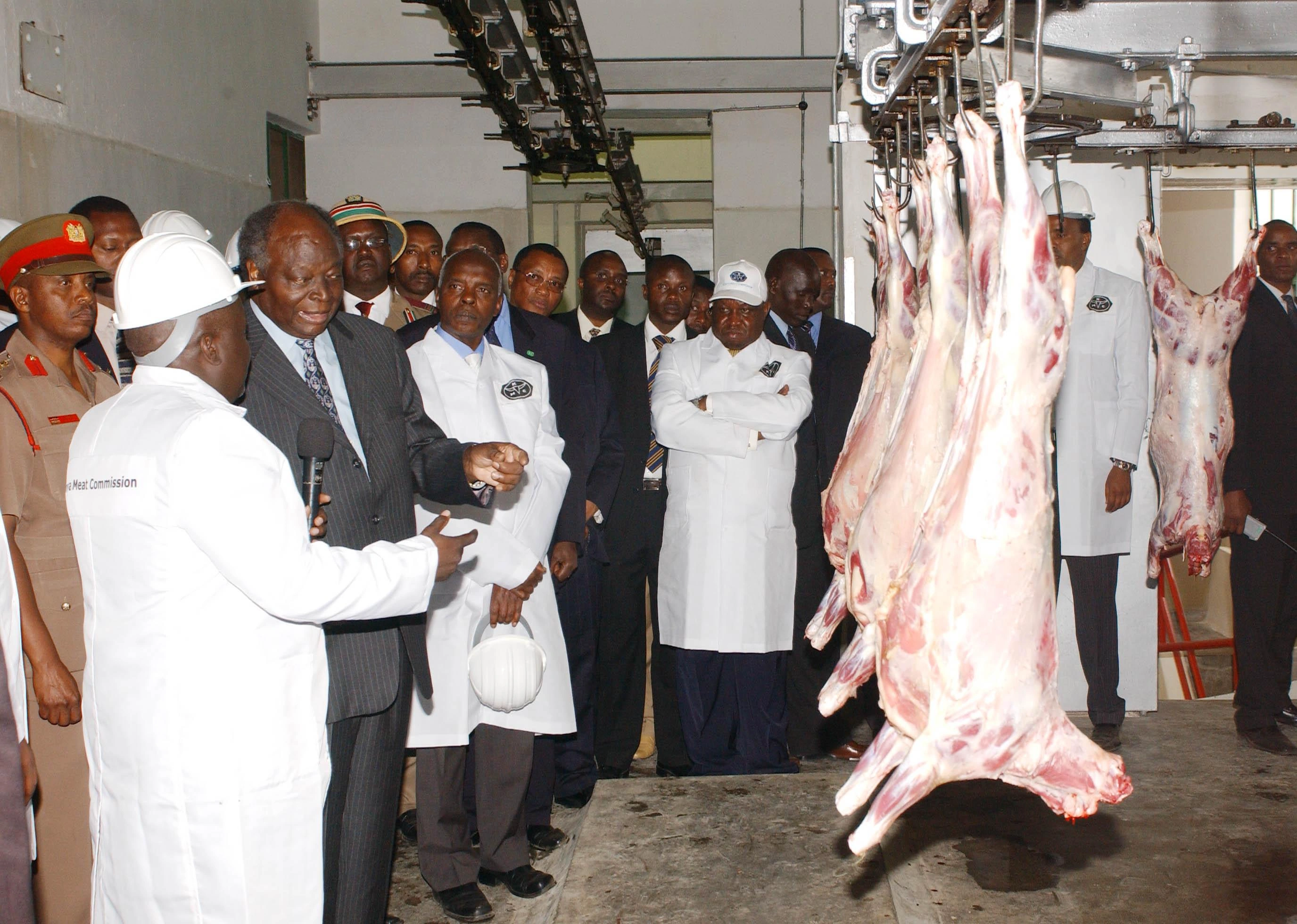
President Mwai Kibaki Offically opening Kenya Meat Commission at Athi River after 15 years of closure
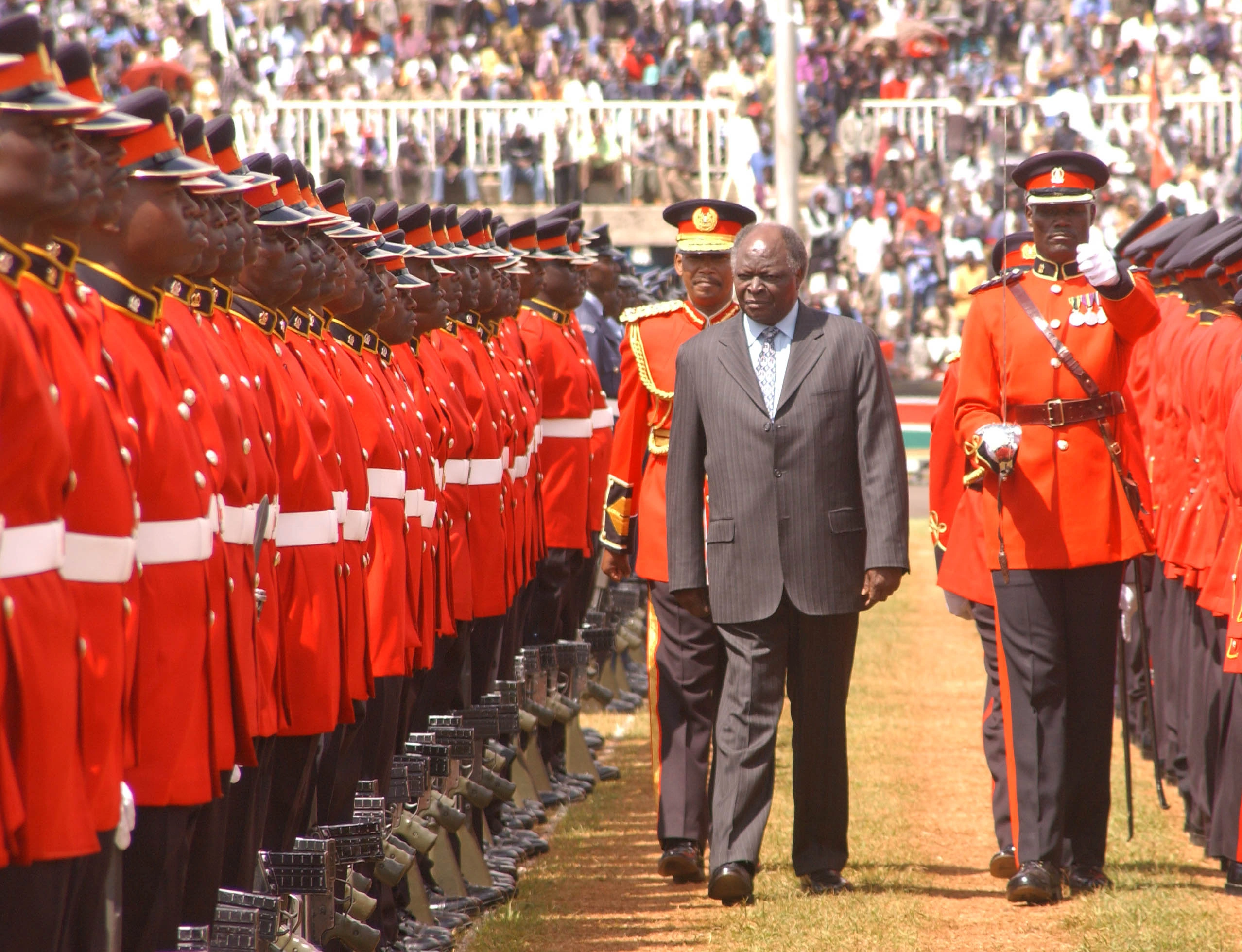
President Mwai Kibaki inspecting a Guard of Honour during Madaraka Day Celebrations at Nyayo National Stadium
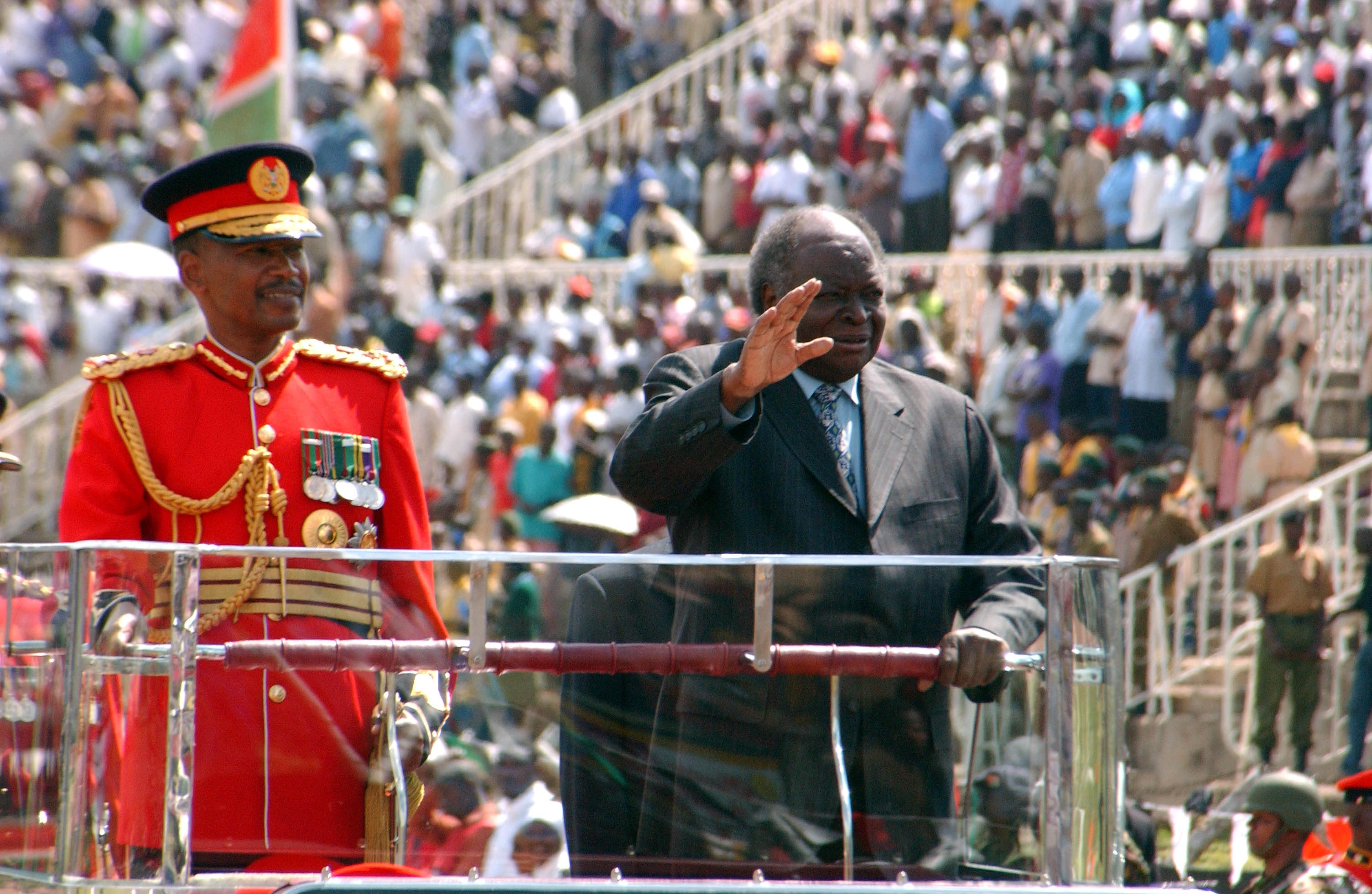
President Mwai Kibaki and the Chief of General Staff Jeremiah Kianga during Madaraka Day Celebrations at Nyayo National Stadium
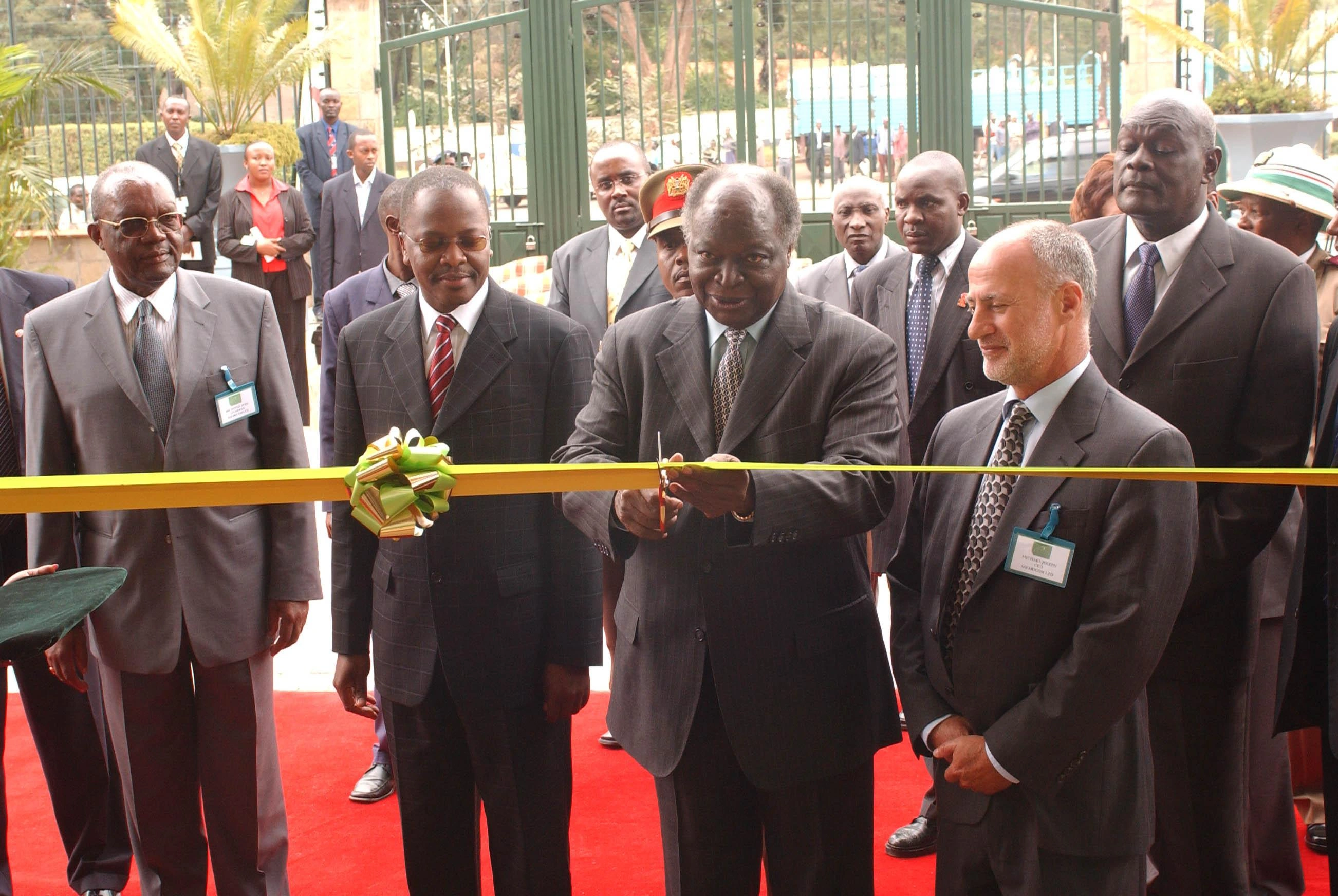
President Mwai Kibaki officially opening Safaricom House in Westlands Nairobi
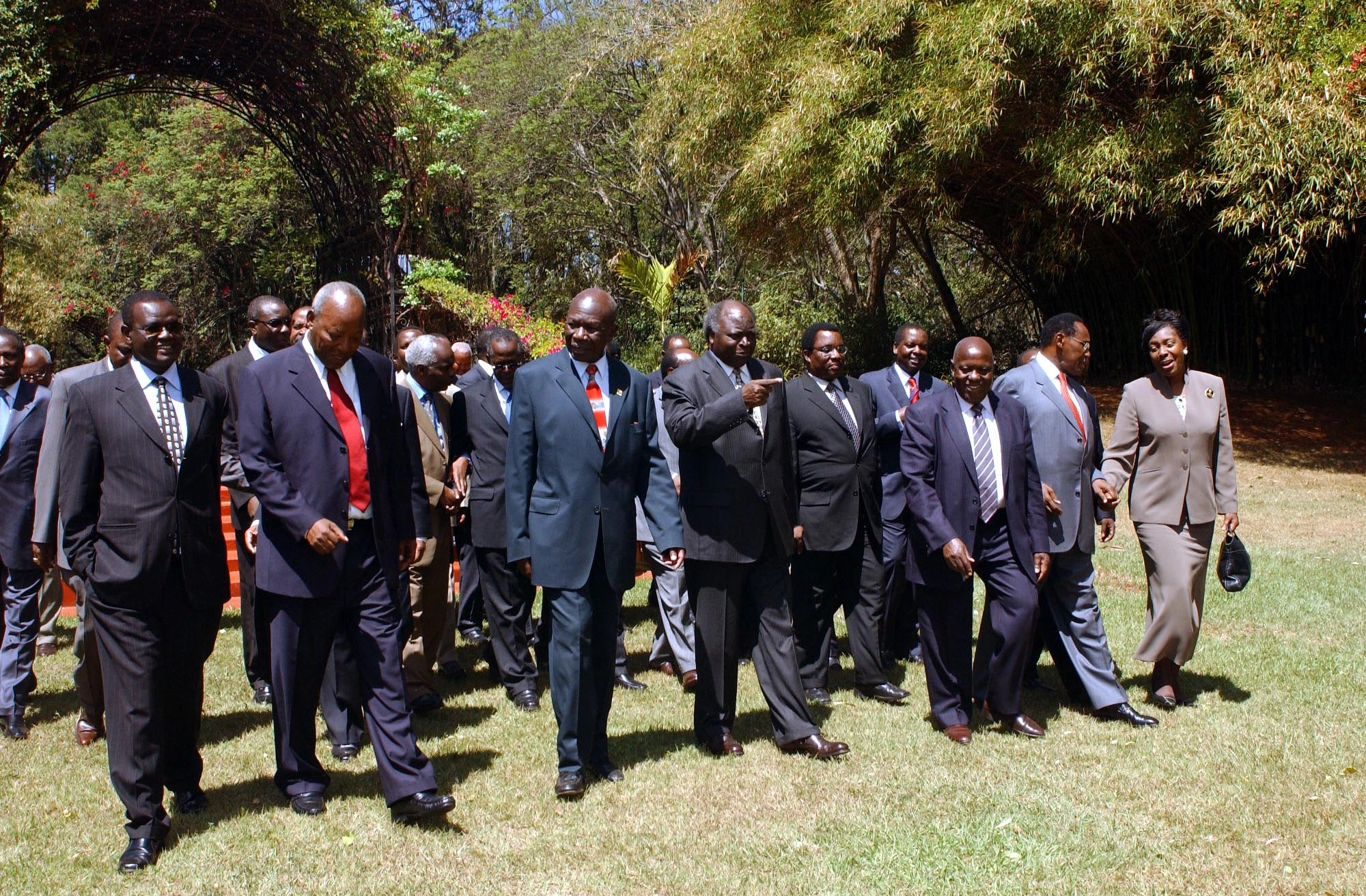
President Mwai Kibaki walking with Cabinet Ministers at State House Gardens Nairobi
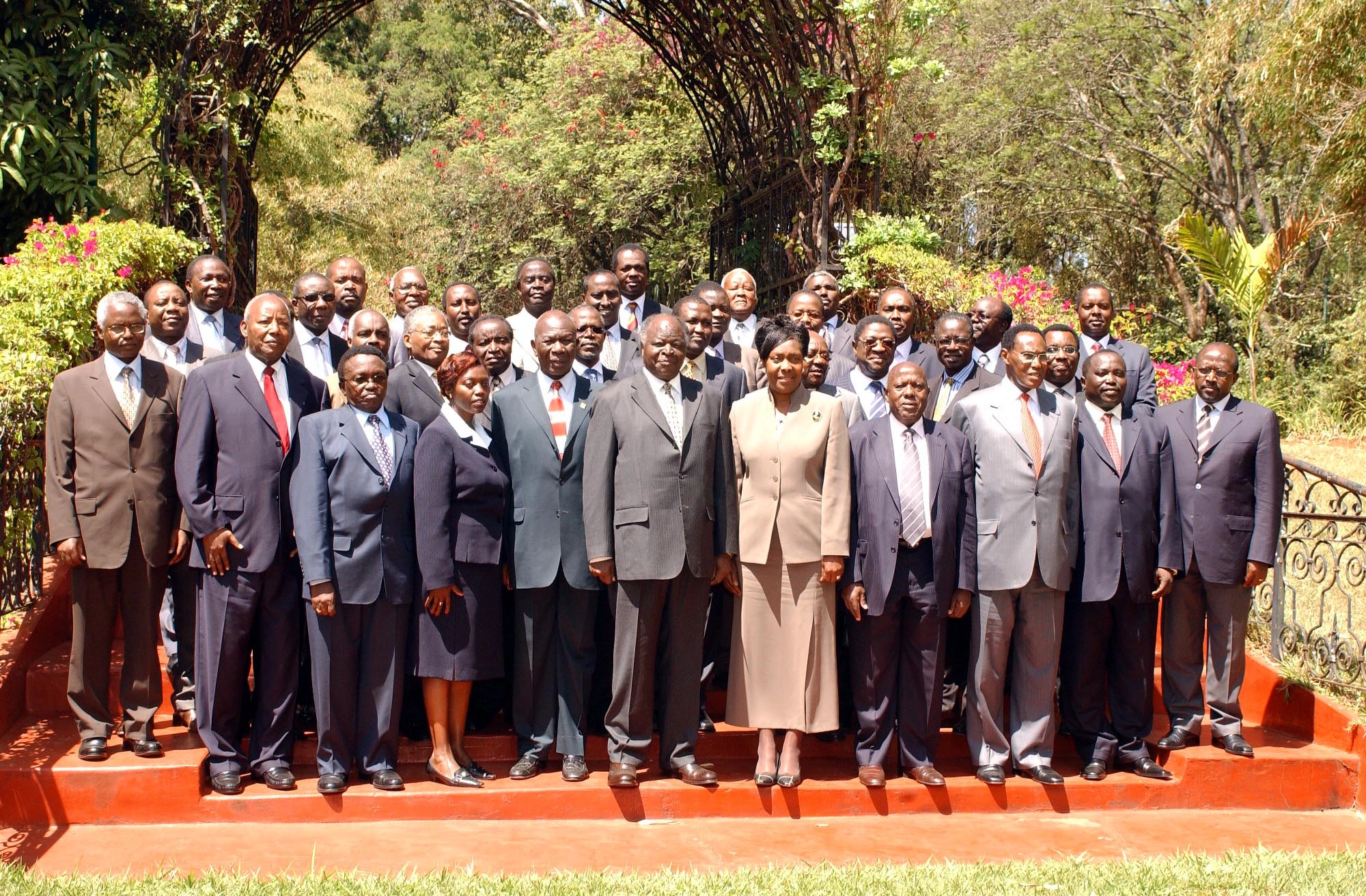
President Mwai Kibaki Group Photo with Cabinet Ministers at State House Gardens Nairobi
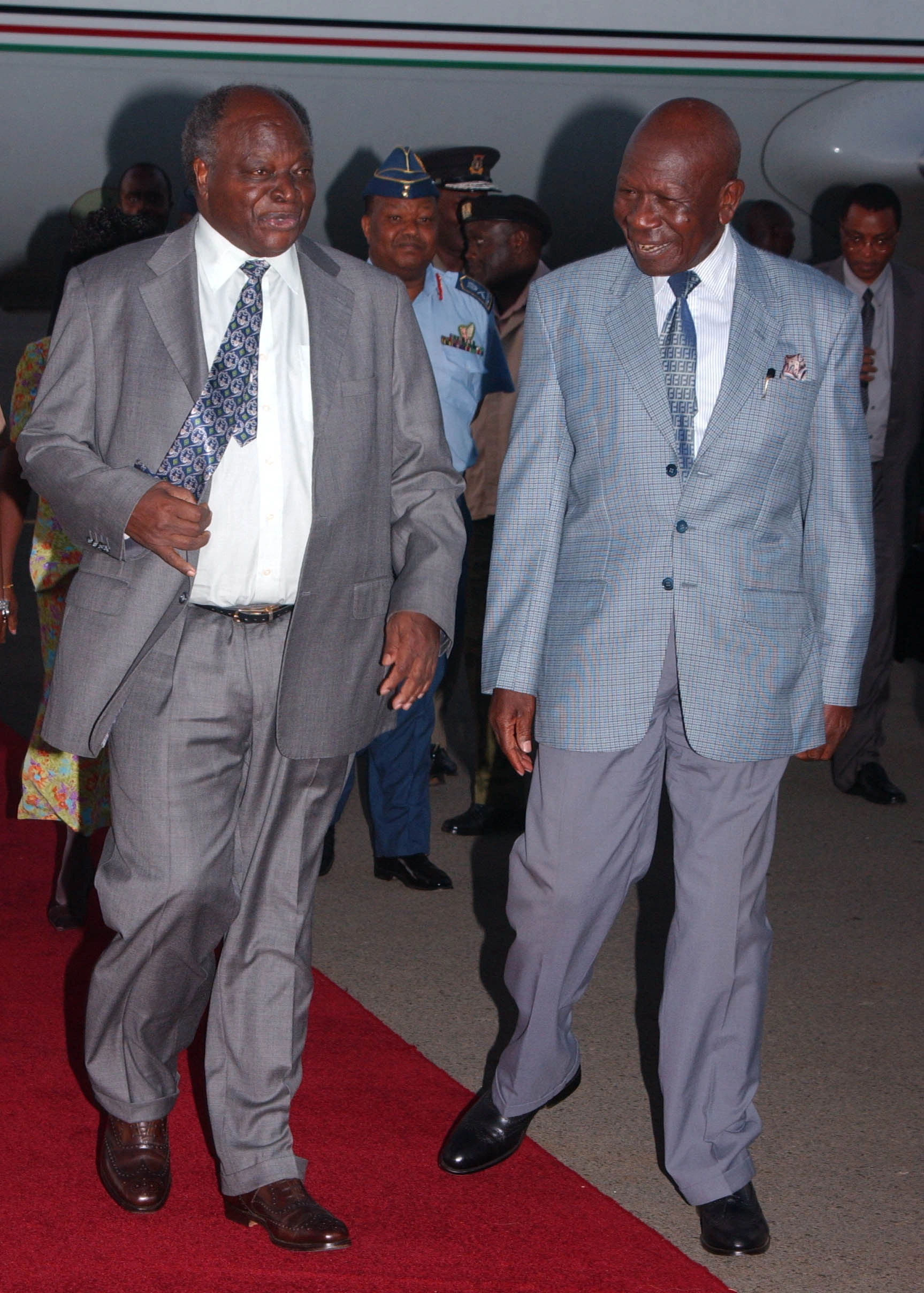
President Mwai Kibaki walking alongside Vice President Moody awori at JKIA Nairobi
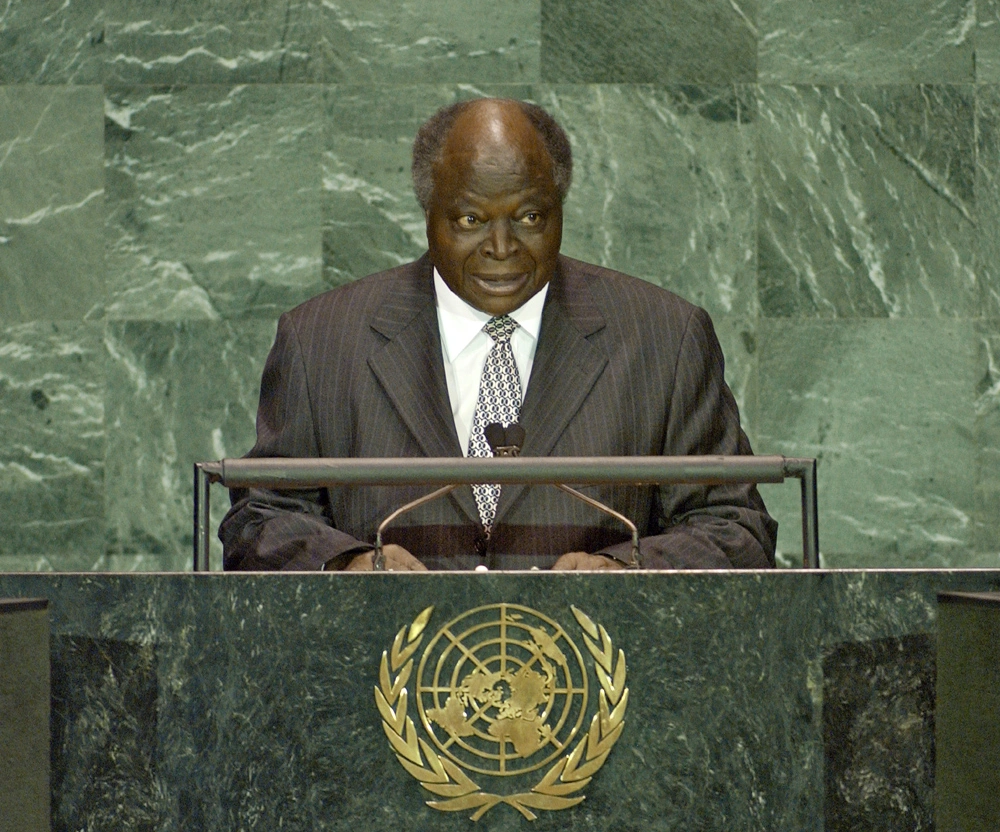
President Mwai Kibaki Kenya National Statement Speech at the United Nations General Assembly in New York UNGA
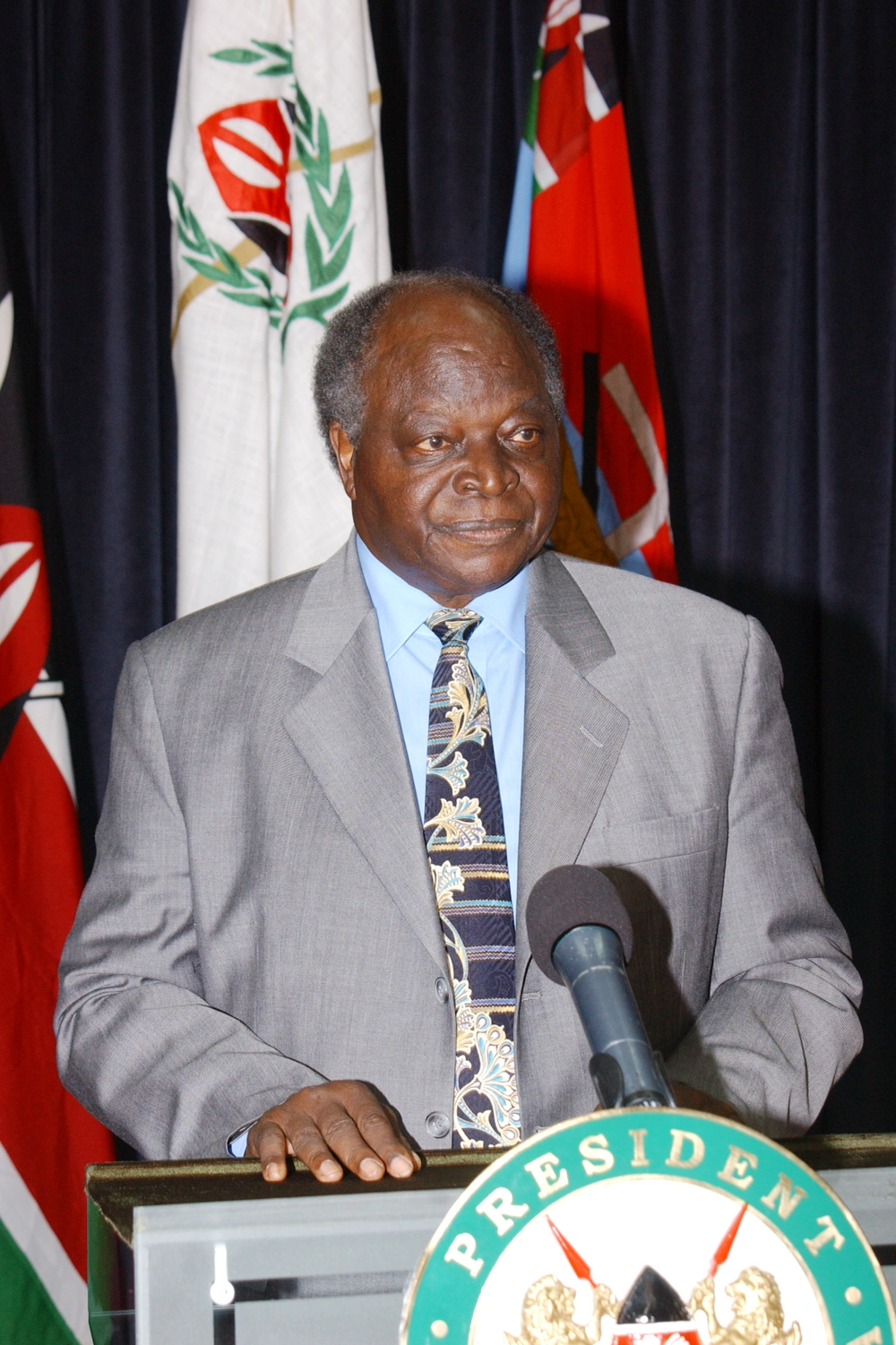
President Mwai Kibaki addressing Kenyans at State House Nairobi
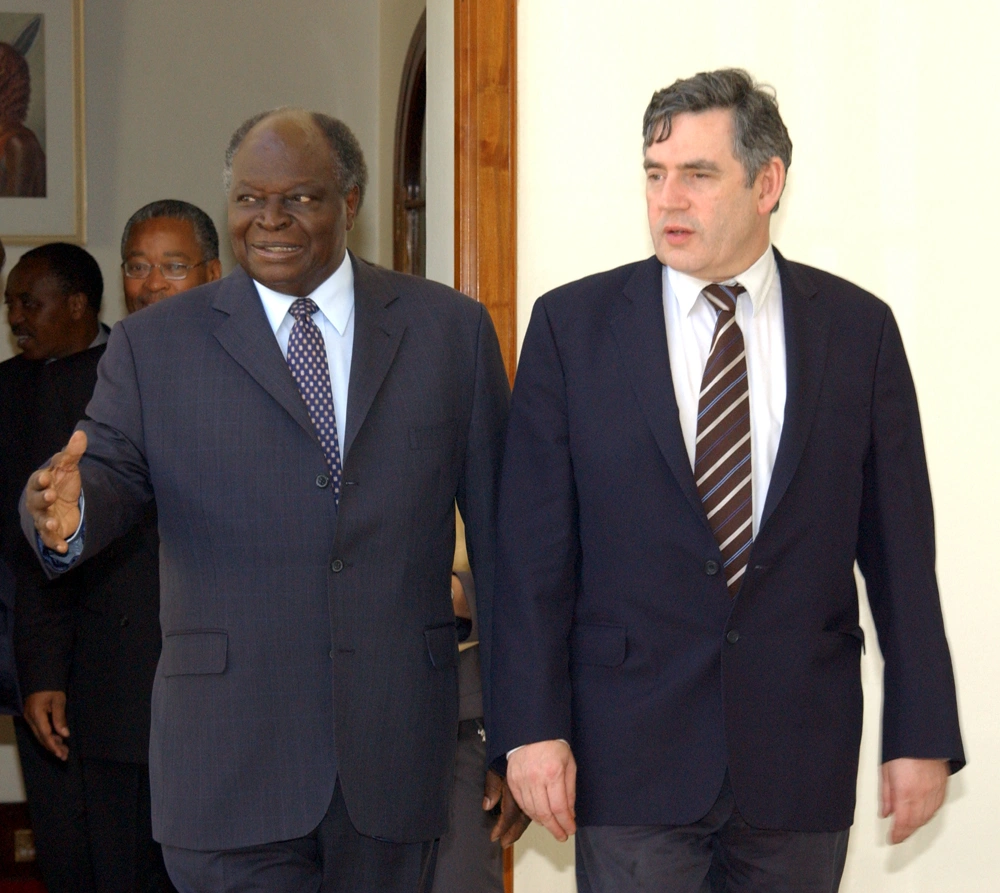
President Mwai Kibaki welcoming UK Prime Minister Gordon Brown at State House Nairobi
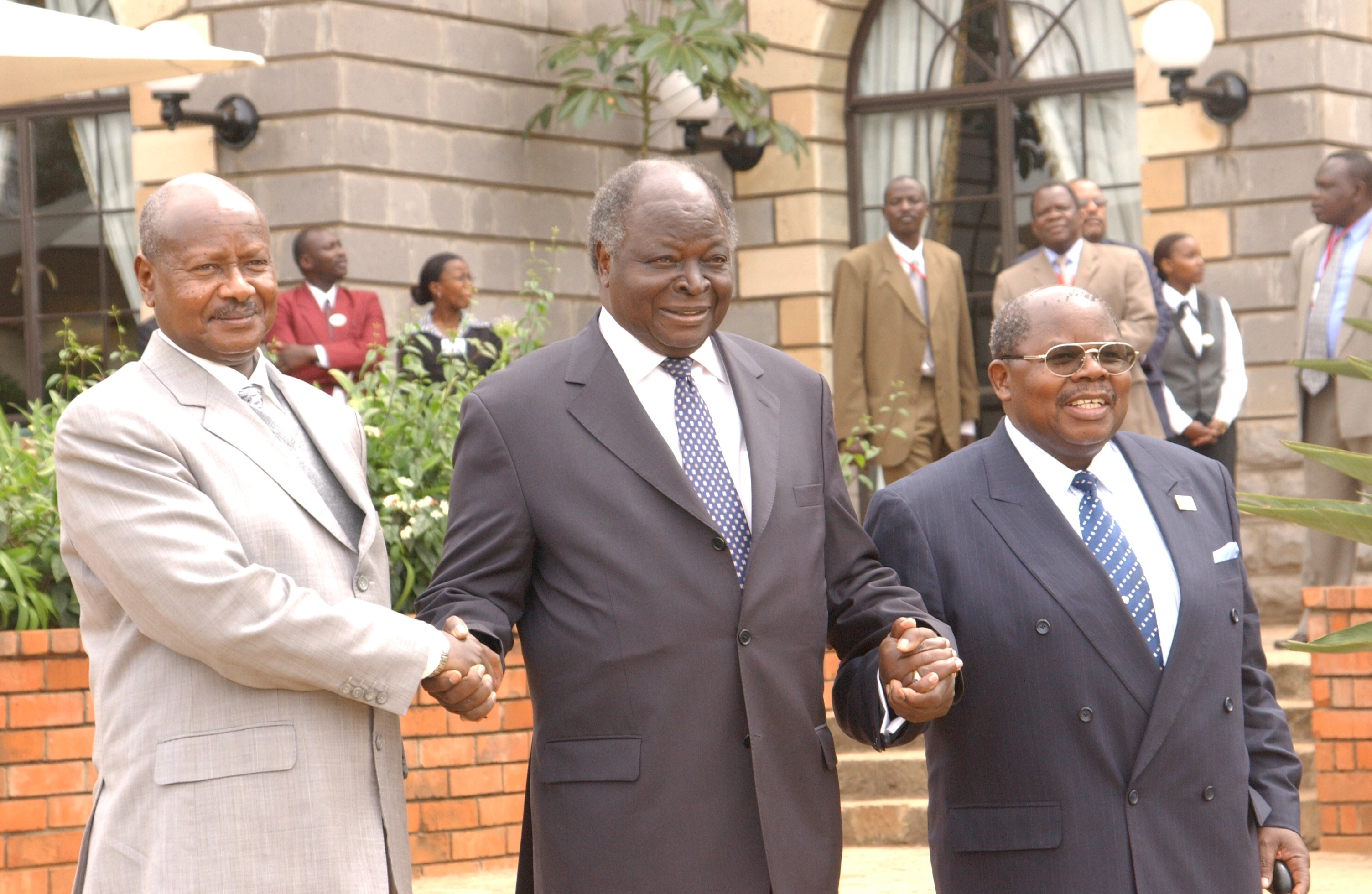
President Mwai Kibaki with Uganda President Yoweri Museveni and Tanzanian Benjamin Mkapa during the EAC summit held in Arusha
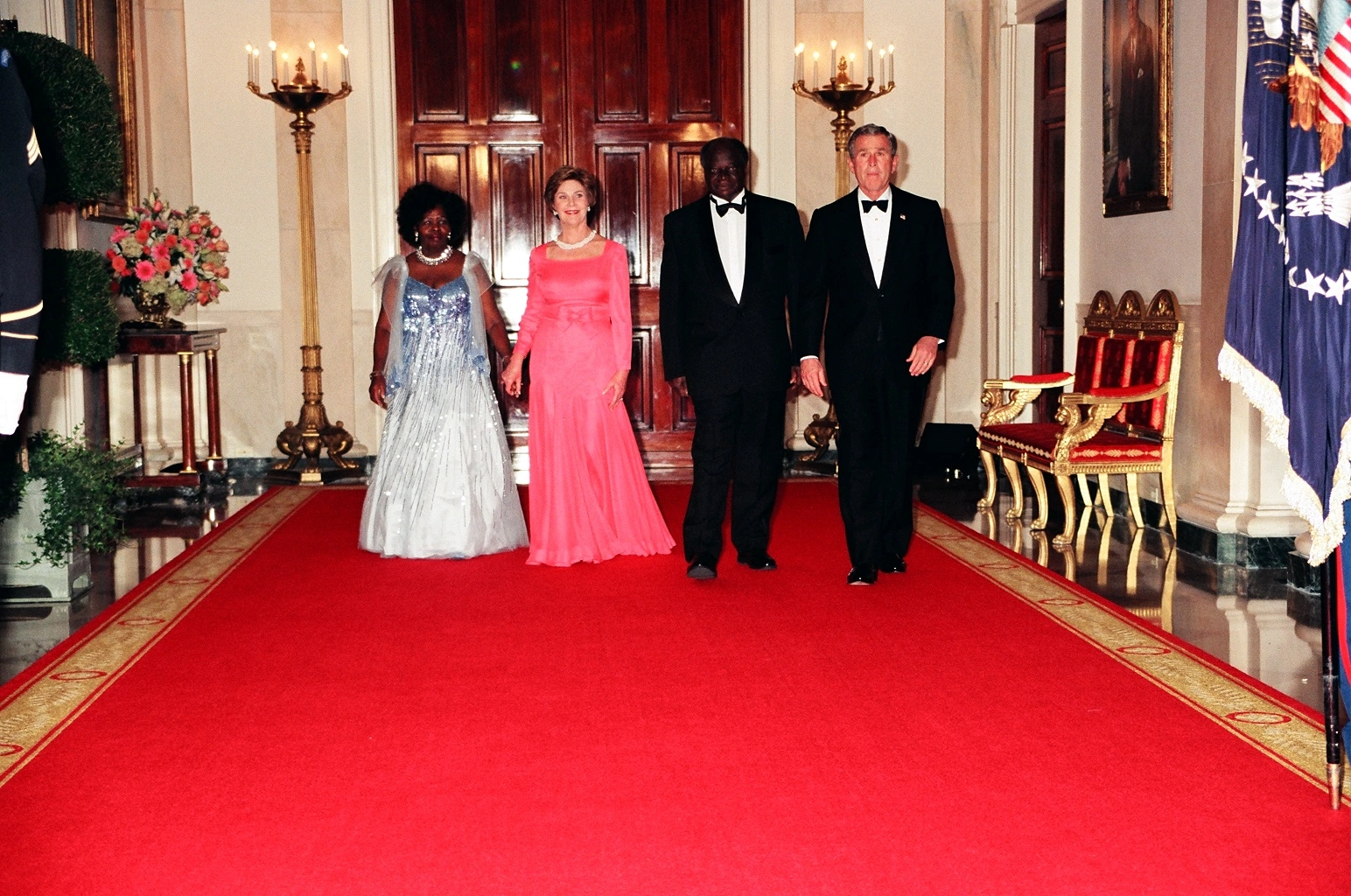
President Mwai Kibaki State Visit to the United States dinner hosted by President George W Bush at the White House
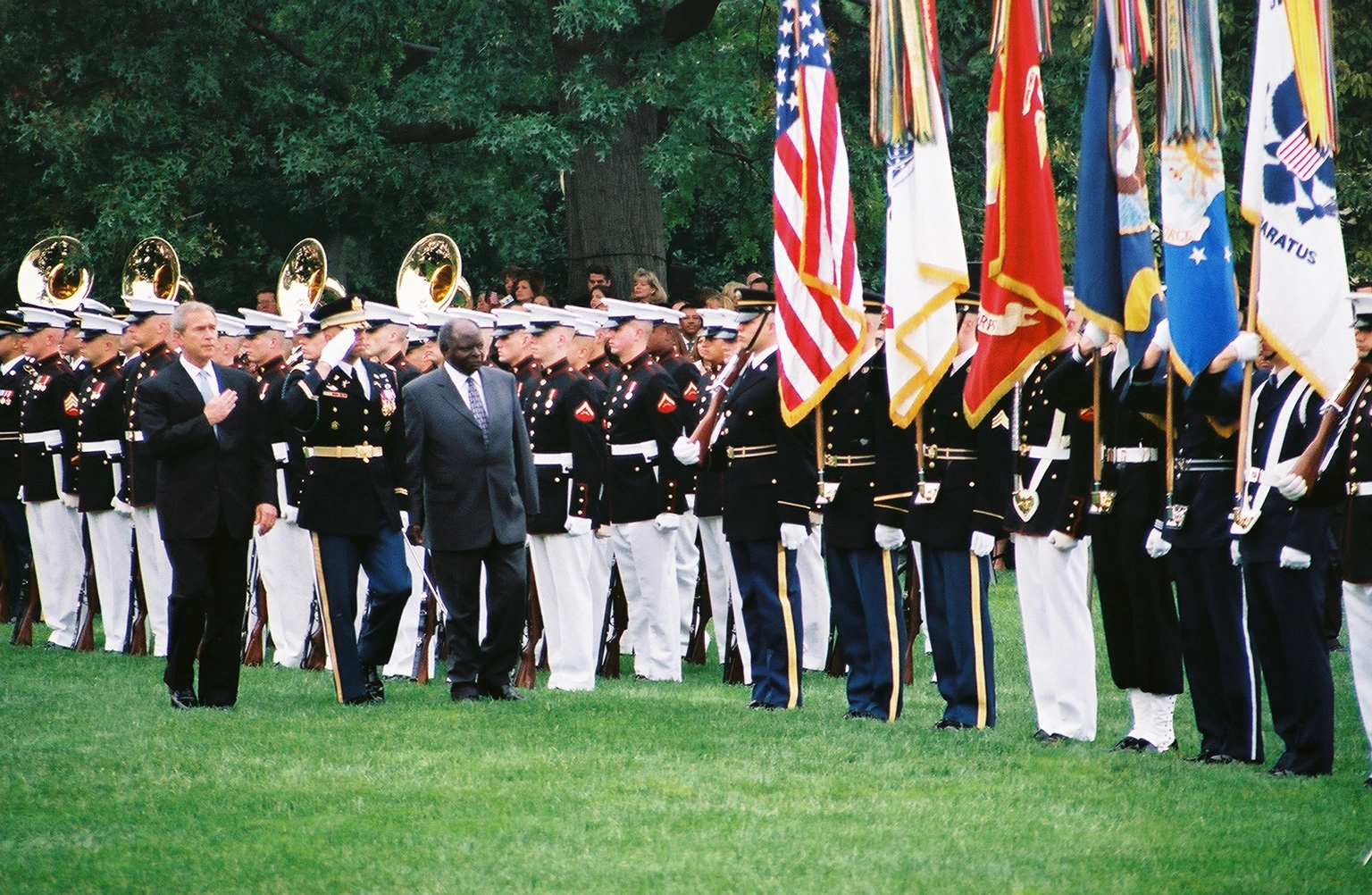
President Mwai Kibaki inspecting a guard of honour during the State Visit to the United States hosted by President George W Bush at the White House
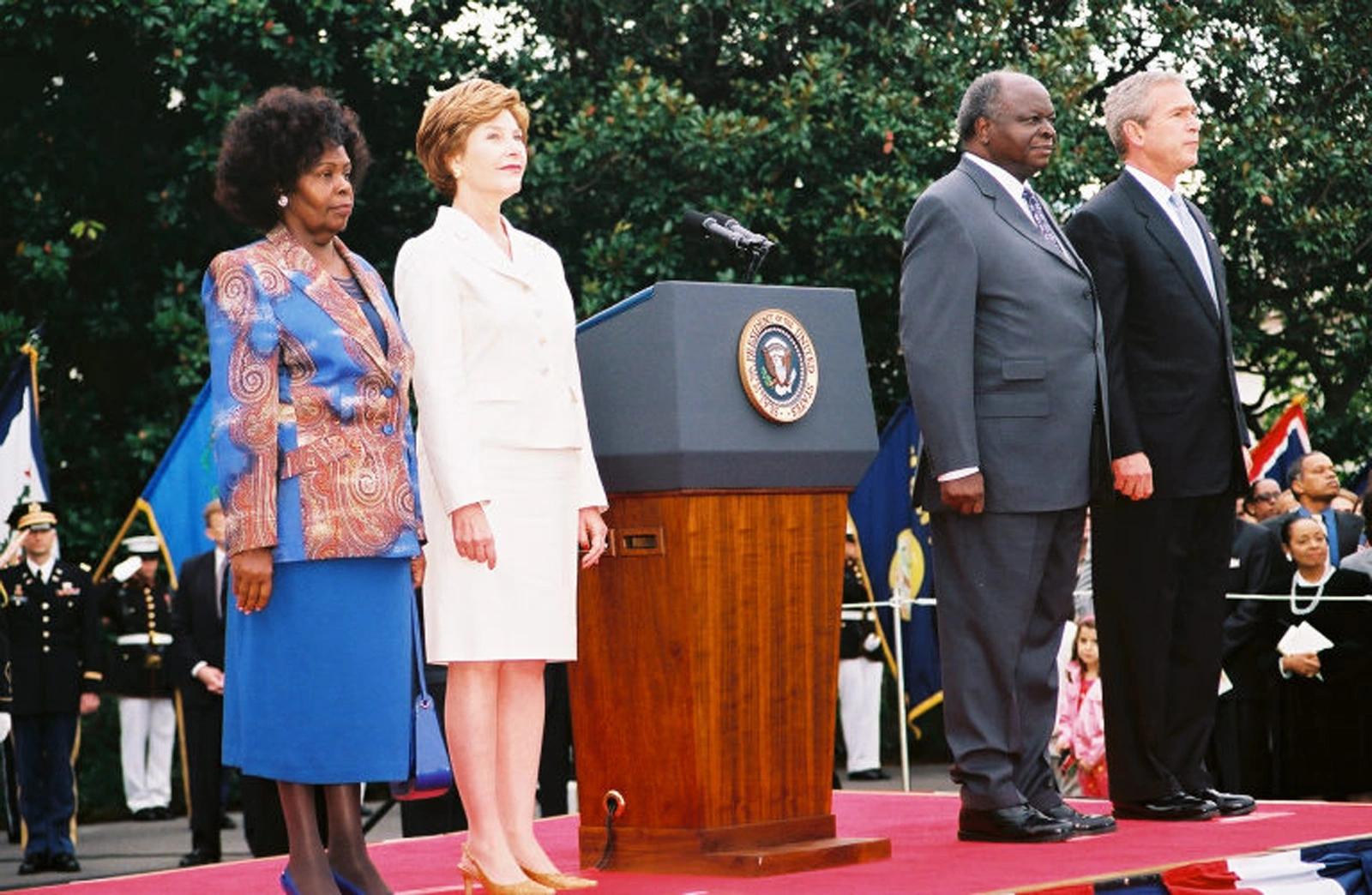
President Mwai Kibaki arrival for the State Visit to the United States hosted by President George W Bush at the White House
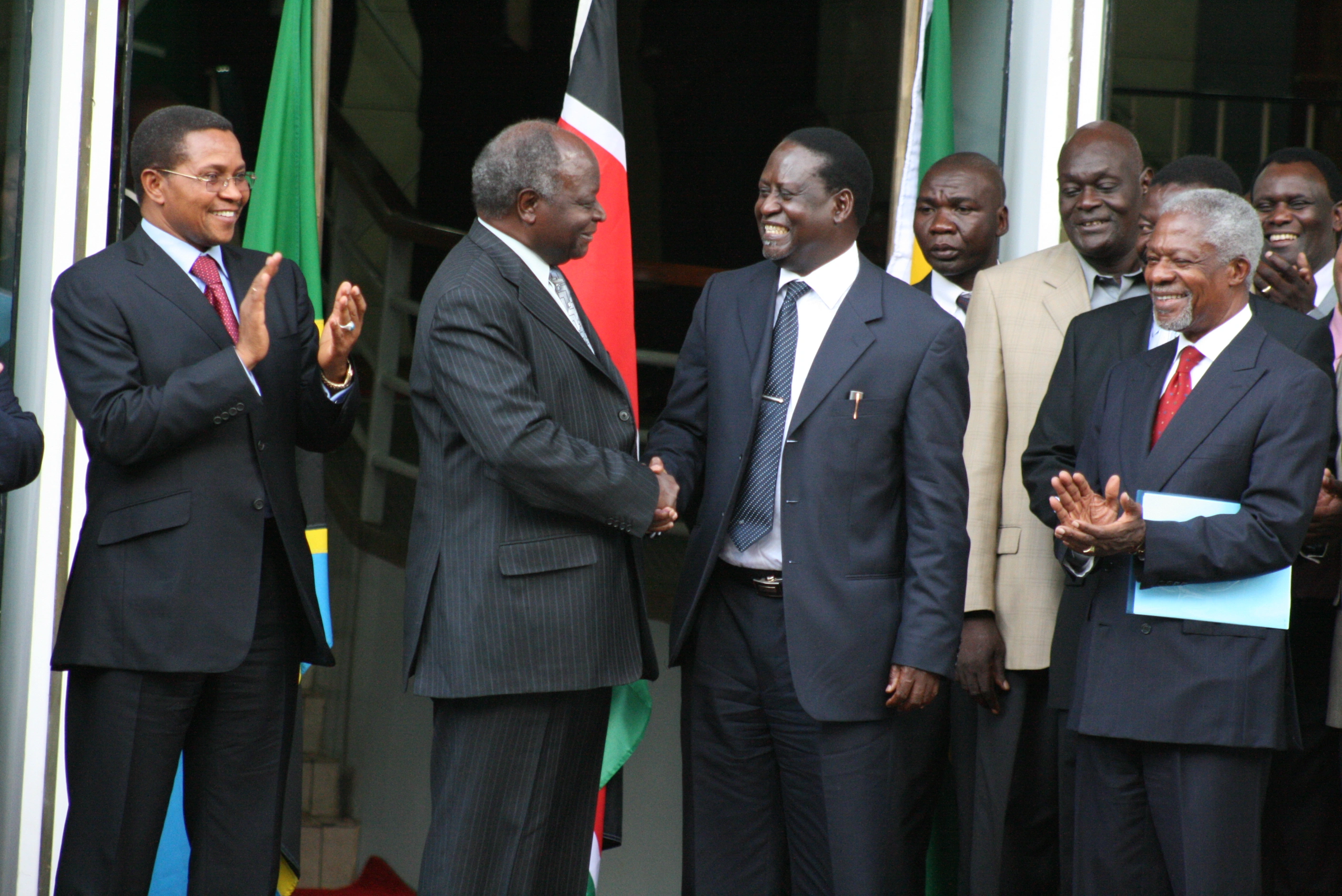
President Mwai Kibaki and opposition leader Raila Odinga handshake after signing the Power Sharing Deal at Harambee House Nairobi 28.2.2008.
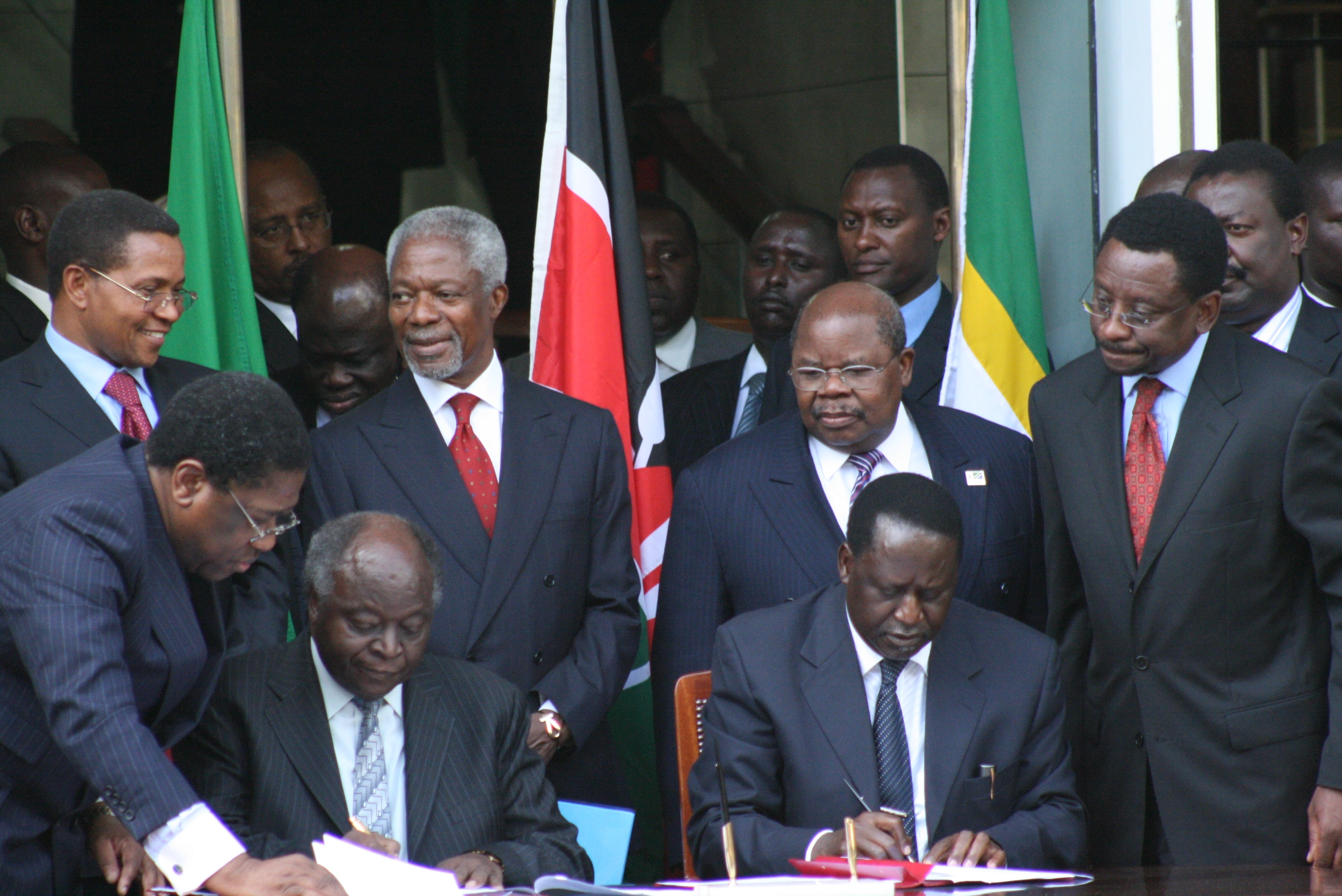
2007 elections_President Mwai Kibaki and opposition leader Raila Odinga signing the Power Sharing Deal at Harambee House Nairobi 28.2.2008
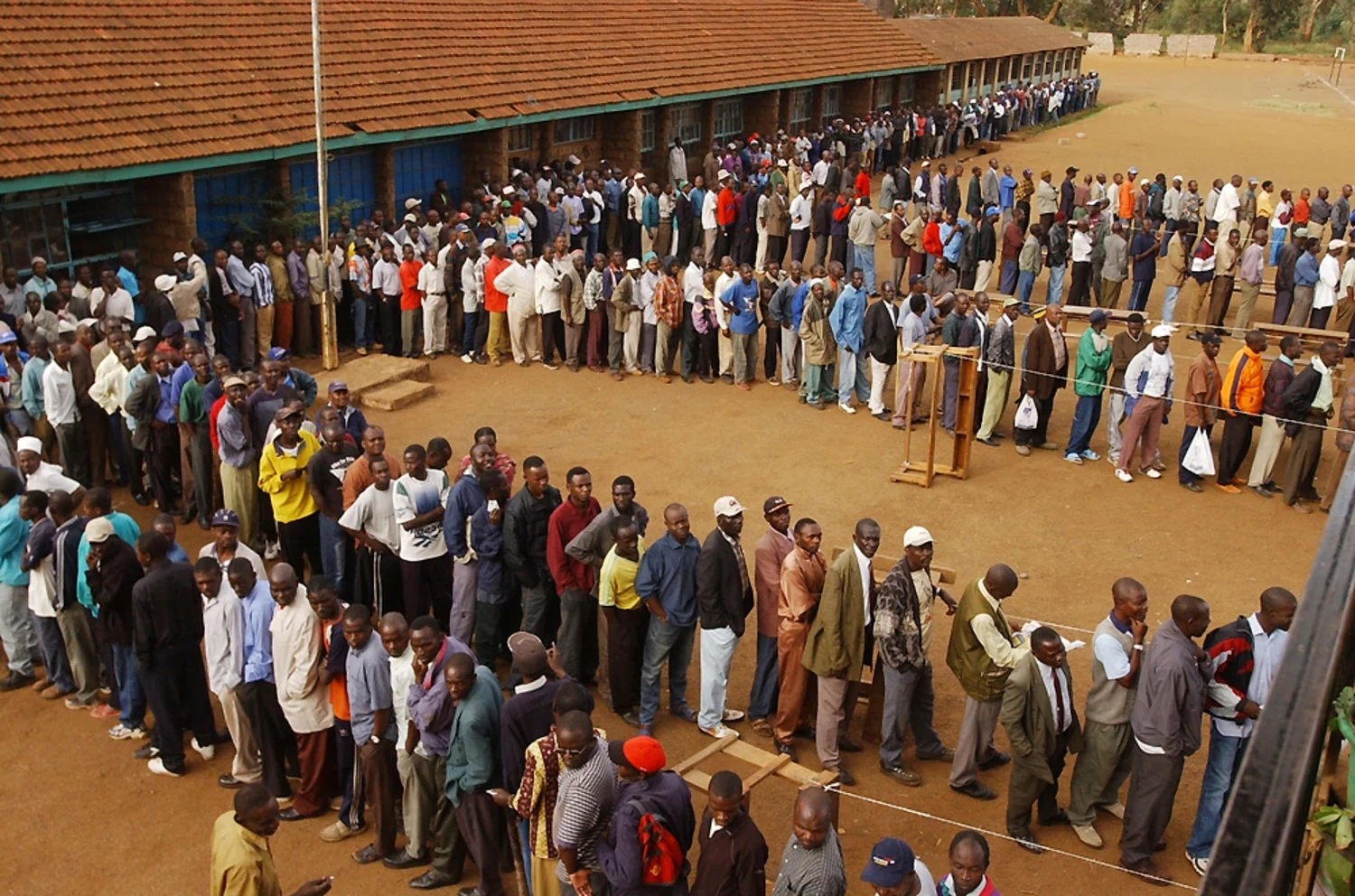
Kenyans Queing to vote in the 2005 Referendum
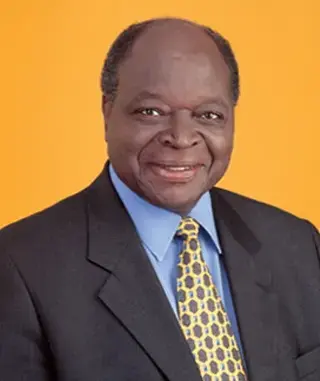
President Mwai Kibaki Official Portrait
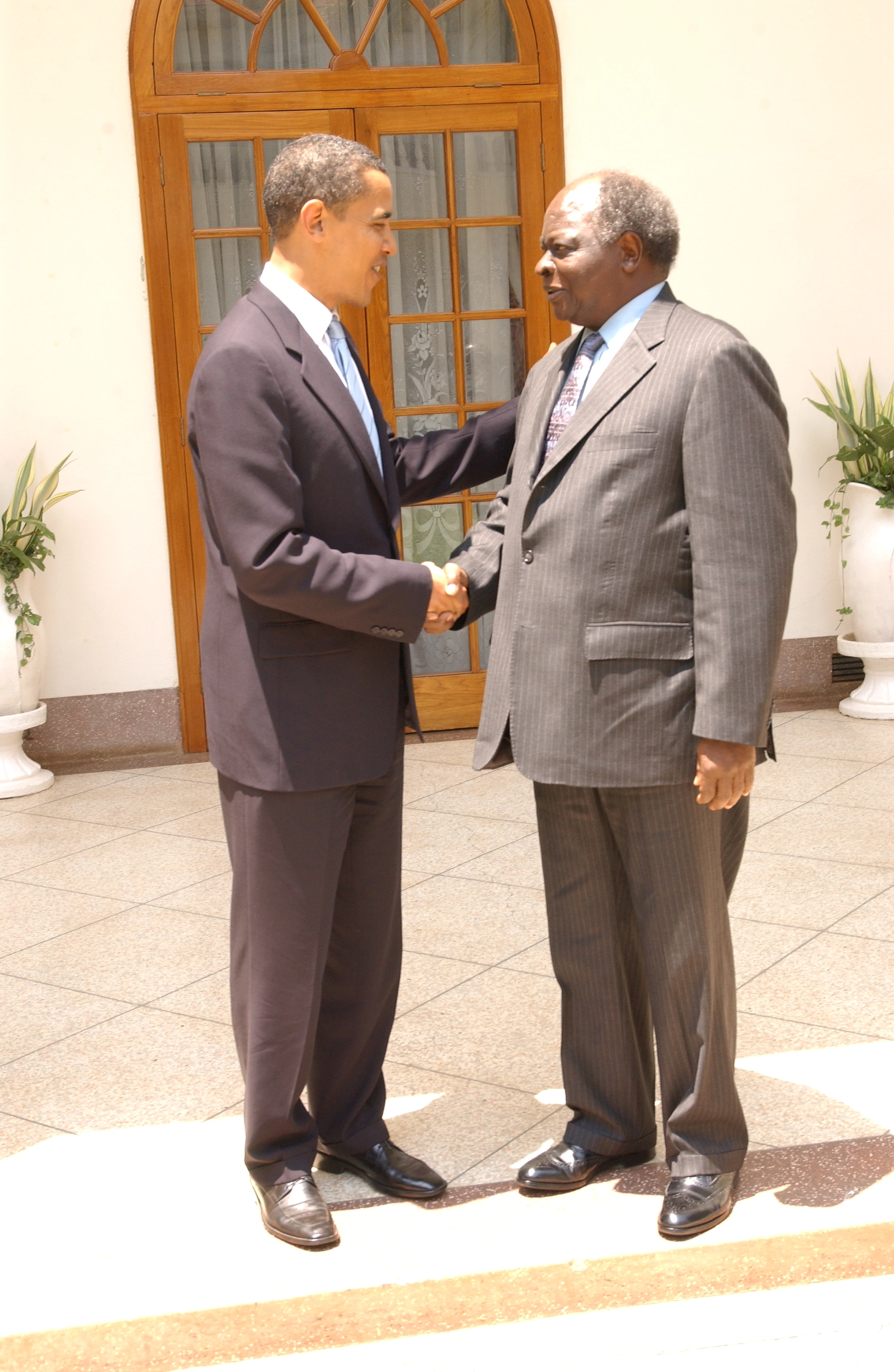
President Mwai Kibaki welcoming US Senator for Illinois Barack Obama at State House Nairobi
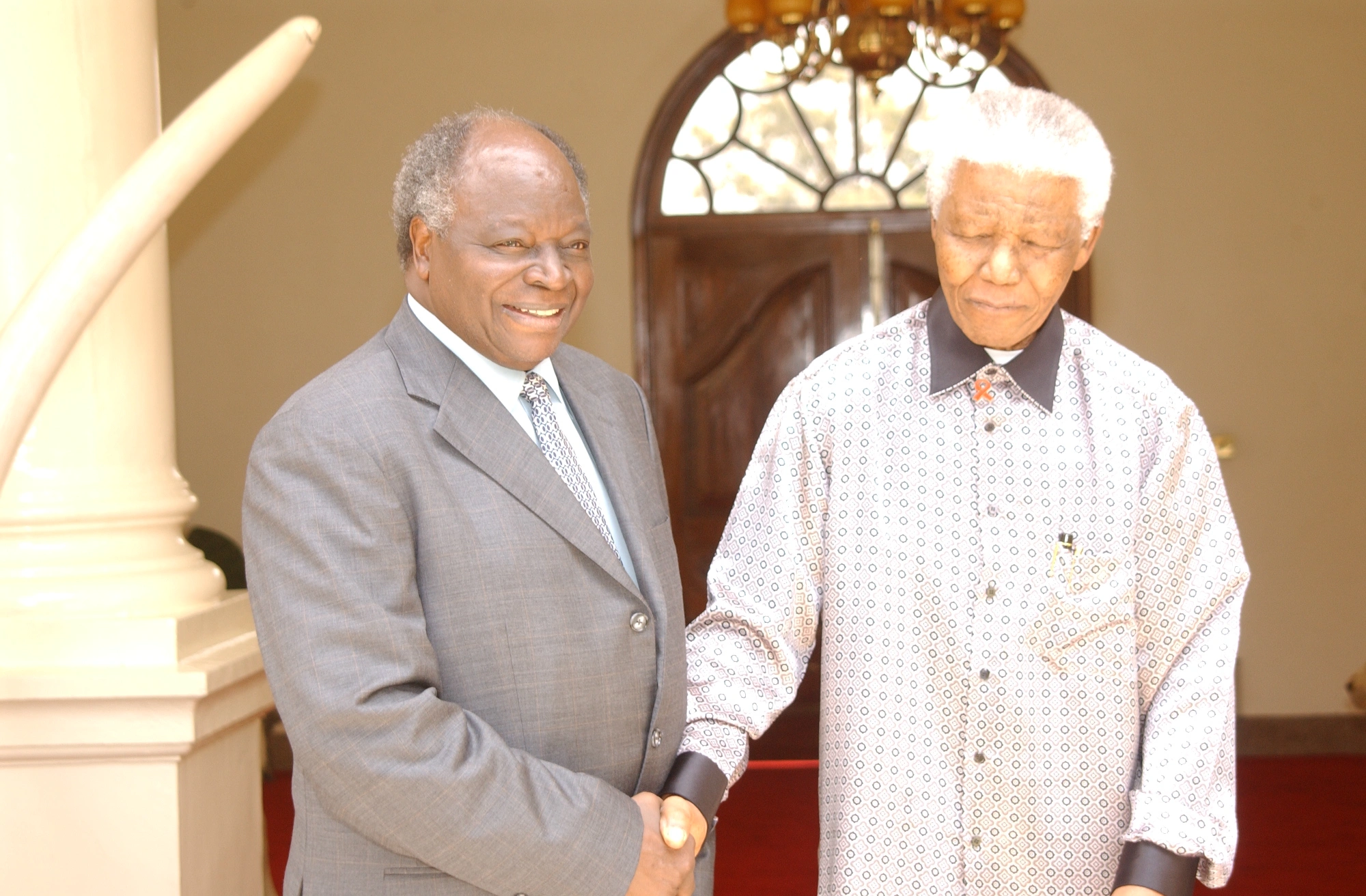
President Mwai Kibaki welcoming Former South African President Nelson Mandela Senator at State House Nairobi
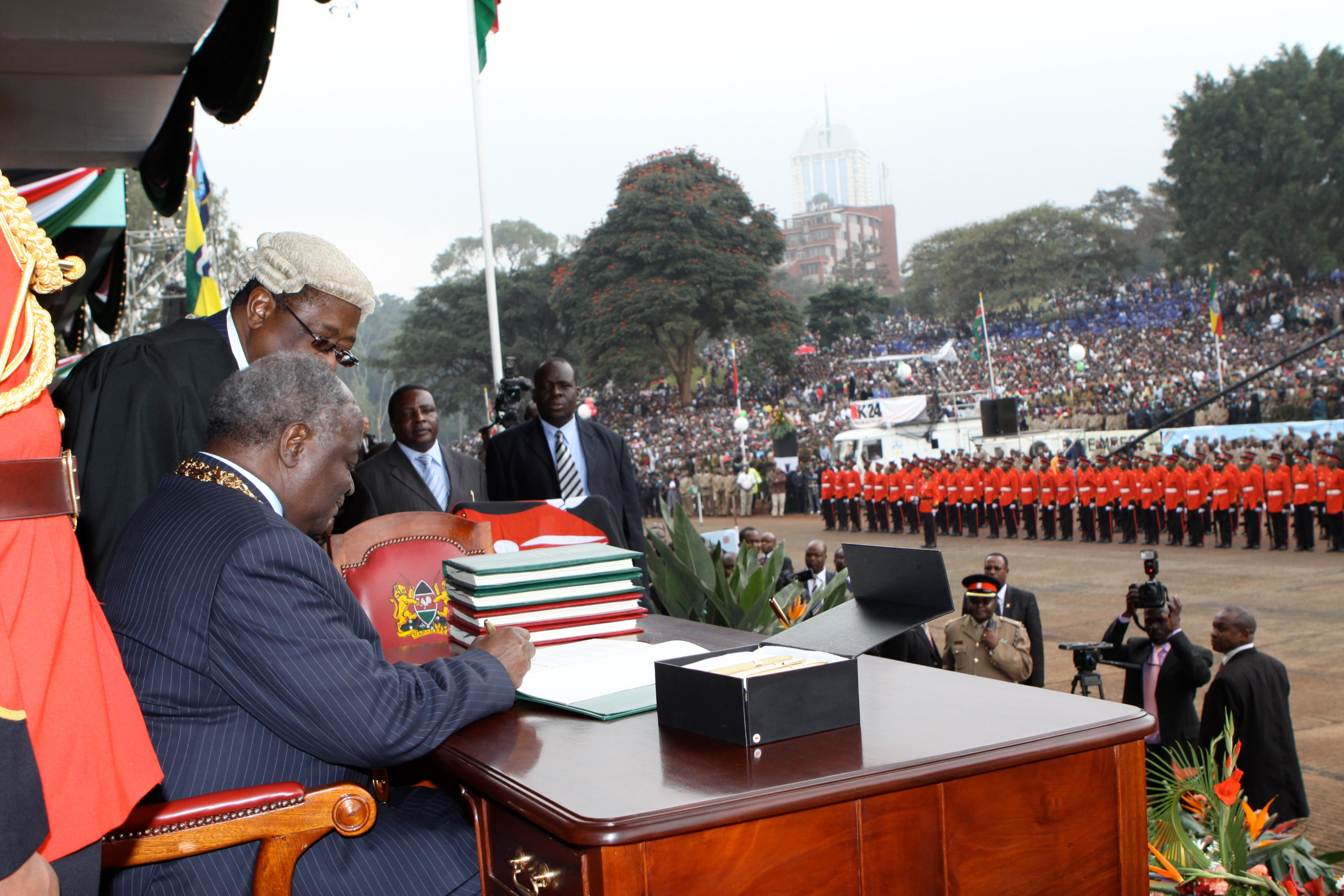
President Mwai Kibaki Signing the New Constitution on Promulgation Day at Uhuru Park Nairobi 2
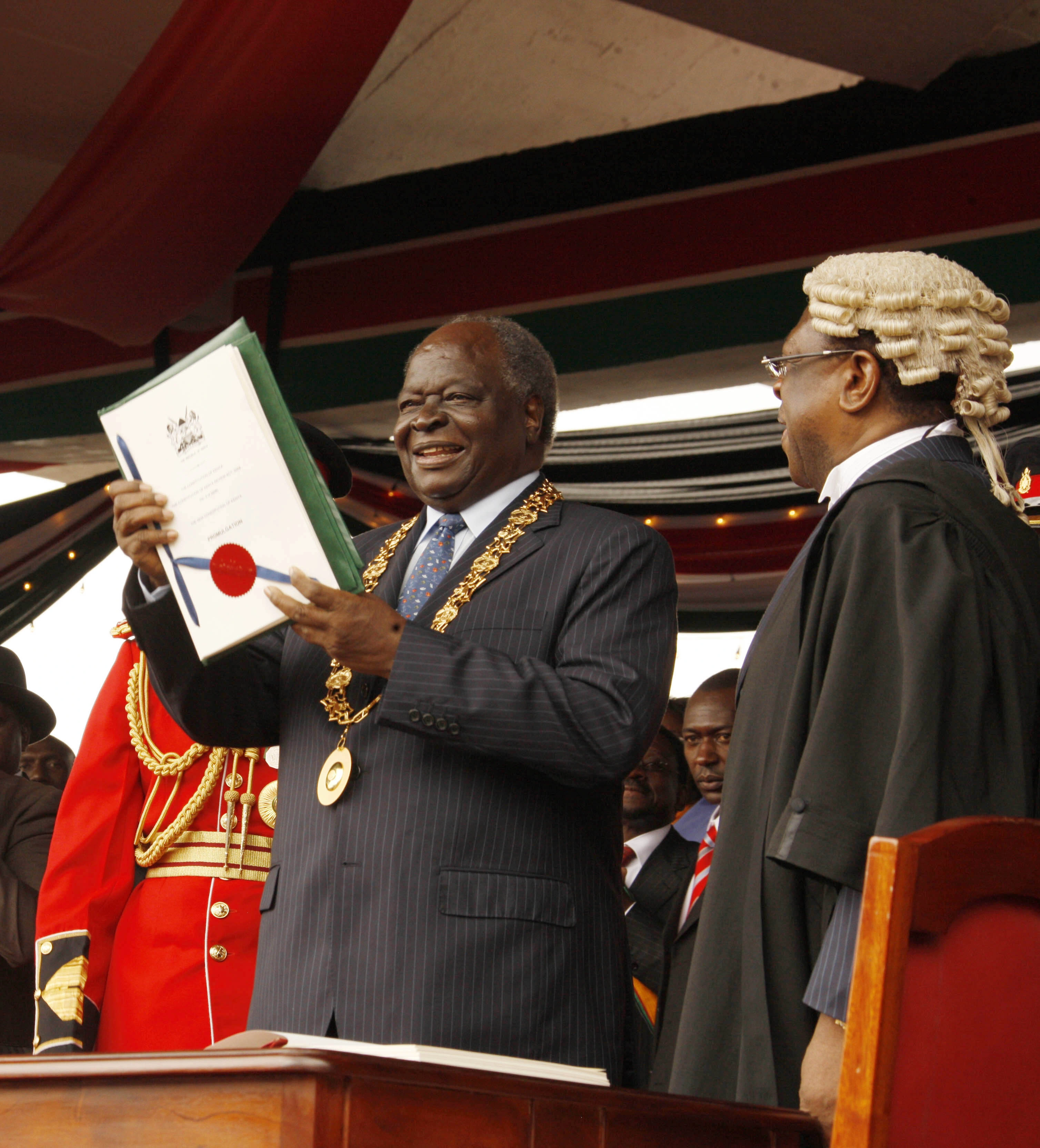
President Mwai Kibaki waving the New Constitution on Promulgation Day at Uhuru Park Nairobi 2
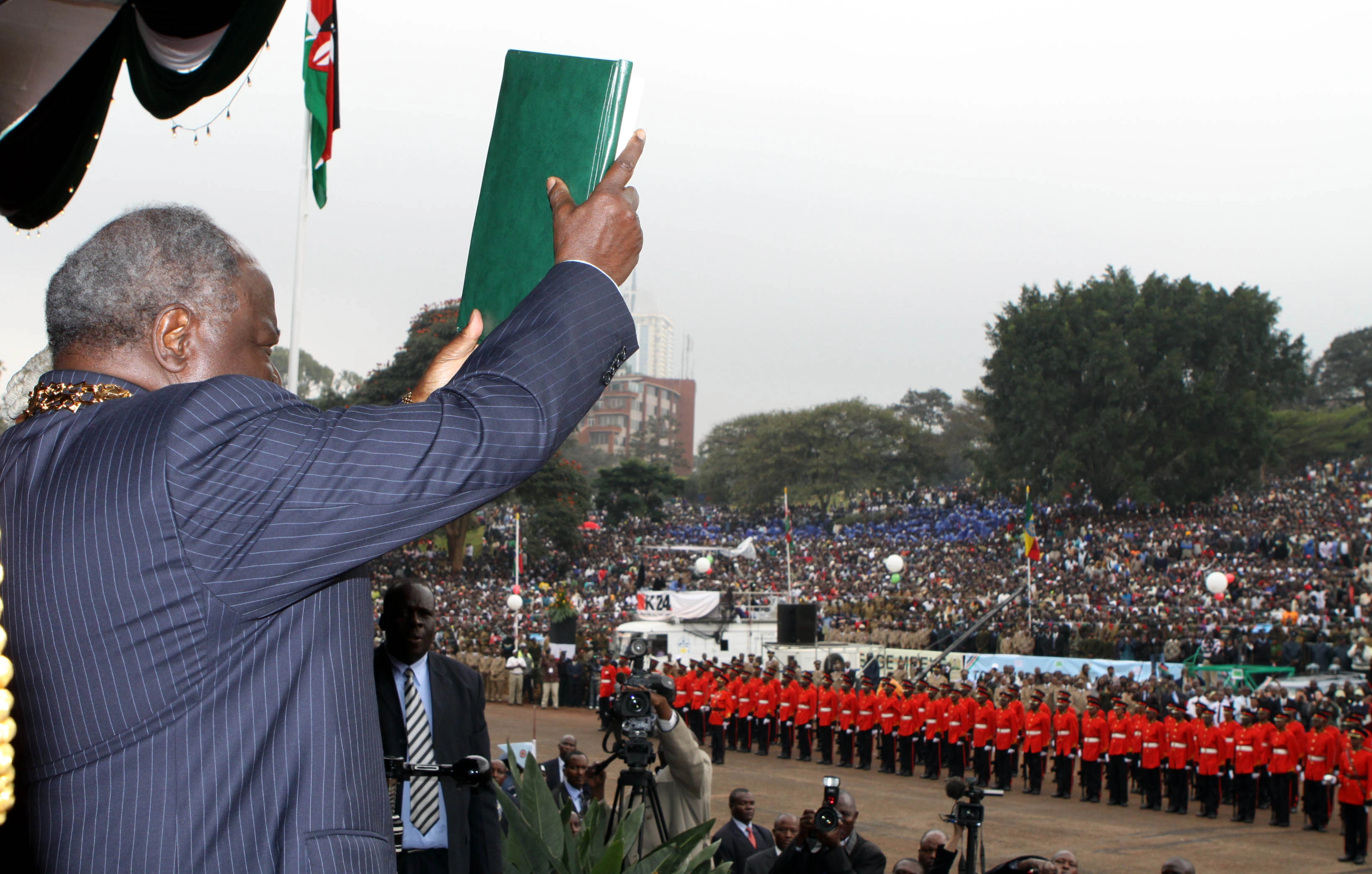
President Mwai Kibaki waving the New Constitution on Promulgation Day at Uhuru Park Nairobi 1
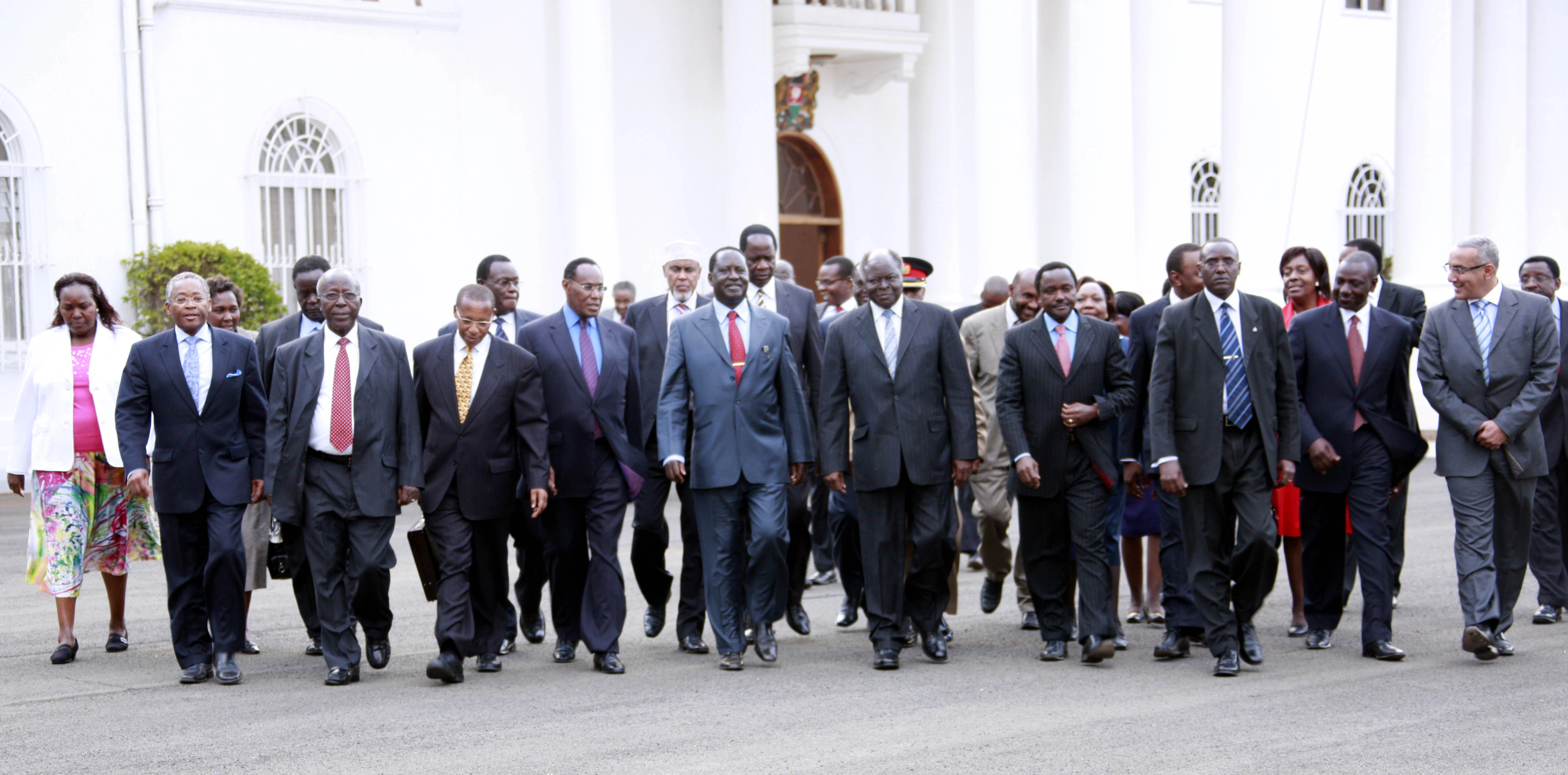
President Mwai Kibaki walking together with the Grand Coalition Cabinet Ministers at State House Nairobi
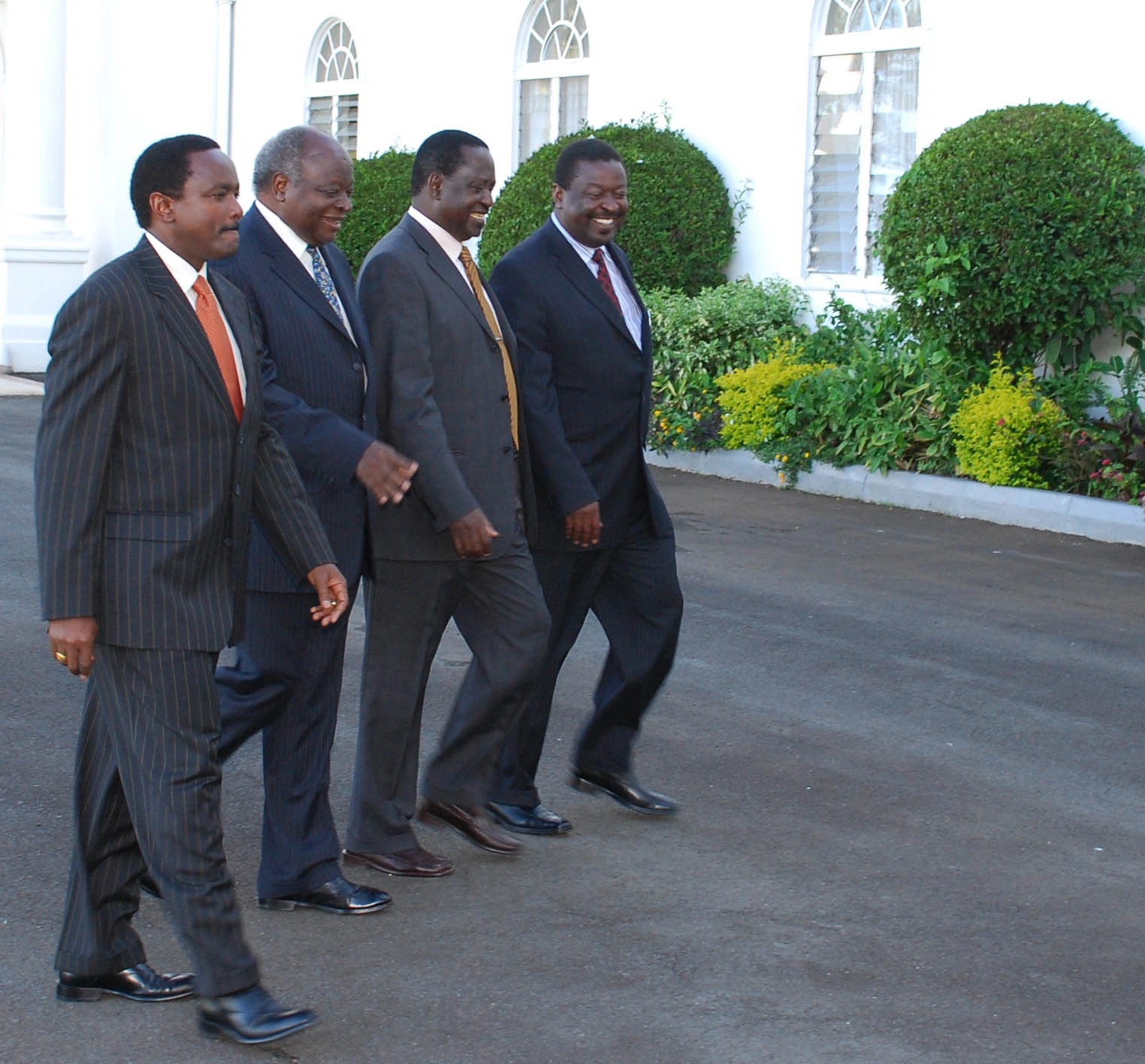
President Mwai Kibaki walking alongside VP Kalonzo Musyoka PM Raila Odinga and DPM Musalia Mudavadi at State House Nairobi
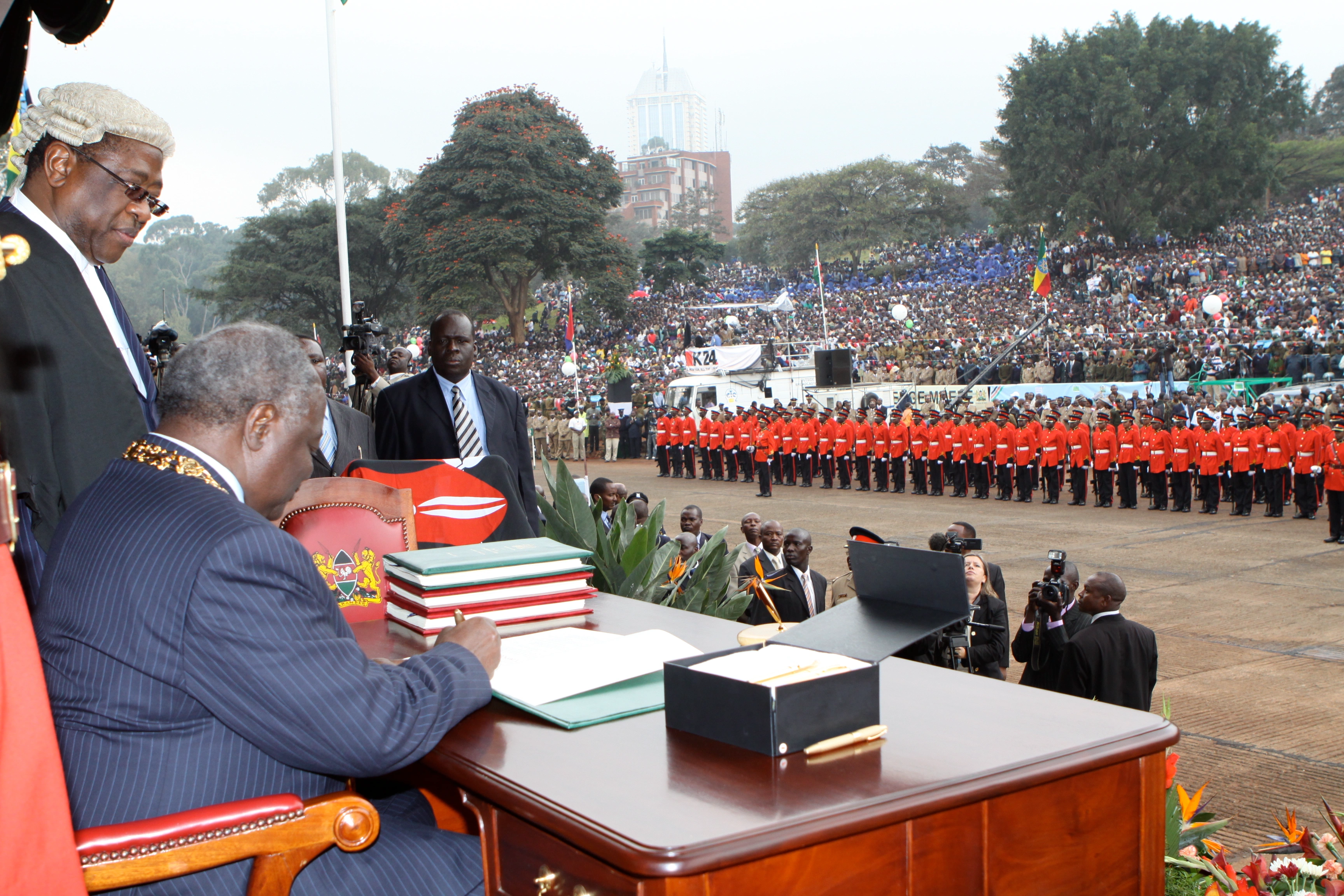
President Mwai Kibaki Signing the New Constitution on Promulgation Day at Uhuru Park Nairobi 1
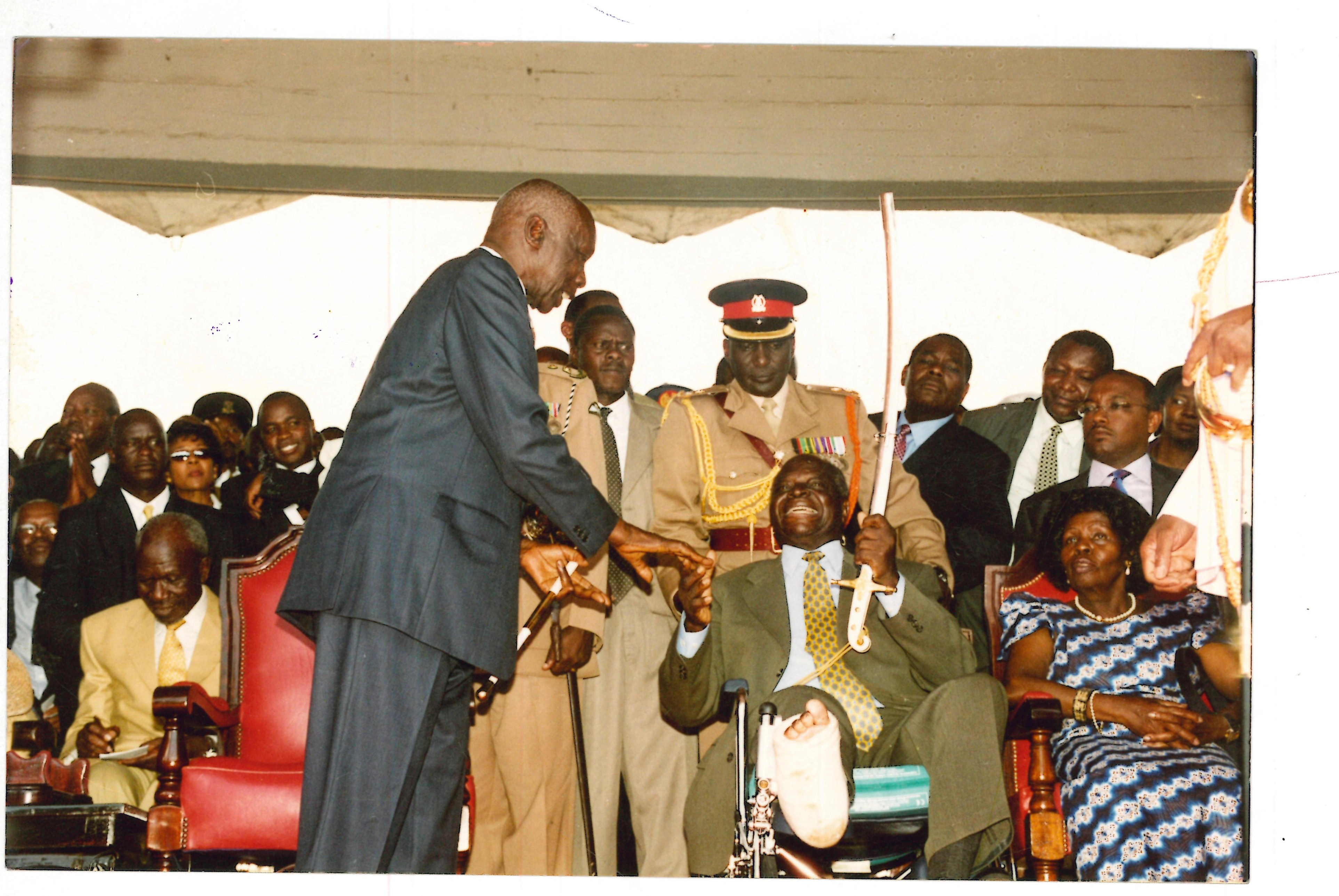
President Mwai Kibaki Receiving the sword from outgoing President Daniel Arap Moi during the inauguration of the Third President at Uhuru Park
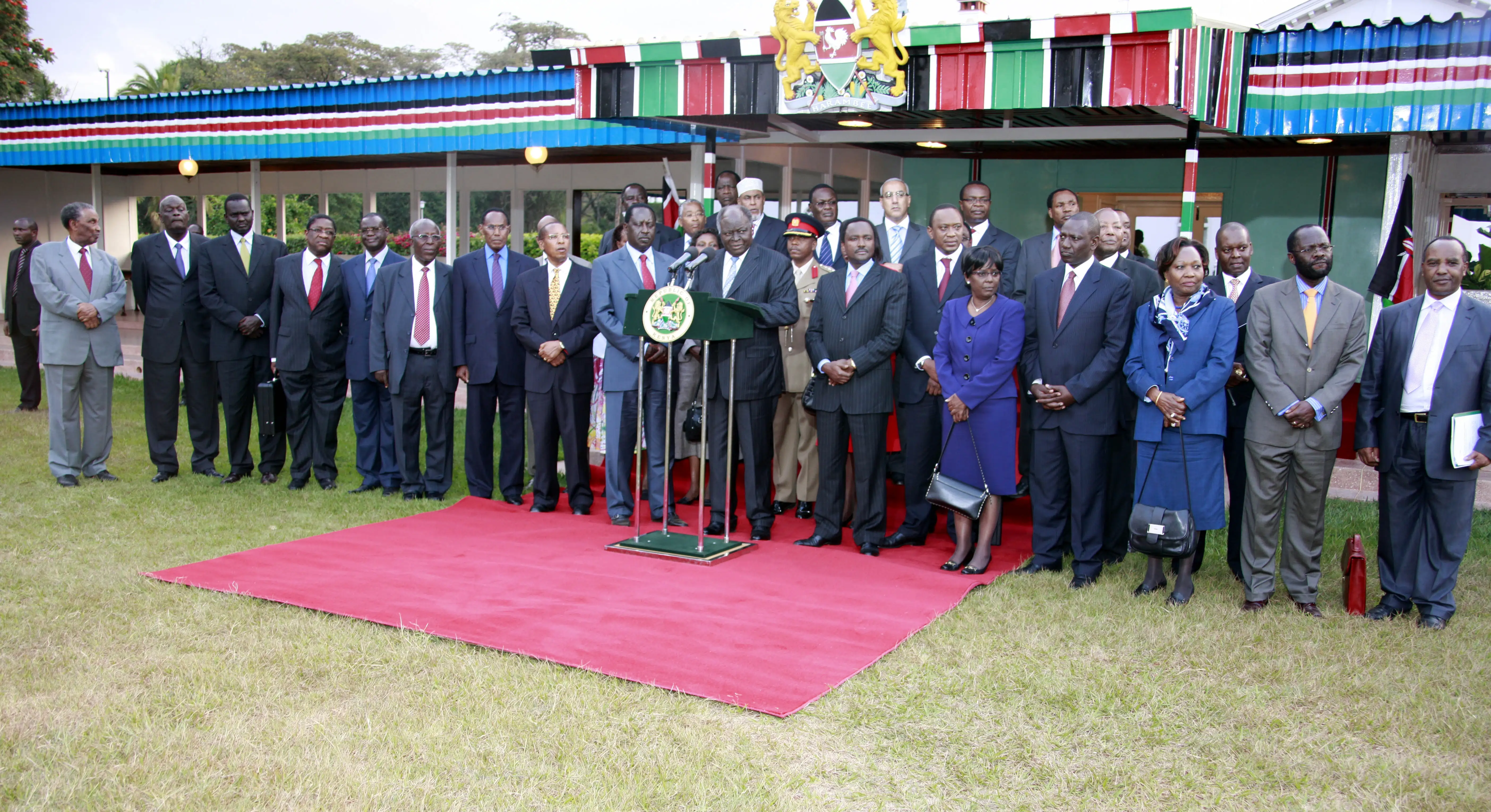
President Mwai Kibaki Press Conference with the Grand Coalition Cabinet Ministers at State House Nairobi
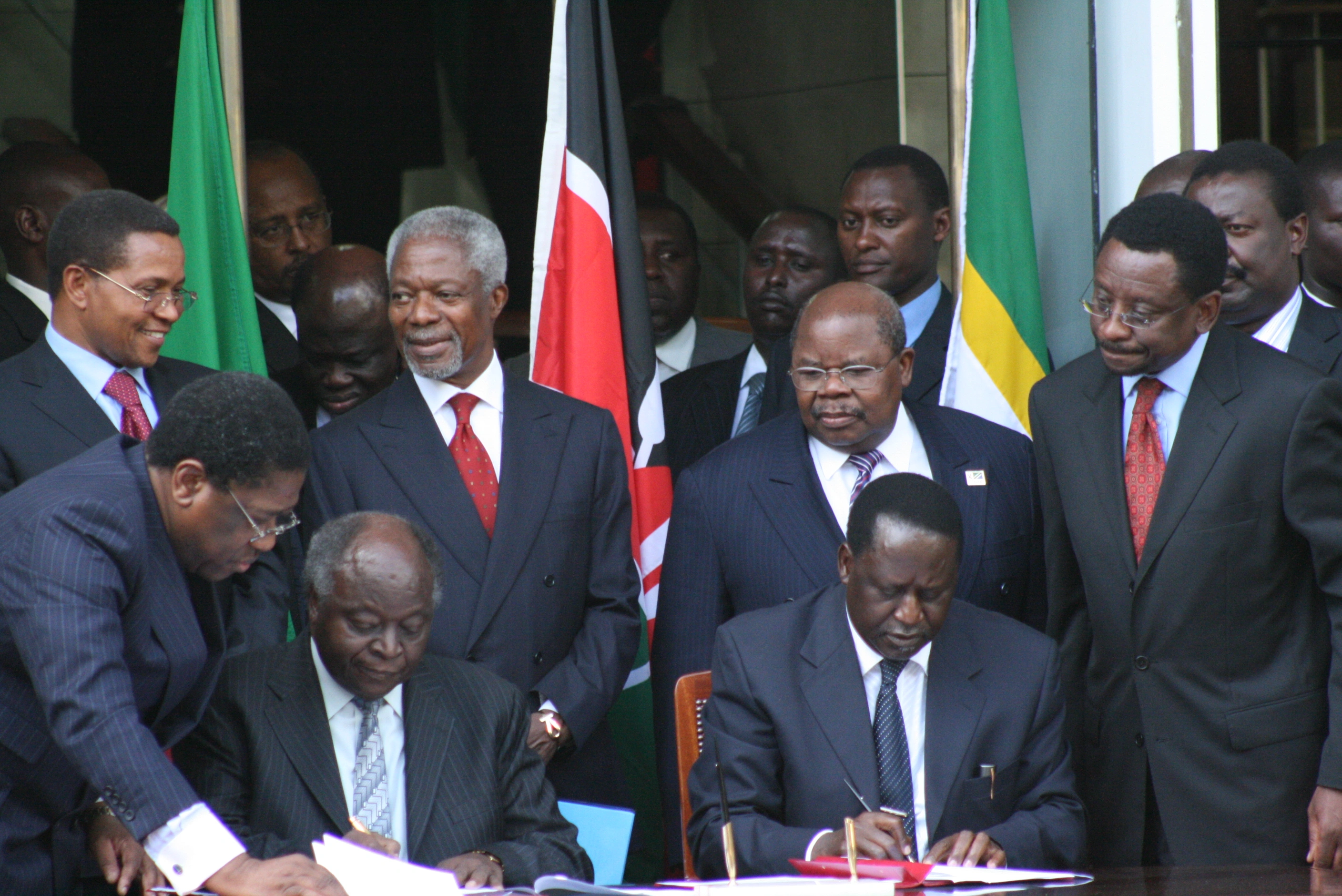
President Mwai Kibaki and opposition leader Raila Odinga signing the Power Sharing Deal at Harambee House Nairobi
Speeches
President Mwai Kibaki Speech on Jamhuri Day_12.12.2011
Open Resource
President Mwai Kibaki Speech on Jamhuri Day_12.12.2009
Open Resource
President Mwai Kibaki Speech on Kenyatta Day_20.10.2007
Open Resource
President Mwai Kibaki Speech on Madaraka Day_1.6.2008
Open Resource
President Mwai Kibaki Speech on Madaraka Day_1.6.2007
Open Resource
President Mwai Kibaki Speech on Madaraka Day_1.6.2004
Open Resource
Documents
PDF
Promulgated by President Mwai Kibaki on 27th August 2010. The supreme law of Kenya establishing a new constitutional framework.
PDF
The Constitution of Kenya Revised Edition 2008